European and Canadian Leaders Issue Joint Appeal for Immediate Iran Ceasefire
In a significant diplomatic move, European Commission President Ursula von der Leyen and Canadian Prime Minister Mark Carney have jointly called for a swift and lasting end to the ongoing conflict involving Iran. The statement, released on April 8, 2026, underscores the urgent need for de-escalation and a return to peaceful negotiations in the volatile Middle East region.
Diplomatic Pressure Mounts for Conflict Resolution
The leaders emphasized that continued hostilities pose severe risks to regional stability and global security. "We urge all parties to immediately cease hostilities and engage in meaningful dialogue," the statement reads. This appeal comes amid heightened tensions following recent military escalations, with both European and Canadian officials expressing deep concern over the humanitarian impact and potential for broader conflict.
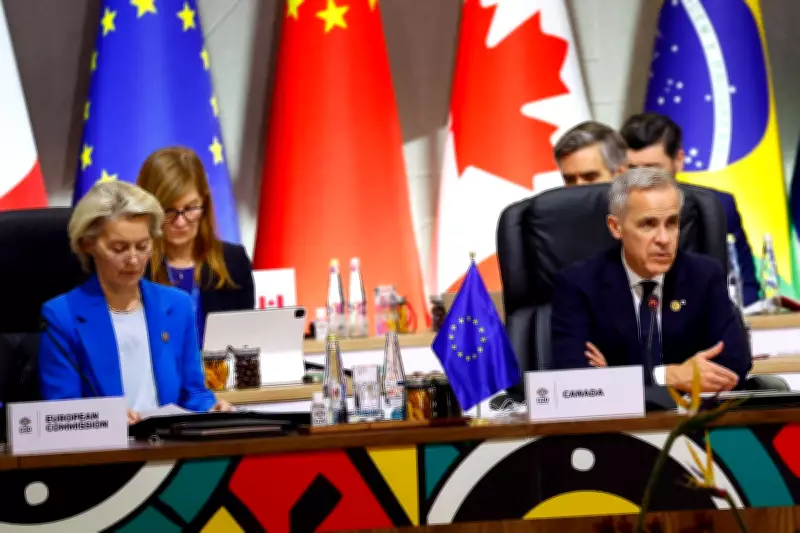
Von der Leyen and Carney, who previously collaborated at the G20 Summit in Johannesburg in November 2025, highlighted the importance of international cooperation in resolving the crisis. Their joint statement signals a unified transatlantic approach, advocating for diplomatic channels over military solutions.

Background and Context of the Conflict
The Iran conflict has drawn increasing international attention due to its complex geopolitical implications and humanitarian toll. Key points include:
- Recent escalations have involved multiple state and non-state actors, complicating peace efforts.
- Humanitarian organizations report growing civilian casualties and displacement in affected areas.
- Global economic stability is threatened by disruptions to trade routes and energy supplies.
The European Union and Canada have historically supported multilateral initiatives in the Middle East, and this statement reinforces their commitment to conflict resolution through diplomatic means. Analysts note that such high-level appeals can influence international discourse and pressure conflicting parties to consider ceasefire options.
Implications for International Relations
This joint declaration may pave the way for coordinated international actions, such as:
- Potential United Nations Security Council discussions on the conflict.
- Increased humanitarian aid to regions impacted by the fighting.
- Diplomatic missions aimed at facilitating negotiations between involved parties.
The leaders' statement concludes with a call for all nations to support peace efforts, stressing that a lasting solution requires global solidarity and adherence to international law. As the situation evolves, further diplomatic engagements are expected to address the root causes of the conflict and promote sustainable stability in the region.