EU Leader Issues Stark Warning on Trump's Threats to European Stability
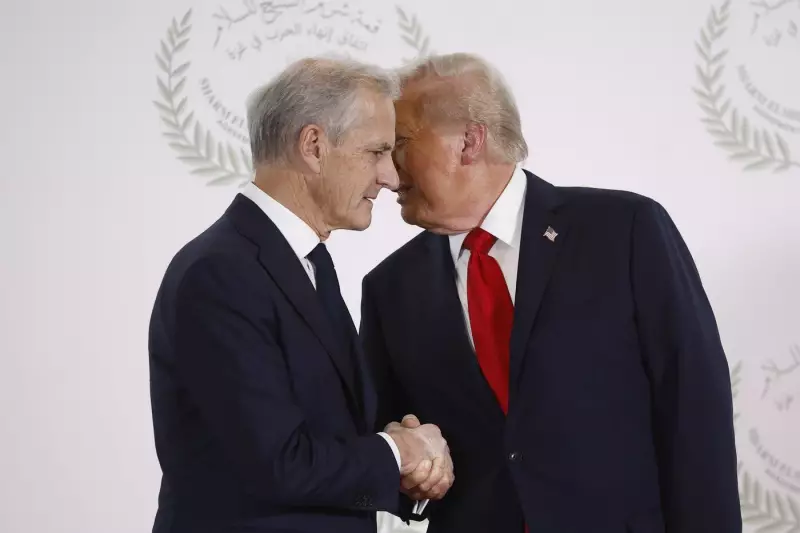
The European Union's chief has delivered a sobering assessment, declaring that recent threats from former U.S. President Donald Trump present a fundamental challenge to Europe's security framework and economic prosperity. This statement comes as European leaders prepare for an emergency summit to address growing geopolitical tensions and their implications for the continent's future.
A Direct Challenge to European Security Architecture
The EU official emphasized that Trump's rhetoric and policy positions threaten to undermine the transatlantic security partnership that has served as the bedrock of European stability for decades. This partnership, built on shared democratic values and mutual defense commitments, now faces unprecedented pressure as political dynamics shift on both sides of the Atlantic.
The timing of this warning is particularly significant, coming just ahead of a crucial emergency summit where European leaders will discuss coordinated responses to emerging security threats. The summit agenda is expected to focus heavily on how to maintain European sovereignty and economic resilience in an increasingly volatile global landscape.

Economic Prosperity at Stake
Beyond security concerns, the EU chief highlighted how Trump's approach could jeopardize Europe's economic prosperity. The European Union has built its economic model on principles of open trade, international cooperation, and predictable diplomatic relations—all elements that could be disrupted by the former president's stated policies.
"Our prosperity is inextricably linked to our security," the official noted, suggesting that any erosion of the transatlantic relationship would have immediate economic consequences for European businesses, workers, and consumers. This dual threat—to both physical security and economic stability—creates what European analysts describe as a "perfect storm" of challenges requiring urgent attention.
Historical Context and Current Concerns
The relationship between European leaders and Donald Trump has been complex since his initial presidential term, marked by disagreements over defense spending, trade policies, and international agreements. The current warnings reflect ongoing concerns that a potential return to Trump-era policies could:
- Undermine NATO's collective defense principles
- Disrupt established trade agreements and economic partnerships
- Create diplomatic fractures that adversaries might exploit
- Force European nations to reconsider their strategic autonomy
European security experts note that the continent faces multiple simultaneous challenges, including Russia's ongoing aggression in Eastern Europe, economic competition from China, and domestic political pressures. Against this backdrop, uncertainty about American commitment adds another layer of complexity to an already difficult security environment.
The Path Forward for European Unity
As European leaders convene for their emergency summit, the central question will be how to respond to these challenges while maintaining European unity and purpose. Options under consideration include:
- Strengthening European defense capabilities independent of American support
- Developing more resilient supply chains and economic partnerships
- Enhancing diplomatic outreach to other democratic allies worldwide
- Creating contingency plans for various political scenarios in the United States
The EU chief's statement serves as both a warning and a call to action for European nations to reassess their strategic priorities and dependencies. As the emergency summit approaches, European capitals are engaged in intense discussions about how to navigate what many describe as the most challenging security environment since the end of the Cold War.
The coming weeks will be crucial for determining whether European leaders can develop a coherent, unified response that protects both their security interests and economic prosperity in an increasingly unpredictable world. The outcome of these deliberations could shape Europe's strategic direction for years to come.