In a striking divergence of priorities, Republican lawmakers in the United States are championing a swift democratic transition for Venezuela, even as the administration of President Donald Trump appears singularly focused on securing the country's vast oil reserves. This internal conflict comes in the wake of the dramatic capture of former dictator Nicolás Maduro.
A Clash of Visions: Freedom vs. Fuel
The weekend raid that resulted in the arrest of Maduro and his wife triggered jubilant celebrations in Venezuelan diaspora communities globally. However, the Trump administration has made it clear that its primary objective was not regime change. Instead, the White House is backing an interim government led by Delcy Rodríguez, Maduro's former vice president, to maintain stability and facilitate the flow of Venezuelan oil to American markets.
White House press secretary Karoline Leavitt underscored this stance, stating, "We obviously have maximum leverage over the interim authorities. Their decisions are going to continue to be dictated by the United States of America." A classified CIA assessment is said to support the view that Rodríguez's government is best positioned to ensure a steady oil supply.

The GOP's Democratic Champion: Maria Corina Machado
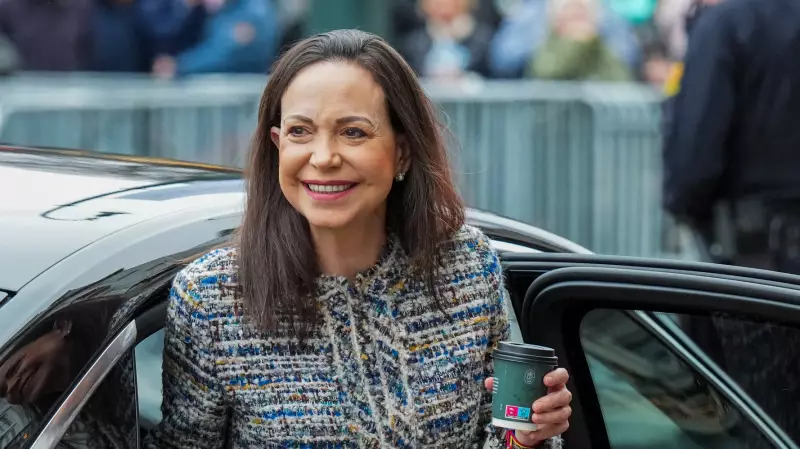
This pragmatic, energy-centric approach has put the administration at odds with many congressional Republicans, particularly those from South Florida where large Cuban and Venezuelan exile communities fervently support regime change. These lawmakers are rallying behind Maria Corina Machado, the exiled opposition leader and 2025 Nobel Peace Prize laureate.
Republicans like Rep. Carlos Giménez (R-Fla.) insist that Machado has not been sidelined. "I don't think they're sidelining the opposition. I think they're getting the stage ready for a free and democratic Venezuela," Giménez argued. Sen. Rick Scott (R-Fla.), a close Trump ally, posted a video praising Machado's gratitude towards Trump's actions.
Yet, President Trump himself has expressed skepticism about Machado's viability, suggesting she lacks sufficient respect in Venezuela and was reportedly displeased she won the Nobel Prize he coveted. "If she had turned it down and said, 'I can't accept it because it's Donald Trump's,' she'd be the president of Venezuela today," a source close to the White House told The Washington Post.
An Uncertain Path Forward
Machado and her Republican allies are now in a last-ditch effort to sway the president. She appeared on Sean Hannity's Fox News program, praising Trump and even offering to give him her Nobel medal. Meanwhile, the administration is moving swiftly on the energy front, rushing to convince oil companies to invest in Venezuela and suggesting the U.S. would reimburse their costs.
Democrats have harshly criticized this plan. Sen. Chris Murphy (D-Conn.) called it "an insane plan," accusing the administration of proposing to "steal Venezuela's oil at gunpoint forever and use that leverage to run the country." Other Republicans, like Sen. Kevin Cramer (R-N.D.), see strategic value in working with the Rodríguez interim government, calling it a "lower-risk way to move forward" as long as the U.S. maintains a "short leash."
As bipartisan praise flows for the military operation that captured Maduro, a clear divide remains on what comes next. With the administration showing no urgency for new elections and Republicans insisting on Machado's democratic mandate, the future of Venezuela hangs in the balance between ideals of freedom and the stark realities of geopolitical and economic interests.