Victor Davis Hanson Analyzes the Long-Term Outlook of the Iran Conflict
Published on April 19, 2026, by Victor Davis Hanson, this analysis delves into the complex dynamics of the ongoing Iran war, suggesting that while public fatigue and political distortions cloud perceptions, the eventual outcome may significantly favor the United States. Hanson, a distinguished fellow at the Center for American Greatness and a historian at Stanford University's Hoover Institution, provides a nuanced perspective on the fluid situation, emphasizing strategic advantages over immediate chaos.
The Strait of Hormuz: A Critical Flashpoint
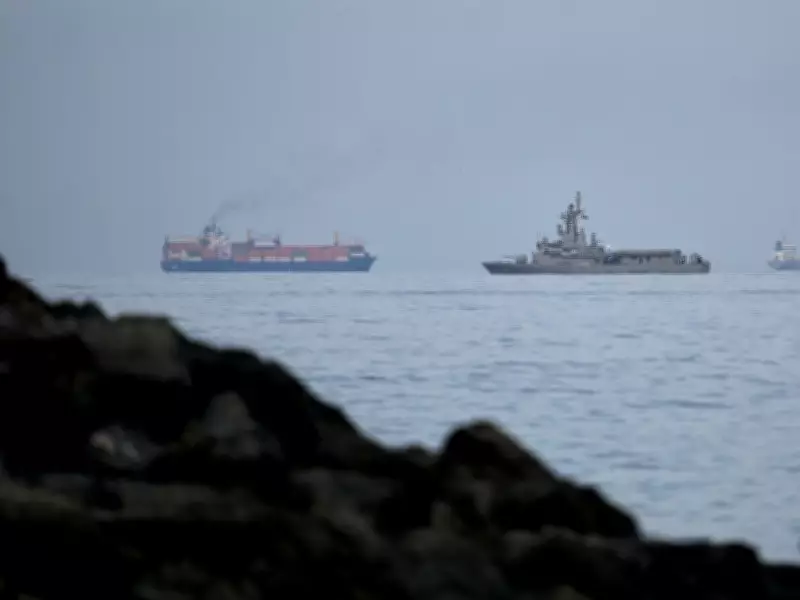
Prior to President Donald Trump's announcement of a blockade and subsequent control over the Strait of Hormuz, maritime traffic was severely limited, primarily involving vessels aligned with Iran or neutral parties. This disruption surpassed earlier incidents, such as the "Tanker War" during the Iran-Iraq conflict and harassment campaigns in 2018-19. Hanson posits that if the U.S. can swiftly secure the Strait, restoring traffic to 60-70% of pre-war levels while avoiding full-scale escalation, oil prices could stabilize within one to two months.
The American challenge is not military but political, with the administration constrained by economic impacts, global oil fluctuations, domestic gas prices, and midterm election considerations. Militarily, options include demining operations, patrols by U.S. and allied warships, selective blockades, and targeted strikes against Iranian assets. Trump's strategy could invert Iran's tactics, leveraging superior capabilities to maintain control, with world opinion likely siding with the U.S. for economic stability and justified retaliation if Iran breaches ceasefires.

Regime Change and Regional Repercussions
Iran's substantial military investments over 47 years have been largely decimated, leaving the regime with costly rearmament efforts amid public discontent over shortages. Proxies like Hezbollah, Hamas, and the Houthis face isolation, potentially orphaned by Gulf sponsors. The myth of Iranian invulnerability is shattered, eroding the mullahs' nationalist appeal and fueling domestic anger. Hanson draws parallels to the fall of the Berlin Wall, suggesting regime change may unfold gradually over months or years, not immediately post-conflict.
Internal power struggles among theocrats, military officers, and Islamic Revolutionary Guard Corps factions create instability, with leaders fearing both hardliner backlash and public retribution. The West lacks clarity on Iran's current leadership, complicating negotiations. Hanson warns that persistent Iranian attacks could necessitate further U.S. military action to persuade compliance.
Global Winners and Losers
The anti-Western bloc, including Russia's Assad regime, China's Iran satellite, and Iranian proxies, is weakened or isolated. Russia's brief oil price gains may fade as it remains mired in Ukraine, with disrupted weapons corridors to Iran. China risks losing exclusive oil deals with Venezuela and Iran, potentially facing hostility from any transitional Iranian government. The display of U.S. air power and advanced tactics may deter Chinese ambitions regarding Taiwan, given the logistical challenges of a contested invasion.
Western Europe emerges as a significant loser, with allies like the U.K., France, and Spain demonstrating limited support or outright hostility. NATO's cohesion is questioned, potentially reducing U.S. engagement in future European-led interventions. The Democrat-media nexus is criticized for inconsistent rhetoric, while the U.S. public seeks a clear victory defined by Iranian inability to disrupt straits or launch attacks.
Long-Term Strategic Shifts
Gulf exporters are likely to accelerate pipeline projects bypassing the Strait of Hormuz, such as routes through the Red Sea, Gulf of Oman, or even Jordan to Israel's Haifa port. This could render the Strait irrelevant, undermining Iran's strategic leverage. Hanson concludes that despite media hysteria, the war's long-term effects point to a favorable outcome for the U.S., with Iran weakened and global alliances realigned. The key lies in ignoring short-term political noise and focusing on substantive military and economic realities.