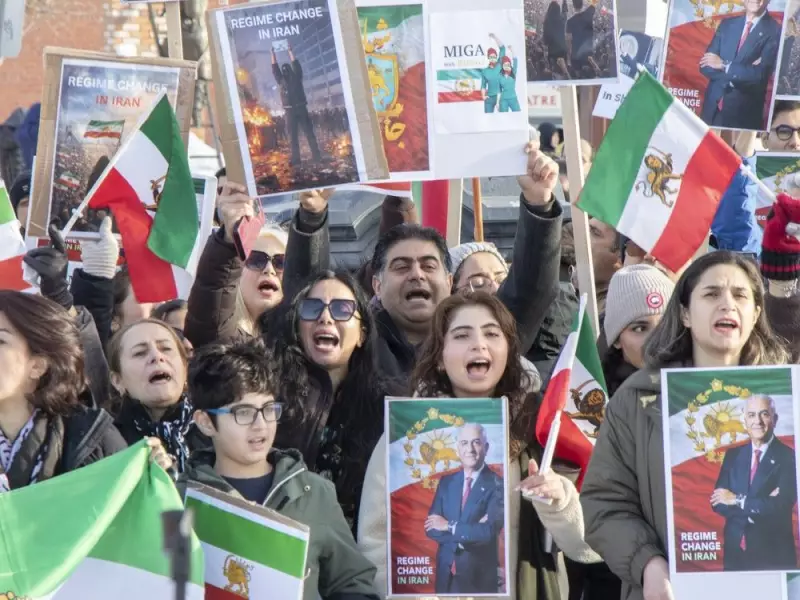
For many in Edmonton, the turmoil and violent government crackdowns in Iran might seem like a distant problem, unrelated to life in Alberta. However, that perception shatters upon examining the direct and painful connections between our community and the actions of the regime in Tehran.
A Local Tragedy with Iranian Origins
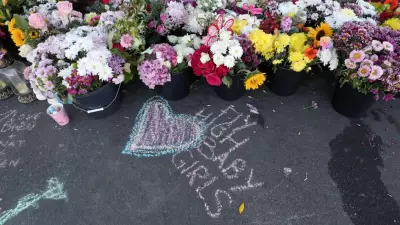
The abstract became tragically concrete for Edmonton in January 2020. Iran’s Islamic Revolutionary Guard Corps shot down Ukraine International Airlines Flight PS752, a civilian passenger plane, killing all 176 people on board. Among the victims were 13 Edmontonians. Families in our city were forced to bury loved ones because a foreign government murdered innocent civilians and then systematically lied about it.
Today, that same regime is again engaged in lethal suppression. In the face of renewed nationwide protests, authorities have imposed severe internet blackouts and cut communications to hide evidence of their actions. This digital siege also traps foreign nationals, including Edmonton residents. The author notes a personal connection to one such individual currently in Iran, whom they have been unable to contact since communications were severed. Government travel advisories urging citizens to leave feel like a "cold joke" when there are effectively no means to coordinate an exit.

From Global Leader to Pariah State
Iran's current state stands in stark contrast to its recent past. During the 1960s and 1970s, Iran was a stable, secular nation admired globally. It was a rising economic power, providing loans to Western countries and rapidly advancing education. Its capital, Tehran, was such a model that Seoul, South Korea, renamed its financial district "Tehrano" in hopes of emulating its success.
The 1979 Islamic Revolution triggered a dramatic reversal. Foreign investment fled, freedoms vanished, and the economy went into a freefall. The Iranian Rial, which traded at roughly 70 to one U.S. dollar before the revolution, has catastrophically depreciated to an exchange rate of approximately 1,500,000 to one today.
Why Alberta's Economy Feels the Shockwaves
This volatility does not stay contained within Iran's borders; it radiates outward, impacting Alberta directly. Global oil markets are not governed by supply and demand alone; they are highly sensitive to FUD—fear, uncertainty, and doubt. When a major energy-producing state like Iran descends into chaos, it injects instability into worldwide energy prices, causes insurance premiums to rise, and complicates long-term investment decisions.
Alberta's provincial budget remains overwhelmingly reliant on predictable energy revenues. The uncertainty generated by instability in Iran undermines that planning certainty and challenges fiscal discipline right here at home. The geopolitical risk emanating from Tehran translates into tangible economic risk for Albertans.
This moment of protest is distinct from previous uprisings, such as the "Woman, Life, Freedom" movement, not only in scale but in structure. For years, protests flared without a clear political alternative. The dynamic shifted when exiled Crown Prince Reza Pahlavi emerged as a unifying figure for the opposition. His leadership helped transform scattered demonstrations into a coordinated, nationwide movement, with millions marching on January 11, 2026, demanding a secular, pro-Western alternative to the current rulers.
The connection is undeniable. What happens in Iran—from the murder of Edmontonians on Flight PS752 to the regime's suppression of its people—creates ripples that are felt in our city's mourning families, in our inability to reach trapped citizens, and in the very foundations of our provincial economy. The distance is an illusion; the impact is real.