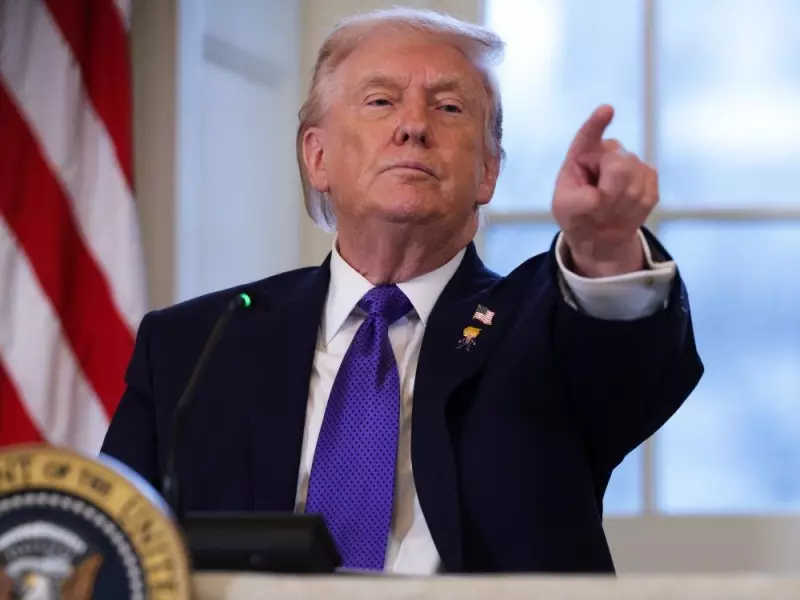
In a significant shift for American global strategy, recent actions by U.S. President Donald Trump have decisively ended a long period of foreign policy hesitation, according to commentator Ben Shapiro. Writing in January 2026, Shapiro contends that Trump's moves, particularly the ouster of Venezuelan leader Nicolas Maduro, represent the final burial of the "Iraq syndrome"—a mindset of paralysis that has gripped Washington for over two decades.
The Ghosts of Vietnam and Iraq
Shapiro explains that the Iraq syndrome emerged from the ashes of the costly and protracted Iraq War and its subsequent occupation. It created a pervasive fear within the American establishment that any overseas military intervention would inevitably spiral into another bloody quagmire. However, this was not a new phenomenon.
To understand it, one must look back to the Vietnam War. In its aftermath, a doctrine of restraint, known as the "Vietnam syndrome," took hold. This worldview, Shapiro notes, was underpinned by a belief that the U.S. was a malign force and should retreat from assertive global leadership. The consequences, he argues, were severe, including the Cambodian genocide and the Soviet invasion of Afghanistan.

This paralysis was eventually broken by President Ronald Reagan in the 1980s through decisive actions like the Grenada intervention. A framework for the use of force, articulated by Defense Secretary Caspar Weinberger, helped restore confidence. Yet, the lengthy nation-building missions in Afghanistan and Iraq in the 2000s revived the old fears, rebranding them as the Iraq syndrome.
The Cost of Retreat and the Trump Doctrine
According to Shapiro, the Iraq syndrome led directly to a policy of retreat under Presidents Barack Obama and Joe Biden. He cites the withdrawal from Iraq, which enabled the rise of ISIS, and the disastrous Afghan pullout in 2021 that left 13 U.S. servicemembers dead. These actions, he asserts, signaled weakness and emboldened adversaries like Russia and China.
The turnaround, Shapiro writes, began with the articulation and application of a "Trump Doctrine." Its principles are straightforward: prioritize American interests, use proportional investment, keep all policy tools available, and issue explicit, public deterrent threats.
Trump applied this doctrine twice in a year, Shapiro points out. First, with B-2 strikes on Iran's Fordow nuclear facility on June 22, 2025. Second, with the operation that removed Nicolas Maduro from power in Venezuela. In both instances, critics warned of catastrophic escalation and new quagmires—the reflexive cry of the Iraq syndrome. In both instances, Shapiro argues, they were wrong.
A Restored America on the Global Stage
The result of these targeted actions, Shapiro concludes, is a restoration of American deterrence without entangling the nation in endless conflicts. America is once again feared on the global stage, marking an extraordinary reversal from the perceived weakness of just a year prior. The message to adversaries is now clear: actions will have consequences.
Shapiro credits Trump with finally laying the Iraq syndrome to rest, just as Reagan did with the Vietnam syndrome. He frames this as a necessary return to a foreign policy where American strength is projected clearly and effectively, putting an end to a cycle of self-doubt and retreat that defined the post-Iraq War era.