Iran Unveils Provocative Mural in Tehran Square as Direct Warning to United States
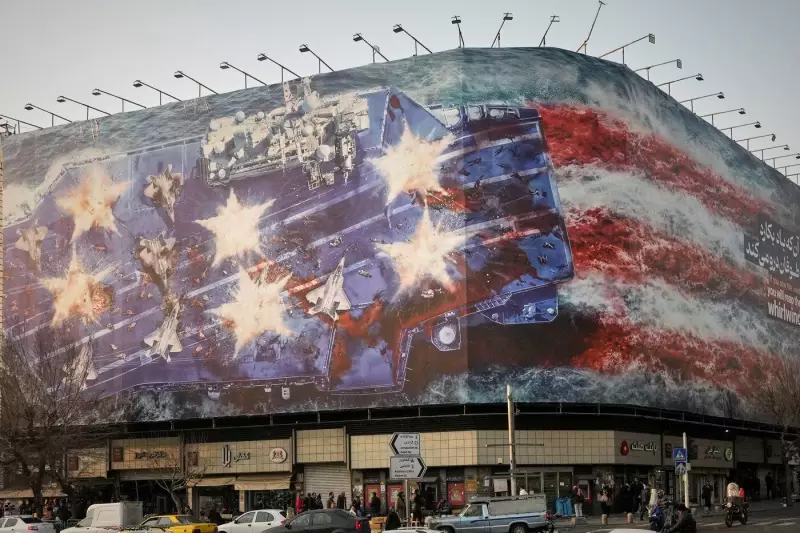
In a bold and highly symbolic move, Iranian authorities have unveiled a large-scale mural in the heart of Tehran, explicitly warning of potential retaliation if the United States conducts a military strike against the nation. The billboard, prominently displayed at Enqelab-e-Eslami Square, also known as Islamic Revolution Square, features a detailed depiction of a severely damaged U.S. aircraft carrier, complete with disabled fighter jets on its deck.
A Message in Two Languages
The artwork carries a bilingual message, written in both Farsi and English, that reads: "If you sow the wind, you'll reap the whirlwind." This proverb, suggesting that aggressive actions will lead to severe consequences, serves as a clear and public declaration of Iran's stance. The imagery and text together form a powerful visual statement aimed at both domestic audiences and the international community, particularly the United States.
Timing and Geopolitical Context
The unveiling occurred on Sunday, January 25, 2026, as captured by photographer Vahid Salemi. This act comes amid persistent tensions between Iran and the United States, which have spanned decades and involved various conflicts over nuclear programs, regional influence, and security issues. The mural appears to be a preemptive psychological and political tool, designed to deter any potential military aggression by illustrating the costs of such an action.

Analysts suggest that this public display is part of a broader strategy by Iran to project strength and resilience. By situating the mural in a major public square, the government ensures maximum visibility, reinforcing nationalistic sentiments and preparing the populace for possible confrontations. The damaged aircraft carrier symbolizes a direct threat to U.S. naval power, a cornerstone of American military strategy in the Middle East.
International Reactions and Implications
While immediate official reactions from U.S. authorities are not detailed in the initial report, such provocations typically escalate diplomatic rhetoric and could influence ongoing negotiations or military posturing. The mural underscores the volatile nature of Iran-U.S. relations, where symbolic gestures often carry significant weight in international diplomacy.
This development is likely to be monitored closely by global security experts, as it reflects Iran's continued use of public art and propaganda as instruments of foreign policy. The message serves as a reminder of the potential for rapid escalation in the region, where historical grievances and contemporary conflicts frequently intersect.