Iran Doubles Down on Strait of Hormuz Restrictions as U.S. Blockade Persists
Iran has reaffirmed its commitment to limiting maritime traffic through the critical Strait of Hormuz, asserting that the measure will remain in effect as long as the United States maintains its blockade of Iranian ports. This stance emerges as mediators, led by Pakistan, race against time to extend a fragile ceasefire scheduled to expire on Wednesday. The conflicting blockades have significantly hindered diplomatic efforts, casting doubt on the possibility of prolonging the two-week truce.
Diplomatic Stalemate and Escalating Tensions
In a televised interview aired late Saturday, Iranian parliamentary Speaker Mohammed Bagher Qalibaf, who also serves as Iran's chief negotiator in talks with the United States, emphasized the nation's firm position. "It is impossible for others to pass through the Strait of Hormuz while we cannot," Qalibaf declared. He criticized the U.S. blockade as a "naive decision made out of ignorance" but reiterated Iran's pursuit of peace despite deep-seated distrust toward Washington. "There will be no retreat in the field of diplomacy," he stated, acknowledging that substantial gaps persist between the two sides.
Initially, Iran had reopened the strait following a 10-day truce between Israel and the Iranian-backed Hezbollah militant group in Lebanon, which took effect on Friday. However, after U.S. President Donald Trump insisted that the blockade of Iran's ports "will remain in full force" until a bilateral deal is reached, Tehran reversed its decision, opting to continue enforcing restrictions in the strategic waterway.

Maritime Incidents and Global Economic Implications
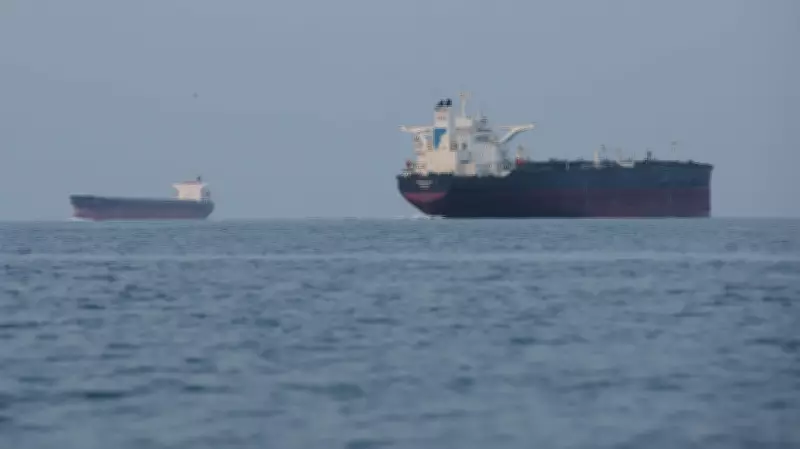
The situation escalated on Saturday when Revolutionary Guard gunboats opened fire on vessels, including a tanker and a container ship, causing damage and forcing two India-flagged merchant ships to retreat. This incident prompted India to summon Iran's ambassador in protest, describing it as a "serious incident." Following these attacks, ships in the Persian Gulf halted their transit attempts, reverting the strait to its pre-ceasefire status quo.
This development poses a severe threat to global energy markets, as approximately one-fifth of the world's oil trade typically passes through the Strait of Hormuz. The renewed restrictions risk exacerbating the ongoing energy crisis and could push the involved parties toward renewed conflict as the war enters its eighth week. Iranian Deputy Foreign Minister Saeed Khatibzadeh warned that the U.S. is "risking the international community, risking the global economy through these, I can say, miscalculations," and endangering the entire ceasefire framework.
Strategic Significance and Human Toll
For Iran, the closure of the strait—imposed after the U.S. and Israel launched the war on February 28 during negotiations over Tehran's nuclear program—represents a potent weapon. It threatens the global economy and aims to inflict political pressure on the Trump administration. Conversely, the U.S. blockade seeks to strain Iran's already fragile economy by cutting off long-term cash flows.
Although the ceasefire has held thus far, the standoff in the strait threatens to reignite a conflict that has already claimed thousands of lives. Casualty figures include at least 3,000 people in Iran, over 2,290 in Lebanon, 23 in Israel, and more than a dozen in Gulf Arab states. Additionally, 15 Israeli soldiers in Lebanon and 13 U.S. service members across the region have been killed.
Mediation Efforts and Future Negotiations
With the ceasefire deadline looming, Iran reported receiving new proposals from the United States, and Pakistani mediators are working to arrange another round of direct negotiations in the coming days. Pakistani authorities have heightened security in Islamabad, with advance U.S. security teams reportedly on the ground, though no formal announcements have been made.

Iran's Supreme National Security Council, acting as the de facto top decision-making body, condemned the U.S. blockade as a violation of the ceasefire. The council stated that Iran would prevent "any conditional and limited reopening" of the strait, insisting on maintaining control over traffic through Iran-designated routes, fee payments, and transit certificates until the war fully concludes.
Pakistani Foreign Minister Ishaq Dar noted that his country is striving to "bridge" differences between the U.S. and Iran, with a second round of talks anticipated early next week. However, Khatibzadeh expressed reluctance, citing the U.S.'s "maximalist position" and dismissing the idea of transferring Iran's stock of 970 pounds of enriched uranium to the United States as "a nonstarter."
President Trump commented on Saturday, suggesting that Iran "got a little cute" but indicating that "very good" conversations were ongoing, with more information expected by day's end. "They can't blackmail us," he added, underscoring the tense and volatile nature of the negotiations.