In a rare public rebuke of its closest ally, the Israeli government has formally objected to a White House announcement regarding the leadership of the next phase in Gaza. The dispute centers on an executive committee, unveiled by the U.S. on Friday, which will oversee the challenging second stage of the ceasefire but includes no Israeli officials.
A Committee Formed Without Consultation
The Israeli government stated on Saturday that the formation of the Gaza executive committee "was not coordinated with Israel and is contrary to its policy." Prime Minister Benjamin Netanyahu has directed the foreign ministry to contact U.S. Secretary of State Marco Rubio regarding the matter. The committee, announced as part of the implementation of a U.S.-drafted ceasefire plan, is intended to carry out the vision of a Trump-proposed "Board of Peace."
Notably, the committee's composition bypasses the Israeli government entirely. The only Israeli representative is billionaire businessman Yakir Gabay. Other prominent members include key figures from the Trump administration: Secretary of State Marco Rubio, Trump envoy Steve Witkoff, son-in-law Jared Kushner, and Deputy National Security Adviser Robert Gabriel. The group also features former British Prime Minister Tony Blair, Apollo Global Management CEO Marc Rowan, and World Bank President Ajay Banga.

Regional Mediators and Internal Backlash
The committee further incorporates representatives from Middle Eastern nations that have acted as ceasefire mediators: a diplomat from Qatar, an intelligence chief from Egypt, and Turkey's foreign minister. A cabinet minister from the United Arab Emirates is also included. Turkey's role is seen as particularly crucial, given its strained ties with Israel but good relations with Hamas, potentially aiding in persuading the group to disarm.
The Israeli objection triggered immediate support from Netanyahu's far-right coalition partners. National Security Minister Itamar Ben-Gvir urged the prime minister to order the military to prepare for a potential return to war. Finance Minister Bezalel Smotrich argued that "the countries that kept Hamas alive cannot be the ones that replace it." Netanyahu's office did not respond to further questions about its objections on Saturday.
The Ceasefire's Second Phase and Broader Context
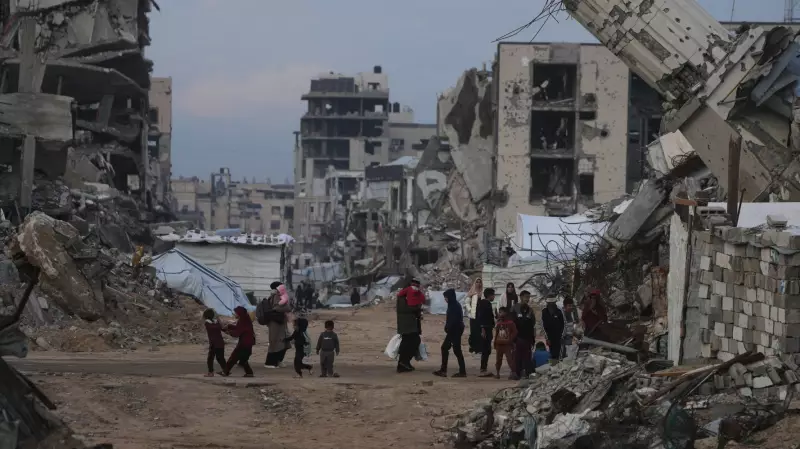
The Trump administration declared on Wednesday that the Gaza ceasefire was moving into its second phase. This stage involves the deployment of a new Palestinian committee to run Gaza's daily affairs under the executive committee's oversight, an international security force, the disarmament of Hamas, and the reconstruction of the devastated territory. Hamas has stated it will dissolve its Gaza government once the new Palestinian committee takes office but has shown no willingness to dismantle its military wing.
The war, which began with the Hamas-led attack on southern Israel on October 7, 2023, has resulted in profound casualties. Israeli officials say the initial attack killed some 1,200 people, mostly civilians, and took over 250 hostage. According to Gaza's Health Ministry, Israel's retaliatory offensive has killed over 71,400 Palestinians. The ministry, part of the Hamas-run government, maintains records generally seen as reliable by UN agencies.
The ceasefire itself took effect on October 10, 2025. Its first phase focused on the return of all remaining hostages in exchange for Palestinian detainees, a surge in humanitarian aid, and a partial Israeli withdrawal from Gaza. The current diplomatic clash over the oversight committee underscores the immense difficulties facing the ceasefire's next, more complex stage and highlights the fragile nature of the U.S.-Israel partnership in navigating the war's aftermath.