While much of the Western media continues to depict Israel as a pariah state—isolated, beleaguered, and morally suspect—the reality on the ground tells a far different story. Israel's military prowess has quietly transformed it into a diplomatic powerhouse, forging alliances through hard power, shared threats, and raw mutual self-interest.
Eastern Mediterranean Partnerships
In the eastern Mediterranean, Israel is shielding Greece and Cyprus from Turkish belligerence while jointly developing offshore natural gas resources with them. These projects, which aim to pipe energy into Western Europe, could one day form the northern anchor of the ambitious India–Middle East–Europe Economic Corridor. This vast network of road, rail, and sea routes is intended to move goods and energy from India, through the Arabian Peninsula and Israel, and onward to Europe—a strategic undertaking that bypasses traditional choke-points and underscores Israel's centrality in global trade.
Gulf Ties and the Abraham Accords
Israel's emergence in the Gulf is equally striking. Iran's recent attacks have hit Gulf states more intensely than Israel itself, yet Israel's ties with the United Arab Emirates have grown so close that Israeli forces have deployed Iron Dome and Iron Beam batteries, along with boots on the ground, to defend Emirati territory. Similar pragmatic partnerships extend across the region. These quiet relationships—built on arms transfers, intelligence sharing, and coordinated operations—created the foundation for U.S. President Donald Trump to formalize the Abraham Accords in 2020. Far from symbolic, they represent a genuine strategic realignment.

Morocco and Spain
That diplomatic clout is now being leveraged in Morocco's long-standing dispute with Spain over the enclaves of Ceuta and Melilla on the North African coast. Morocco, an Abraham Accords member, has deepening economic, military, and intelligence ties with Israel. Spain, meanwhile, has grown aggressively hostile toward Jerusalem. With the United States seeking to penalize Madrid for obstructing American efforts in the Iran conflict, some analysts anticipate that Morocco will enlist Jerusalem's support in pressing its sovereignty claims with Washington.
The Falkland Islands and Argentina
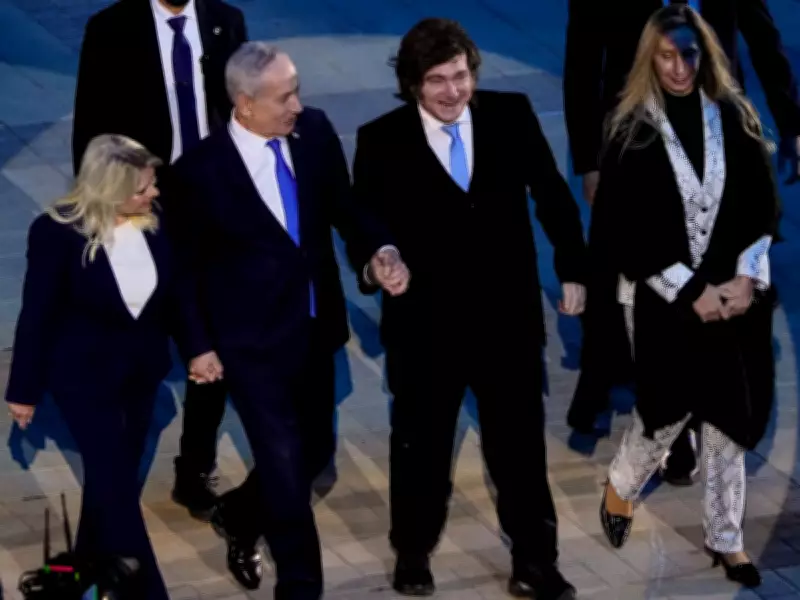
Another colonial possession, the United Kingdom's Falkland Islands, which are claimed by Argentina, may also be in play. During the 1982 Falklands War, Israel quietly backed Argentina against the U.K., which was limiting arms sales to Israel, while the U.S. backed the U.K. Back then, the British prevailed. Today, with close relations among Israel, the U.S., and Argentina under President Javier Milei, and with the U.K. increasingly hostile toward Israel and unwilling to help with U.S. operations against Iran, the alignment has shifted. The Argentine case would be strengthened by the Isaac Accords, which is intended as a Judeo-Christian version of the Abraham Accords for Latin America. Launched last month in Jerusalem by Israeli Prime Minister Benjamin Netanyahu and President Milei, it is ultimately hoped that Paraguay, Ecuador, Uruguay, Panama, Costa Rica, Guatemala, Honduras, and El Salvador will join, forming a pro-democracy, pro-Israel regional bloc that the U.S. would likely back.
Global Military Partnerships
Further afield, Israel's military is a cornerstone of defense for strategic nations. India, Israel's largest military customer, relies on Israeli drones, missiles, and joint development for its security. Azerbaijan depends on Israeli arms and intelligence. Singapore's formidable armed forces were literally built with Israeli training and doctrine—a partnership that remains rock-solid. Ties with Taiwan are more discreet but no less vital, providing the island with critical asymmetric capabilities amid Chinese pressure.
In sum, while Western elites wring their hands over Israel's supposed isolation, the Jewish state is quietly forging alliances across the globe through hard power, shared threats, and raw mutual self-interest. This diplomatic coup de tête is reshaping international relations in ways that many are only beginning to understand.