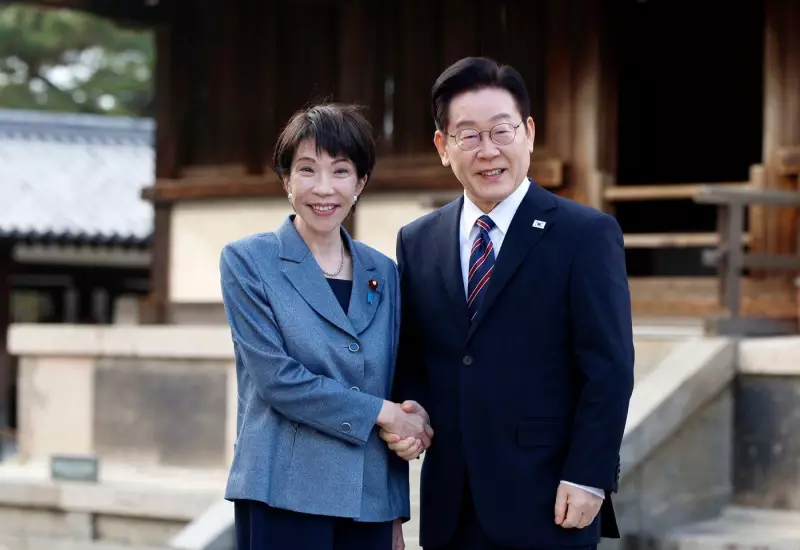
The leaders of Japan and South Korea have taken a significant step towards strengthening their nations' partnership. Japanese Prime Minister Sanae Takaichi and South Korean President Lee Jae Myung convened for a high-profile meeting, culminating in a mutual agreement to enhance cooperation across various sectors.
A Symbolic Venue for Diplomatic Talks
The pivotal discussions occurred on Wednesday, January 14, 2026, at a location rich with historical significance. The leaders met at the Horyuji Temple in Ikaruga, Nara prefecture, in western Japan. This UNESCO World Heritage site, one of the world's oldest wooden structures, provided a profound backdrop for talks aimed at building a more stable future.
Official photographs captured the two leaders during their visit to the temple's Western Precinct, known as Saiin Garan. The imagery of Prime Minister Takaichi and President Lee Jae Myung together underscored the formal and cordial nature of this diplomatic engagement.

Commitment to a Strengthened Partnership
While the specific areas of enhanced collaboration were not detailed in the initial report, such agreements typically encompass economic ties, security coordination, and cultural exchanges. The commitment to "improve co-operation" signals a deliberate effort by both administrations to move beyond historical tensions and foster a more pragmatic and forward-looking relationship.
This meeting is particularly noteworthy given the complex historical and political dynamics that have often characterized relations between Seoul and Tokyo. The willingness to engage at the highest level indicates a shared recognition of the importance of stability and partnership in Northeast Asia.
Regional and Global Implications
The accord between Japan and South Korea carries weight far beyond their bilateral connection. As two of the region's major economies and key allies of the United States, their ability to work together more seamlessly has implications for regional security, supply chain resilience, and diplomatic initiatives.
Improved cooperation can contribute to a more unified approach on issues ranging from economic development to addressing challenges posed by other actors in the region. The meeting sets a positive tone for diplomatic efforts in the early part of 2026.
Observers will be watching closely for subsequent announcements that outline the concrete steps and joint projects that will flow from this high-level agreement. The success of this renewed commitment will be measured by its translation into tangible outcomes that benefit both nations and contribute to regional peace and prosperity.