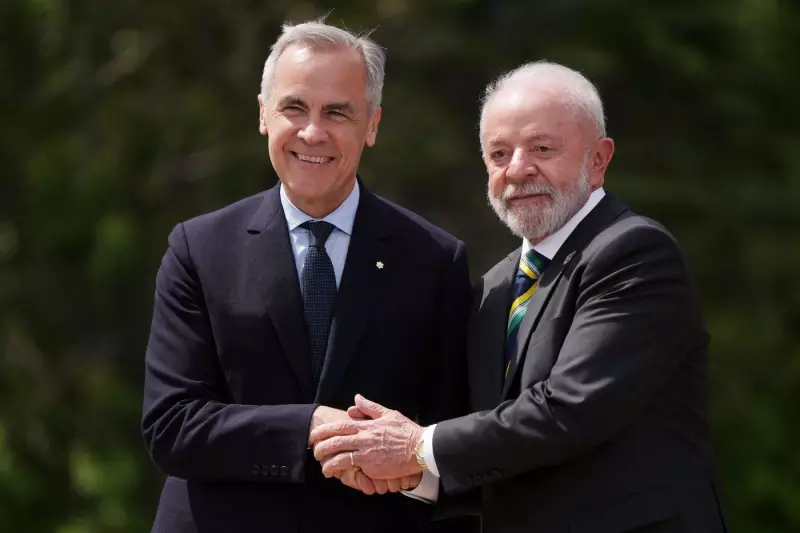
Brazilian President Luiz Inacio Lula da Silva has extended an invitation to Canadian Prime Minister Mark Carney for an official visit to Brazil in April. The invitation comes amidst Lula's strong condemnation of recent United States actions in Venezuela, marking a significant moment in hemispheric diplomacy.
A Meeting at the G7 and an Invitation Extended
The groundwork for this diplomatic move was laid during a previous meeting between the two leaders. Prime Minister Mark Carney welcomed President Lula to the G7 Summit in Kananaskis, Alberta, on Tuesday, June 17, 2025. That high-level encounter appears to have fostered a continued dialogue, now culminating in the formal invitation for Carney to travel to South America.
The details of the proposed April visit are still being finalized, but it signals a mutual interest in strengthening bilateral ties between Canada and Brazil. The two nations share interests in areas such as trade, environmental protection, and democratic governance.

Lula's Sharp Rebuke of U.S. Venezuela Strategy
In related comments, President Lula did not mince words when addressing the situation in Venezuela. He publicly condemned the recent actions and policies undertaken by the United States regarding the politically and economically troubled nation.
While the exact nature of the U.S. actions referenced was not detailed in the initial report, Lula's criticism aligns with his longstanding advocacy for regional solutions to South American crises and his skepticism of external intervention. This stance often positions him at odds with more hawkish approaches from Washington.
Implications for Canada's Foreign Policy
Prime Minister Carney's potential acceptance of the invitation and his engagement with Lula will be closely watched. It presents an opportunity for Canada to navigate complex South American politics, where relations with the U.S., Brazil, and Venezuela are deeply intertwined.
Canada has traditionally sought a balanced approach in the region, promoting democracy and human rights while engaging in constructive dialogue. The April visit, if it proceeds, could serve as a platform for Canada to articulate its own perspective on Venezuela and regional stability, distinct from both Washington's and Brasilia's positions.
The development underscores the dynamic nature of international alliances and the role Canada seeks to play as a partner to major emerging economies like Brazil, even amid differing viewpoints on global issues.