Marco Rubio Delivers Stark Warning at Munich Security Conference
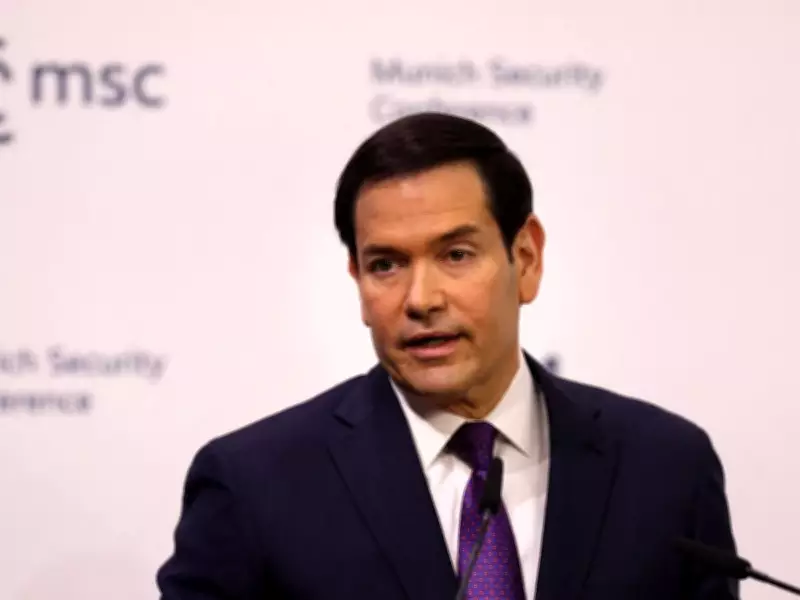
U.S. Secretary of State Marco Rubio delivered a forceful address at the 62nd Munich Security Conference on February 14, 2026, declaring that America has no interest in a "polite managed decline" of Western civilization. Speaking before an international audience in Munich, Germany, Rubio called for a revitalization of historic alliances that once saved the world from tyranny.
Historical Context of Western Survival
Rubio began his speech by reflecting on the conference's origins in 1963, when Europe was divided against itself and the Berlin Wall had recently been erected. He reminded attendees that just months before the first Munich Security Conference, the Cuban Missile Crisis had brought the world to the brink of nuclear destruction.
"When this conference began in 1963, it was on a continent that was divided against itself," Rubio stated. "The line between communism and freedom ran through the heart of Germany. Even as World War II still burned fresh in memory, we found ourselves staring down the barrel of a new global catastrophe."

The Secretary of State emphasized that during that perilous time, victory was far from certain, but Western nations were unified by common purpose. "We were unified not just by what we were fighting against; we were unified by what we were fighting for," he declared.
The Dangerous Delusion of Post-Cold War Triumph
Rubio argued that the euphoria following the collapse of the Soviet Union led to dangerous assumptions about global politics. He criticized what he called the "foolish idea" that the world had reached "the end of history" and that liberal democracy would inevitably spread worldwide.
"This was a foolish idea that ignored both human nature and it ignored the lessons of over 5,000 years of recorded human history," Rubio asserted.
According to Rubio, Western nations made several critical errors in the post-Cold War era:
- Outsourcing sovereignty to international institutions
- Investing in massive welfare states at the expense of defense capabilities
- Implementing energy policies that impoverished populations while competitors exploited fossil fuels
- Opening borders to unprecedented mass migration that threatened social cohesion
Current Challenges and the Path Forward
Rubio warned that while Western nations reduced their military capabilities, other countries engaged in the most rapid military buildup in human history. He noted that these competitors have not hesitated to use hard power to pursue their interests.
The Secretary of State also criticized climate policies that he claimed were impoverishing Western populations while competitors used energy resources as leverage. "To appease a climate cult, we have imposed energy policies on ourselves that are impoverishing our people," Rubio stated.
Regarding immigration, Rubio argued that the pursuit of a borderless world had created unprecedented challenges. "We opened our doors to an unprecedented wave of mass migration that threatens the cohesion of our societies, the continuity of our culture, and the future of our people," he said.
A Call for Rebuilding and Renewal
Rubio concluded with a call for collective action and renewal. "We made these mistakes together, and now, together, we owe it to our people to face those facts and to move forward, to rebuild," he declared.
The Secretary of State's speech emphasized that America remains committed to its historic alliances but expects partners to join in rejecting managed decline. His address represented a clear statement of American foreign policy priorities under the current administration, emphasizing national sovereignty, military preparedness, and cultural continuity as essential components of Western civilization's future.