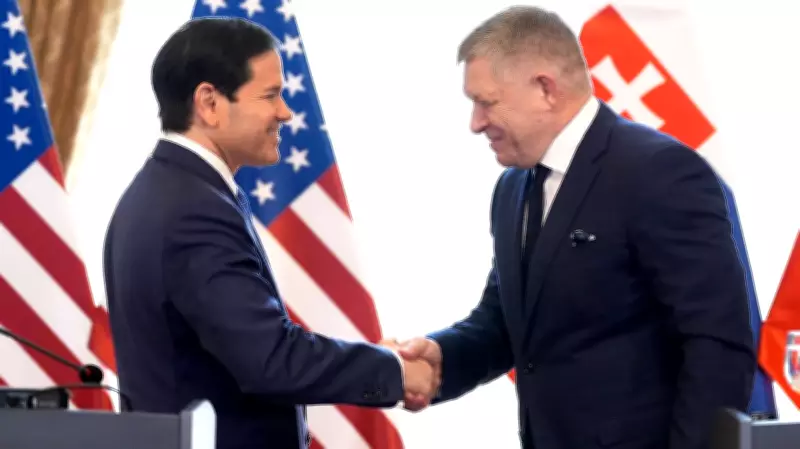
U.S. Secretary of State Marco Rubio arrived in Budapest, Hungary, on Monday for high-level discussions with Prime Minister Viktor Orbán and his administration. The centerpiece of the visit was the signing of a civilian-nuclear cooperation agreement, a pact championed by former U.S. President Donald Trump, which aims to bolster energy collaboration between the two nations.
Political Context and Election Dynamics
This diplomatic engagement occurs just two months before Hungary's pivotal national elections on April 12, where Orbán and his Fidesz party confront their most formidable challenge since retaking power in 2010. Trump has been a vocal supporter of Orbán's reelection campaign, recently endorsing him on Truth Social as a "truly strong and powerful Leader" and "a true friend, fighter, and WINNER." Many in Trump's MAGA movement and broader conservative circles view Hungary as a model of successful conservative nationalism, despite criticisms over democratic backsliding and economic struggles within the European Union.
Rubio's Central European Tour
Rubio's stop in Hungary follows a visit to Slovakia on Sunday, where he met with Prime Minister Robert Fico. Both Slovakia and Hungary, led by Euroskeptic populists who oppose support for Ukraine and align with Trump's policies, represent friendly territory for Rubio as he seeks to secure energy agreements. This tour began after Rubio's participation in the Munich Security Conference in Germany, highlighting a strategic focus on Central European alliances.

Orbán's Policies and International Relations
Orbán has maintained warm relations with the Kremlin despite Russia's war in Ukraine, earning a reputation as Russian President Vladimir Putin's most reliable advocate in the EU. His government has continued purchasing Russian energy, receiving an exemption from U.S. sanctions after a White House meeting with Trump in November. Domestically, Orbán's firm stance on issues like immigration—exemplified by a border fence erected in 2015—and hostility to LGBTQ+ rights, including bans on Budapest Pride and same-sex adoption, resonate with many U.S. conservatives.
Election Strategy and CPAC Influence
Hoping to capitalize on his political affinity with Trump, Orbán's government has actively courted a visit from the former president before the April elections, believing such an endorsement could boost his poll numbers. Budapest has hosted multiple Conservative Political Action Conference (CPAC) events, with another rescheduled for March just ahead of the vote, underscoring the strategic alignment between Hungarian and American conservative movements.
As Rubio departs, the nuclear deal symbolizes deepening U.S.-Hungarian ties amid a charged electoral atmosphere, with Orbán banking on international support to secure another term in office.