Trump Lashes Out at UK and Spain Over Iran Stance, Threatens Trade Cutoff
Former US President Donald Trump has issued sharp criticisms against the United Kingdom and Spain, accusing them of failing to fully support the recent US-Israeli military assault on Iran. In a fiery statement delivered alongside German Chancellor Friedrich Merz at the White House on March 3, 2026, Trump threatened to cut off all trade with Spain and lambasted British Prime Minister Keir Starmer for what he deemed uncooperative behavior.
Trade Threats Against Spain
Trump expressed intense frustration with Spain, specifically targeting the left-wing government of Prime Minister Pedro Sanchez. "Spain has been terrible," Trump declared, adding that he has directed Treasury Secretary Scott Bessent to "cut off all dealings with Spain." He further emphasized, "So we're going to cut off all trade with Spain. We don't want anything to do with Spain."
This threat comes after Spain refused to allow the United States to use its bases, such as Naval Base Rota and Moron Air Base, for offensive actions against Iran, limiting their use to activities consistent with the United Nations Charter. Spanish Foreign Minister Jose Manuel Albares reiterated this position, underscoring the government's commitment to international law.

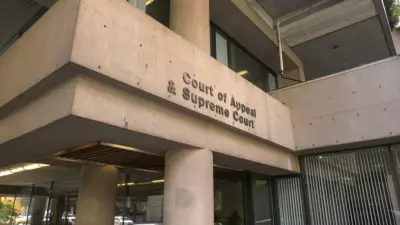
However, the feasibility of Trump's trade threat remains uncertain. The Supreme Court previously struck down his use of emergency powers to impose arbitrary tariffs on other countries, raising questions about his authority to unilaterally end trade relations.
Criticism of the United Kingdom
Trump also directed his ire at the United Kingdom, a long-standing ally of the United States. He disparaged Prime Minister Keir Starmer, stating, "This is not Winston Churchill that we're dealing with," and added, "I'm not happy with the UK." Trump specifically criticized the UK's handling of the Diego Garcia base in the Chagos Islands, which the UK has agreed to return to Mauritius under a lease arrangement. "I will say the UK has been very, very uncooperative with that stupid island that they have," Trump remarked.
The UK decided not to join the assault on Iran, which Trump launched with Israel on Saturday. Instead, Starmer authorized the use of two UK air bases—one in Gloucestershire, western England, and the other at the joint UK-US Diego Garcia base in the Indian Ocean—for "specific and limited defensive purposes." Notably, the UK did not permit the use of its bases in Cyprus, one of which was struck by an Iranian-made drone.
Trump expressed annoyance at the logistical delays, saying, "It's taken three, four days for us to work out where we can land. There would have been much more convenient landing there, as opposed to flying many extra hours," in an apparent reference to Diego Garcia.
Broader Diplomatic and Military Context
The tensions arise amid ongoing conflict in the Middle East. Iran's strikes on Gulf neighbors since February 28, following the US-Israeli attack, have disrupted regional stability, forcing the United Arab Emirates to shut its airspace and catching travelers off guard. Images from the aftermath show smoke plumes billowing in industrial zones and wreckage from projectile strikes in Tel Aviv.
Trump also pointed to Sanchez's refusal to join NATO allies in pledging to boost defense spending to five percent of GDP, a level he advocates, arguing that the United States bears too much of the burden. This adds another layer to the diplomatic rift, highlighting disagreements over NATO commitments and military cooperation.
Key Figures and Reactions
The meeting at the White House included US Vice President JD Vance, Secretary of State Marco Rubio, and Secretary of Defense Pete Hegseth, who observed as Trump and Merz discussed the situation. Meanwhile, international responses have been mixed, with some allies expressing concern over the escalating rhetoric and potential economic repercussions.

As the situation develops, the global community watches closely to see how these threats and criticisms will impact US relations with key European allies and the ongoing conflict with Iran. The episode underscores the volatile nature of international diplomacy under Trump's leadership and the challenges in maintaining cohesive alliances during military engagements.