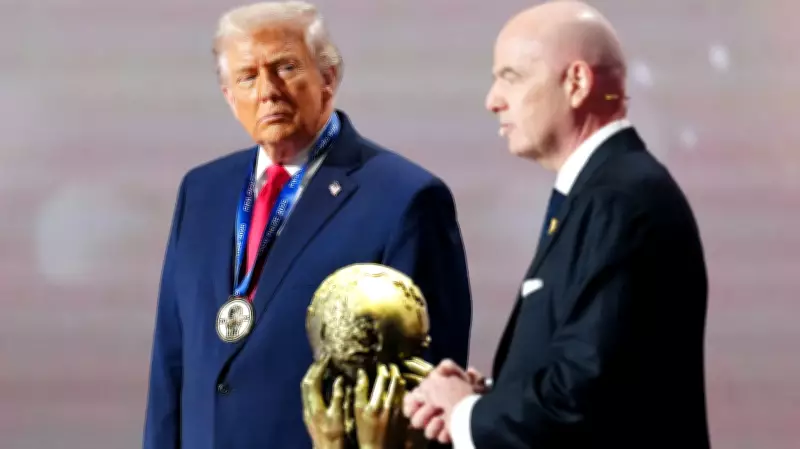
In a statement to Politico on Tuesday, former President Donald Trump declared his lack of concern over whether Iran participates in the upcoming 2026 FIFA World Cup, which will be jointly hosted by the United States, Mexico, and Canada. "I really don't care. I think Iran is a very badly defeated country. They're running on fumes," Trump remarked, highlighting his dismissive stance toward the nation's involvement in the prestigious soccer tournament.
Iran's Absence from FIFA Summit Sparks Uncertainty
Iran was notably the only country missing from a FIFA planning summit for World Cup participants held this week in Atlanta. This absence has intensified speculation about whether Iran's national soccer team will be able to compete on U.S. soil this summer, especially as regional conflicts continue to escalate. FIFA, soccer's global governing body, did not immediately respond to a Reuters request for comment on the matter, leaving many questions unanswered.
Travel Ban Complications and Security Concerns
Iran is one of two nations subject to Trump's most restrictive travel ban, enacted by executive order in June of last year, according to Politico. While the ban includes exemptions for World Cup teams and their support staff, decisions on visa exceptions for other individuals—such as government officials or executives from team-sponsoring companies—are handled by the State Department on a case-by-case basis. This adds a layer of complexity to Iran's potential participation.

Andrew Giuliani, director of the White House FIFA World Cup Task Force, emphasized in a January interview in Colorado Springs that security concerns would heavily influence the administration's approach to granting travel ban exceptions. In a subsequent statement to Politico on Tuesday, Giuliani added, "President Trump's decisive action to eliminate the Ayatollah, the most notorious state sponsor of terrorism in my lifetime, removes a major destabilizing threat and will help protect people around the world, including Americans and the millions planning to attend the 2026 World Cup in the United States."
Iran's World Cup Prospects and Historical Context
Iran secured its place in a fourth consecutive World Cup by topping Group A in the third round of Asian qualifying last year. The team has been placed in Group G alongside Belgium, Egypt, and New Zealand. Their matches are scheduled to take place in the United States, with two games in Los Angeles and one in Seattle. Interestingly, if both the U.S. and Iran finish second in their respective groups, the two countries could face off in an elimination match on July 3 in Dallas.
Mehdi Taj, president of the Football Federation of the Islamic Republic of Iran, expressed concerns about the World Cup, stating that the severity of attacks by U.S. and Israeli forces does not bode well for the tournament, set to run from June 11 to July 19. In the modern era, no team that has qualified has failed to participate in the World Cup finals. If Iran were to withdraw, it would almost certainly be replaced, marking a significant disruption to the event.
The situation underscores the intersection of sports, politics, and international relations, as logistical and diplomatic hurdles threaten to impact one of the world's most-watched sporting events. With tensions high and security at the forefront, the coming months will be critical in determining Iran's role in the 2026 World Cup.