Trump Unveils Global Board of Peace at Davos Summit
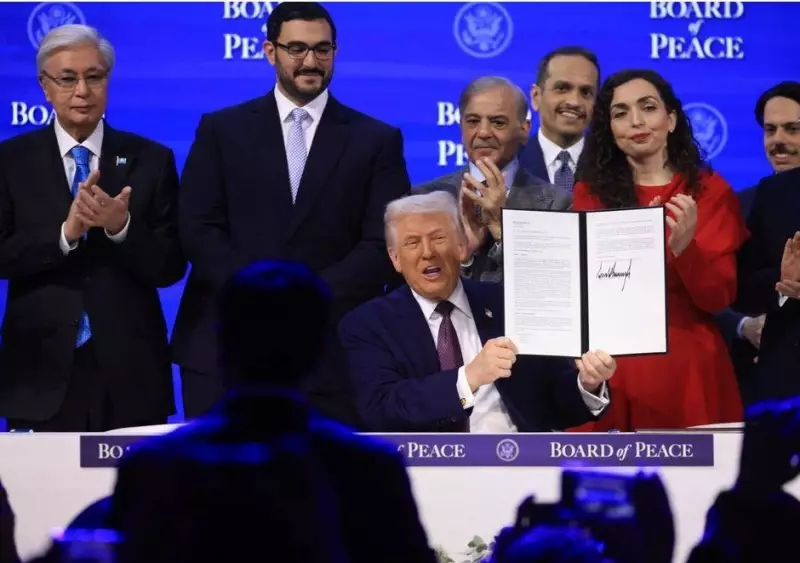
President Donald Trump has officially launched his ambitious Board of Peace initiative, moving forward with a project he claims will enhance global geopolitical stability. The announcement was made during a celebratory event on the sidelines of the World Economic Forum in Davos, Switzerland, on Thursday, January 22, 2026.
Allies Express Reservations as Trump Pushes Ahead
The creation of this new international organization has sparked significant rancour and reservations from key allies, particularly major G7 nations who have chosen to remain on the sidelines. Despite this opposition, Trump proceeded with the launch, seeking to allay concerns by emphasizing collaboration with existing global institutions.
"Once this board is completely formed, we can do pretty much whatever in conjunction with the United Nations," Trump declared during the Davos event. "You know, I've always said the United Nations has got tremendous potential."

Founding Members and International Support
Trump was joined on stage by several founding members who share his populist worldview, including Argentine President Javier Milei and Hungarian Prime Minister Viktor Orban. The board also attracted representatives from a diverse array of nations:
- Bahrain
- Morocco
- Azerbaijan
- Bulgaria
- Pakistan
- Saudi Arabia
- Turkey
- United Arab Emirates
- Uzbekistan
During the ceremony, leaders gathered at a table to sign official documents that White House Press Secretary Karoline Leavitt described as putting the board's charter "in full force" and establishing it as an "official international organization."
Connection to Gaza Peace Plan and Broader Agenda
The Board of Peace represents a significant component of Trump's push to advance the second phase of his Gaza peace plan, even as Hamas continues to refuse relinquishing its weapons. During the Davos event, Trump portrayed the initial phase of the peace deal as successful while emphasizing the United States' commitment to rebuilding Gaza.
However, the president also issued a cautionary note, stating that Hamas should return the remains of the last deceased hostage from its 2023 assault on Israel before further progress could be made.
Economic and Defense Priorities Highlighted
Trump opened the event by touting the strength of the U.S. economy and making bold claims about his administration's foreign policy achievements. He asserted that he had stopped at least eight wars, though this figure includes conflicts that hadn't escalated into open hostilities and situations where long-standing animosities remain unresolved.
The president also reiterated his desire for $1.5 trillion in U.S. defense spending and praised NATO allies for increasing their spending targets. However, he couldn't resist taking a jab at Spain, which has yet to commit to the proposed spending figure, remarking, "They want a free ride, I guess."
International Reactions and Future Implications
The launch of the Board of Peace represents a significant development in international diplomacy, particularly given the absence of support from traditional Western allies. The initiative appears designed to create an alternative framework for global conflict resolution that operates alongside, but potentially independent of, established institutions like the United Nations.
As the board begins its work, international observers will be watching closely to see how it navigates complex geopolitical challenges and whether it can attract broader participation beyond its initial founding members. The organization's effectiveness in promoting actual peace and stability remains to be demonstrated, particularly in volatile regions like the Middle East.