Trump Unveils Ambitious 'Board of Peace' at Davos Forum, Targeting Gaza Ceasefire Oversight
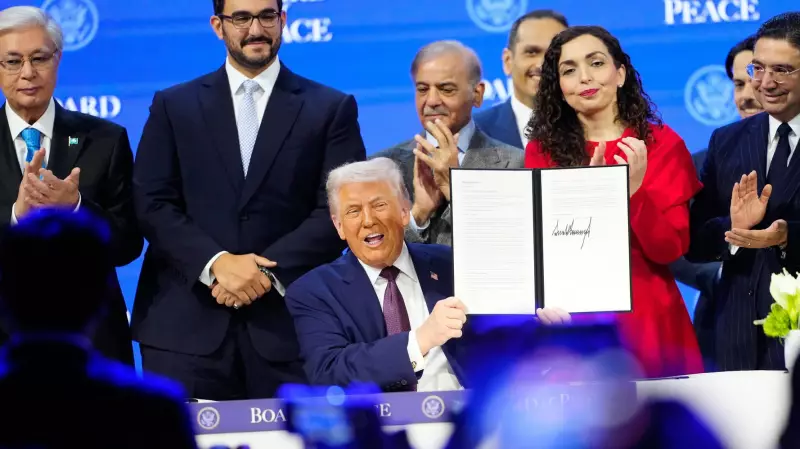
In a significant move at the World Economic Forum in Davos, Switzerland, President Donald Trump officially launched his Board of Peace on Thursday. The initiative is designed to spearhead efforts in maintaining the ceasefire in Israel's ongoing conflict with Hamas, with Trump asserting that "everyone wants to be a part" of this body. However, the unveiling was met with notable absences, as many traditional U.S. allies chose not to participate, casting doubt on the board's global appeal.
A Vision for Gaza's Future and Beyond
During his speech, Trump positioned the board as a global endeavor, stating, "This isn't the United States, this is for the world." He expressed optimism that success in Gaza could pave the way for expanding the board's scope to other international conflicts. The event also featured Ali Shaath, head of a new technocratic government in Gaza, who announced that the Rafah border crossing would open in both directions next week. This development follows Israel's earlier commitment in December, which had yet to materialize.
Membership Challenges and Skeptical Allies
Originally conceived as a small group of world leaders overseeing the ceasefire, the Board of Peace has evolved into a more ambitious project. Skepticism regarding its membership and mandate has led several key countries to decline participation. Trump claimed that 59 countries had signed on, but only 19, plus the U.S., were represented by heads of state or top officials at the ceremony. Attendees included nations such as Azerbaijan, Paraguay, and Hungary, whom Trump praised as "the most powerful people in the world."

Despite Trump's previous suggestions that the board could replace United Nations functions, he adopted a more conciliatory tone in Davos, indicating cooperation with the UN while criticizing its perceived inadequacies in global conflict resolution. Secretary of State Marco Rubio noted that some countries are awaiting parliamentary approval to join, and others have expressed interest without formal invitations.
International Reactions and Concerns
The board's formation has sparked mixed reactions internationally. Russian President Vladimir Putin stated that Russia is consulting with strategic partners before committing, as he prepares to host Palestinian President Mahmoud Abbas in Moscow. Meanwhile, British Foreign Secretary Yvette Cooper explained the UK's refusal to join, citing broader legal issues and concerns over Putin's involvement, given Russia's actions in Ukraine.
Other nations, including France, Norway, Sweden, Canada, Ukraine, China, and the European Union, have also not committed. French officials, while supporting the Gaza peace plan, worry the board might undermine the UN's role. Trump's recent retreat from threats to impose tariffs over Greenland may ease some reluctance, but significant hurdles remain.
Origins and Ongoing Challenges in Gaza
The Board of Peace concept emerged from Trump's 20-point Gaza ceasefire plan, which received endorsement from the UN Security Council. Israeli Prime Minister Benjamin Netanyahu has agreed to join, despite earlier criticism of the board's Gaza oversight committee. However, Gaza's humanitarian crisis persists, with over 2 million Palestinians suffering from the aftermath of more than two years of war. Violence, though reduced since the October ceasefire, continues, and disarming Hamas remains a critical, unresolved issue.
Trump reiterated warnings that Hamas must disarm or face severe consequences, while expressing confidence that the war is "really coming to an end," albeit with minor ongoing conflicts.
Broader Geopolitical Context
Trump's peace push occurs against a backdrop of recent tensions with Iran, where he threatened military action over a violent crackdown on protests. Although he has signaled a pause in strikes after assurances regarding protesters, Trump argued that his tough stance on Iran, including past attacks on nuclear facilities, was crucial to securing the Israel-Hamas ceasefire deal.

Additionally, Trump met with Ukrainian President Volodymyr Zelenskyy in Davos, expressing frustration over the stalled peace talks with Russia and urging both sides to reach an agreement, stating, "if they don't, they're stupid — that goes for both of them."