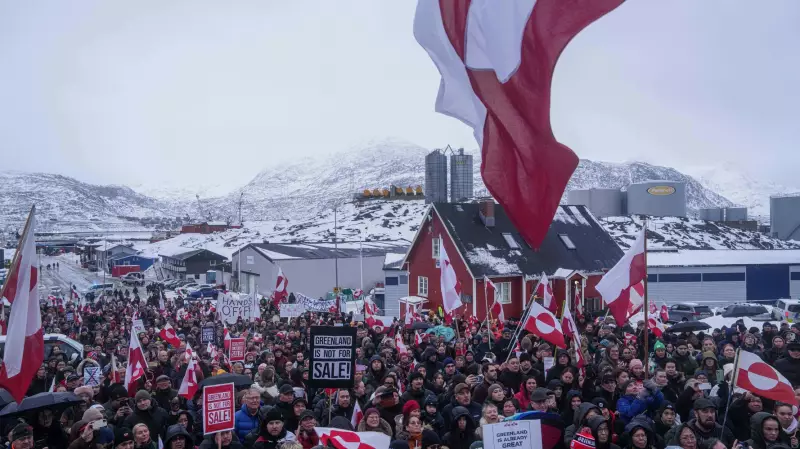
European Allies Confront Trump's Aggressive Tactics as Greenland Crisis Escalates
In a remarkable display of diplomatic frustration, European politicians and officials are openly criticizing President Donald Trump's aggressive foreign policy approach, particularly his recent threats against NATO allies and obsession with acquiring Greenland. The escalating tensions come as Trump prepares to address the World Economic Forum in Davos, Switzerland, this Wednesday, where traditional transatlantic relationships appear to be undergoing significant strain.
Unprecedented Diplomatic Language Emerges
British Parliament member Ed Davey delivered scathing remarks in the House of Commons on Tuesday, stating "President Trump is acting like an international gangster" for threatening allied sovereignty and NATO's future while demanding Greenland through tariff threats. The criticism grew even more direct from Danish European Parliament member Anders Vistisen, who began his Brussels address last week with blunt language rarely heard in diplomatic circles.
Even officials from major multinational organizations expressed their concerns. Nadia Calvino, president of the European Investment Bank, emphasized a pragmatic but firm approach, stating "We will be pragmatic when we can be, firm when we must" regarding dealings with the Trump administration.

The Greenland Controversy Reaches Boiling Point
The latest diplomatic flashpoint emerged when Trump explicitly linked his desire to seize Greenland to the Norwegian Nobel Committee's decision not to award him the peace prize last year. In a letter to Norway's prime minister, Trump repeated his frequent claim about stopping eight wars while declaring "The World is not secure unless we have Complete and Total Control of Greenland."
This extraordinary correspondence was distributed by the U.S. State Department to nations participating in joint military exercises in Greenland, prompting eight European allies – Denmark, Finland, France, Germany, the Netherlands, Norway, Sweden, and the United Kingdom – to issue a unified response condemning tariff threats as undermining transatlantic relations and risking "a dangerous downward spiral."
NATO's Delicate Balancing Act
The crisis reveals deep divisions within NATO about how to handle Trump's unpredictable leadership. While the United States maintains the alliance's largest military and has historically coordinated equipment and training, some European nations have grown increasingly uncomfortable with the flattering approach adopted by NATO Secretary General Mark Rutte.
Rutte's strategy of addressing Trump as "Dear Donald" and praising his leadership has drawn criticism from European diplomats who believe this approach was misguided from the beginning. Despite Trump's overt threats against Greenland, Rutte continues this tactic, recently praising Trump's accomplishments in Syria while expressing commitment to "finding a way forward on Greenland."
Davos Summit Overshadowed by Geopolitical Tensions
The annual World Economic Forum gathering in Davos, typically focused on banking and investment issues, has been dramatically overshadowed by Trump's Greenland obsession and the resulting diplomatic crisis. French President Emmanuel Macron addressed the assembly with thinly veiled criticism, joking about Trump before warning against replacing international law with "a might-makes-right imperialism."
Canadian Prime Minister Mark Carney, whose party benefited politically from Trump's comments about making Canada the 51st state, delivered direct criticism in Davos, stating "We are in the midst of a rupture, not a transition" as great powers weaponize economic integration and use tariffs as leverage.
Uncertain Future for Transatlantic Relations
The situation remains highly volatile as Trump continues to express longstanding dissatisfaction with NATO, falsely claiming the alliance has cheated the United States. Former national security advisers have indicated Trump intends to withdraw from NATO if reelected, while his current administration has stopped sending arms to Ukraine and now forces NATO allies to purchase American weapons for Ukrainian support.

During a White House press conference on Tuesday, Trump claimed the Greenland dispute would be resolved amicably while refusing to rule out military force. When pressed about how far he would go to acquire the island, he ominously responded "You'll find out," leaving European allies uncertain about what comes next in this unprecedented diplomatic confrontation.