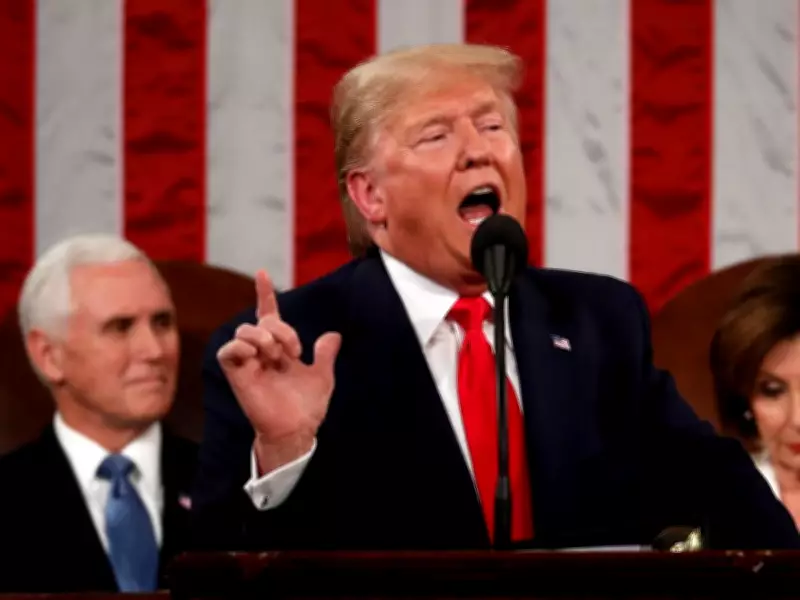
When Donald Trump delivers his upcoming State of the Union address, Canadians should adopt the same analytical approach that Americans have used since his 2016 campaign: take him seriously, but not literally. The focus should be on the underlying sentiments and strategic intentions behind his words, particularly as they relate to the increasingly tense relationship between the United States and Canada.
Decoding Trade Complexities and Tariff Implications
Recent developments in U.S.-Canadian trade have created a landscape of confusion that even skilled communicators like Barack Obama or Bill Clinton would struggle to clarify. The U.S. Supreme Court has overturned some of President Trump's expansive global tariffs, while the House of Representatives has formally opposed his tariffs targeting Canada. Although Trump recently announced a new 15 percent tariff on global imports, goods qualifying under the U.S.-Mexico-Canada Agreement appear to be exempted.
This creates a critical question for Canadian observers: does Trump intend to exclude Canada from a renewed North American trade agreement, which requires renegotiation by July? The answer may lie in how he addresses economic, geopolitical, and personal issues that serve as indicators for his treatment of longstanding partners.

Listening for Signals in Trump's Rhetoric
When Trump expresses grievances against allies or boasts about territorial expansion and resource acquisition, these are signals that traditional friends may be treated as treacherous "frenemies." With midterm elections approaching and his popularity declining, expect Trump to emphasize confrontation with Iran, highlight ambiguous economic statistics, defend tariffs as legitimate and successful, and appeal to his "national conservative" base on emotionally charged issues ranging from immigration to cultural debates.
Canadians should pay particular attention when Trump turns to themes that have defined his political career across three campaigns and two administrations. Historically, American tariffs protected emerging industries or targeted nations engaging in unfair trade practices or human rights violations. Trump's approach has been different—targeting countries for trade surpluses or personal offenses.
Interpreting America's Self-Perception as Victim
In April 2025, when announcing the most sweeping tariffs in U.S. history, Trump declared, "For decades, our country has been looted, pillaged, raped and plundered by nations near and far, both friend and foe alike." The State of the Union may feature similar rhetoric presenting America as a victim of exploitation by allies including Canada and Western European nations.
This victim narrative raises crucial questions: Will Trump's arguments justify sanctioning Canada, historically the United States' leading trade partner? How will this affect the delicate balance of North American economic cooperation?
Strategic Implications for Canadian Policy Makers
The complexity extends beyond trade to encompass broader geopolitical considerations. Trump's approach to international relationships—characterized by transactional thinking and personal grievance—means that traditional diplomatic norms may not apply. Canadian analysts must consider:
- Trade War Escalation: Whether Trump's "trade war against the world" rhetoric includes specific threats to Canadian interests
- Alliance Dynamics: How Trump characterizes relationships with traditional allies during the address
- Resource Competition: References to natural resource acquisition that might impact Canadian sovereignty
- Political Timing: How election-year politics influence Trump's positioning on international issues
Ultimately, the State of the Union address represents more than a presidential speech—it's a window into the administration's priorities, grievances, and strategic direction. For Canadians, understanding the subtext and emotional undercurrents may prove more valuable than analyzing the literal policy pronouncements. The future of North American cooperation may depend on reading between the lines of Trump's carefully crafted public performance.