Historic UN Vote Paves Way for Gaza Stabilization
The United Nations Security Council made a decisive move on Monday, approving a comprehensive U.S.-sponsored plan for Gaza that authorizes an international stabilization force to provide security in the war-torn territory. The resolution passed with overwhelming support, receiving 13 votes in favor while Russia and China chose to abstain.
The vote represents a crucial development in the fragile ceasefire efforts and outlines a potential framework for Gaza's future following two years of devastating conflict between Israel and Hamas. Many Arab and Muslim nations had previously indicated that Security Council authorization would be essential before they would consider contributing troops to any international force.
Key Components of the US Resolution
The approved resolution endorses President Donald Trump's 20-point ceasefire plan, which establishes a transitional authority called the Board of Peace that Trump would lead. This board, yet to be fully established, would oversee the stabilization process alongside an international force granted broad authority to manage borders, provide security, and oversee demilitarization of the territory.

Authorization for both the board and international force is set to expire at the end of 2027, creating a defined timeline for the stabilization efforts. The resolution empowers the stabilization force to use "all necessary measures" to carry out its mandate, which includes the explicit task of ensuring "the process of demilitarizing the Gaza Strip" and "the permanent decommissioning of weapons from non-state armed groups."
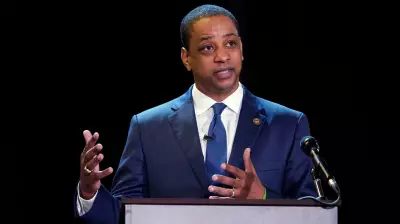
U.S. Ambassador Mike Waltz described the resolution as "historic and constructive," emphasizing that it "starts a new course in the Middle East." He told the Security Council that the measure represents "another significant step towards a stable Gaza that will be able to prosper and an environment that will allow Israel to live in security," while cautioning that the resolution "is just the beginning."
Path to Palestinian Statehood and Regional Reactions
During nearly two weeks of intense negotiations, Arab nations and Palestinian representatives successfully pushed the United States to strengthen language concerning Palestinian self-determination. The final version states that after advances in Gaza's reconstruction and reforms of the Palestinian Authority, "the conditions may finally be in place for a credible pathway to Palestinian self-determination and statehood."
However, the proposal stops short of providing any specific timeline or guarantee for an independent Palestinian state. The resolution additionally commits the United States to "establish a dialogue between Israel and the Palestinians to agree on a political horizon for peaceful and prosperous coexistence."
This language provoked strong opposition from Israeli Prime Minister Benjamin Netanyahu, who has consistently vowed to oppose any attempts to establish a Palestinian state. Netanyahu has long maintained that creating a Palestinian state would effectively reward Hamas and could eventually lead to a larger Hamas-controlled state bordering Israel.
Critical support for the resolution came from key Arab and Muslim nations that had been pushing for a ceasefire and considering contributions to the international force. The U.S. mission to the United Nations distributed a joint statement with Qatar, Egypt, United Arab Emirates, Saudi Arabia, Indonesia, Pakistan, Jordan, and Turkey calling for "swift adoption" of the American proposal.
Russian Alternative and Conflict Context
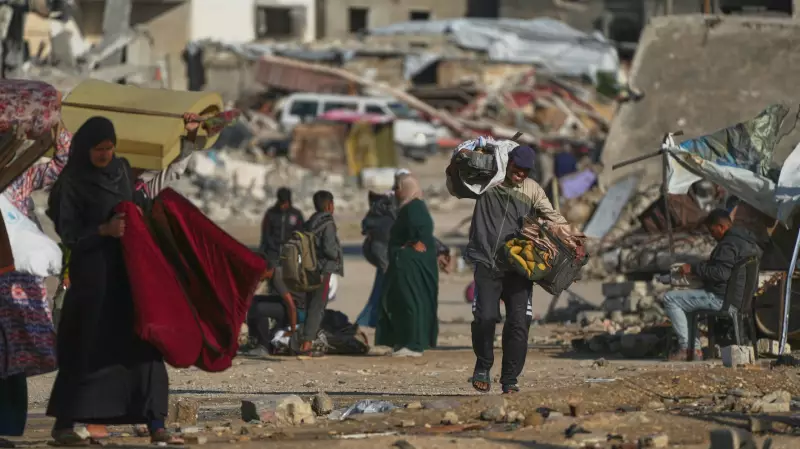
The vote occurred against the backdrop of hopes that Gaza's fragile ceasefire would hold following a war triggered by Hamas's surprise attack on southern Israel on October 7, 2023, which killed approximately 1,200 people. Israel's subsequent military offensive, lasting more than two years, has resulted in over 69,000 Palestinian deaths according to Gaza health ministry figures, though the ministry doesn't distinguish between civilians and combatants while noting the majority are women and children.

Russia had circulated a competing resolution last week featuring stronger language supporting a Palestinian state alongside Israel and emphasizing that the West Bank and Gaza must be united as a state under the Palestinian Authority. The Russian proposal eliminated references to the transitional board and requested that UN Secretary-General Antonio Guterres provide options for an international security force and ceasefire implementation, stressing the importance of maintaining a central Security Council role.
The stabilization force will operate in coordination with a trained and vetted Palestinian police force to secure border areas and facilitate humanitarian assistance flow. The resolution specifies that the force should closely consult and cooperate with neighboring Egypt and Israel. As the international force establishes control and brings stability, Israeli forces will withdraw from Gaza based on "standards, milestones, and timeframes linked to demilitarization" that must be agreed upon by the stabilization force, Israeli forces, the U.S., and ceasefire guarantors.