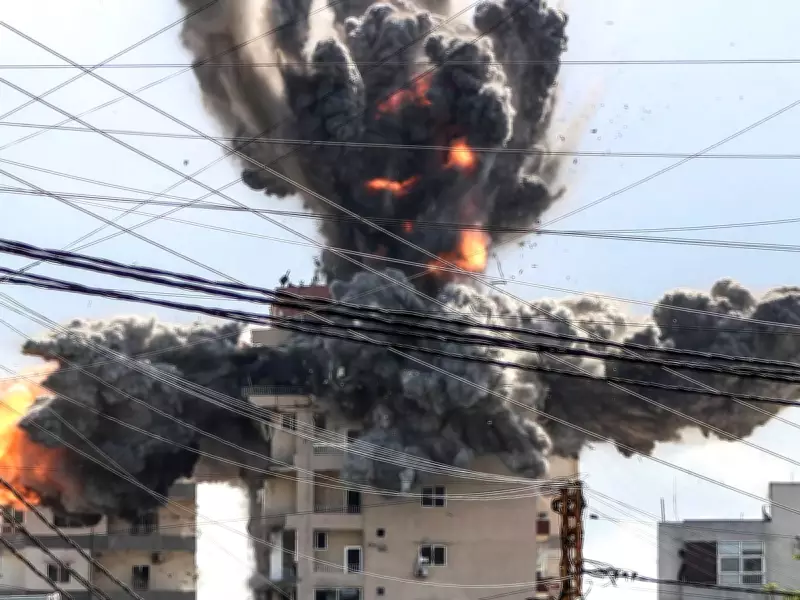
U.S. and Iran Exchange Accusations Over Lebanon Fighting Amid Fragile Ceasefire
The White House has announced that the United States will engage in direct talks with Iran, even as continued fighting in the Middle East—highlighted by Israeli strikes in Lebanon—threatens to derail the fragile ceasefire in the six-week conflict. This development comes amid escalating tensions between Washington and Tehran over whether the hostilities in Lebanon violate the terms of the recently established truce.
U.S. Delegation to Lead Talks Despite Regional Unrest
Press Secretary Karoline Leavitt confirmed that Vice President JD Vance will lead a U.S. delegation to Islamabad for negotiations, scheduled to begin Saturday morning local time. The delegation will include special envoy Steve Witkoff and Jared Kushner, signaling a high-level diplomatic effort. However, sporadic fighting persists across the region, particularly in Lebanon, where Israel continues its campaign against Hezbollah, the Iran-aligned terrorist group.
Iranian officials have condemned the Israeli actions as a violation of the ceasefire, which is less than a day old. In a social media post, Iran Foreign Minister Abbas Araghchi stated, "The Iran–U.S. Ceasefire terms are clear and explicit: the U.S. must choose—ceasefire or continued war via Israel. It cannot have both." This sentiment was echoed by Iranian Parliament Speaker Mohammad-Bagher Ghalibaf, who cited the fighting in Lebanon, along with claims of a drone entering Iranian airspace and the denial of Iran's right to enrichment, arguing that negotiations under such circumstances are unreasonable.

Ceasefire Fragility and Strategic Waterway Tensions
The fragility of the truce is further underscored by Iran's continued strikes on Gulf states and the ongoing blockage of the Strait of Hormuz. President Donald Trump has emphasized that reopening the strait is a precondition for halting the fighting, with Leavitt reiterating on Wednesday that Trump expects the strait to be "reopened immediately." Conflicting reports have emerged regarding the strait's status; Iran's semi-official Fars news agency claimed that passage of oil tankers was halted after Israeli strikes, while Vance countered, saying, "we are seeing signs that the straits are starting to reopen."
Vance Responds to Iranian Claims and Misunderstandings
While traveling in Hungary, Vice President Vance expressed optimism about the negotiations, stating, "we're on the right track." He pushed back against Ghalibaf's comments, questioning his understanding of English and noting that some statements "didn't make sense." Vance suggested there had been a "legitimate misunderstanding" with Iran, clarifying that the ceasefire never included Lebanon. "I think the Iranians thought that the ceasefire included Lebanon, and it just didn't. We never made that promise," he explained.
Vance emphasized that if Iran chooses to let the negotiations collapse over Lebanon—a matter he claims has nothing to do with them and was never part of the ceasefire agreement—that decision ultimately rests with Tehran. He also noted that Israel has offered to moderate its actions in Lebanon during discussions with U.S. officials, as they seek to ensure the success of the negotiations.
The situation remains tense, with both sides trading accusations and the ceasefire hanging in the balance. The outcome of the upcoming talks in Islamabad could prove critical in determining whether the conflict escalates further or moves toward a more stable resolution.