Escalating tensions between the United States and Iran have reached a new peak, with President Donald Trump and senior Iranian officials exchanging direct threats amid widening economic protests within the Islamic Republic. The fiery rhetoric follows U.S. airstrikes on Iranian nuclear facilities in June and comes as demonstrations over the collapsing national currency enter their sixth day.
Dueling Threats on Social Media
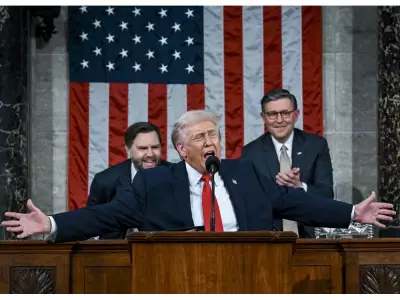
On Friday, President Trump issued a stark warning to Iran on his Truth Social platform. He stated that if Iranian authorities "violently kill peaceful protesters," the United States "will come to their rescue." Trump added, "We are locked and loaded and ready to go," though he did not provide further details on what actions might be taken. The protests, sparked by the rapid depreciation of Iran's rial currency, have already seen at least seven people killed in related violence.
The Iranian response was swift and severe. Ali Larijani, secretary of Iran's Supreme National Security Council and a former parliament speaker, accused the U.S. and Israel of instigating the unrest. Writing on the social media platform X, which is blocked by the Iranian government, Larijani warned, "Trump should know that intervention by the U.S. in the domestic problem corresponds to chaos in the entire region and the destruction of the U.S. interests." He further cautioned American citizens, stating, "They should take care of their own soldiers," in an apparent reference to the U.S. military presence in the Middle East.
Protests Rooted in Economic Crisis
The current wave of demonstrations, while not yet as widespread or intense as the 2022 protests following the death of Mahsa Amini, represents the most significant public challenge to the regime since then. The primary catalyst is a severe economic crisis, with the Iranian rial in freefall. The currency's collapse has pushed the exchange rate to approximately 1.4 million rials to one U.S. dollar, devastating ordinary Iranians' purchasing power.
While the protests are rooted in economic hardship, chants against Iran's theocratic system have also been heard. Reformist President Masoud Pezeshkian has signaled a desire to negotiate with protesters but has publicly acknowledged there is little his civilian government can do to immediately halt the currency's plunge.
Regional Tensions and Nuclear Stalemate
The war of words occurs against a backdrop of ongoing regional hostility. Larijani's remarks likely reference Iran's retaliatory attack in June on Al Udeid Air Base in Qatar, which came after U.S. strikes on three Iranian nuclear sites during a 12-day conflict involving Israel.
Another senior Iranian official, Ali Shamkhani, an adviser to Supreme Leader Ayatollah Ali Khamenei, issued a blunt threat on X: "any interventionist hand that gets too close to the security of Iran will be cut." He sarcastically referenced America's record of "being rescued" in conflicts from Iraq and Afghanistan to Gaza.
Despite Iran's announcement months after the June war that it had ceased enriching uranium at all sites—a move interpreted as an openness to nuclear talks—diplomacy remains stalled. Both President Trump and Israeli Prime Minister Benjamin Netanyahu have continued to warn Tehran against reviving its atomic program, leaving the region in a tense and volatile standoff.