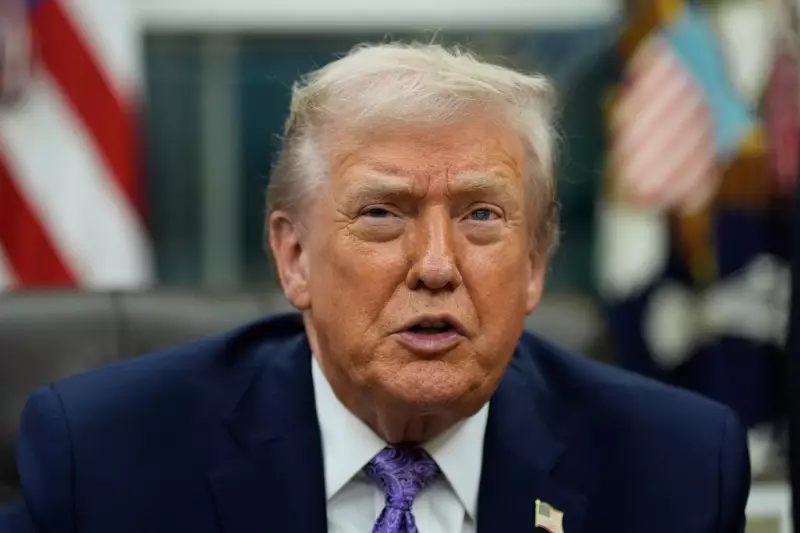
In a rare show of unity, political figures from both major American parties are attempting to counter President Donald Trump's renewed and forceful campaign to acquire Greenland for the United States. The push, which has escalated in early 2026, is prompting deep concern among allies and a coordinated defensive response from lawmakers who fear diplomatic and strategic fallout.
Bipartisan Concerns Over Arctic Strategy
The situation came to a head following statements and actions from the White House in late 2025 and January 2026. President Trump has publicly and privately reiterated his interest in the vast, autonomous Danish territory, viewing its geographic position and mineral resources as a critical strategic asset. This has not been a mere passing comment; administration officials have been tasked with exploring avenues to make the purchase a reality, causing alarm bells to ring in Copenhagen, Nuuk, and within the halls of the U.S. Congress.
Lawmakers from both the Republican and Democratic parties are now actively seeking legislative and diplomatic tools to contain what they see as an unnecessarily aggressive foreign policy move. Their concerns are multifaceted: they worry about severely damaging the United States' relationship with Denmark, a steadfast NATO ally, and about destabilizing the delicate geopolitical balance in the Arctic region. Furthermore, there is significant apprehension regarding the message such a heavy-handed approach sends to other nations about American respect for sovereignty and diplomatic norms.

The Ripple Effects of Presidential Focus
The intensity of the administration's focus on Greenland has created a distracting undercurrent in Washington, even as other global events unfold. Notably, the news emerges alongside other significant political developments. For instance, former Bank of Canada Governor Mark Carney has expressed being "concerned" about U.S. escalating efforts amid the push to buy Greenland. Carney has also agreed "in principle" to serve on a Gaza peace board proposed by Trump, though details remain to be finalized.
This Greenland initiative is not happening in a vacuum. It represents a continuation of a policy fascination first prominently voiced by Trump during his first term, now revived with fresh vigor. The persistence of the idea, despite previous rebuffs from Danish leadership, indicates a determined executive branch willing to challenge traditional diplomatic boundaries. The bipartisan congressional effort aims to erect checks and balances against this executive momentum, utilizing committee oversight, potential funding restrictions, and public statements to apply pressure.
An Uncertain Path Forward
The critical question dominating discussions in Washington, Ottawa, and European capitals is whether this congressional push will be sufficient. While bipartisan opposition creates a significant hurdle, the President retains substantial authority over foreign policy and diplomatic negotiations. The strategy of congressional leaders appears to be one of raising the political and diplomatic cost of the pursuit to a level that forces a reconsideration.
As of mid-January 2026, the standoff continues. The world watches to see if a coalition of U.S. legislators can successfully temper a president's longstanding geopolitical ambition. The outcome will have lasting implications for Arctic sovereignty, transatlantic alliances, and the balance of power between the White House and Congress in matters of international affairs. The situation remains fluid, with further developments expected as administrative plans and congressional counter-measures become clearer.