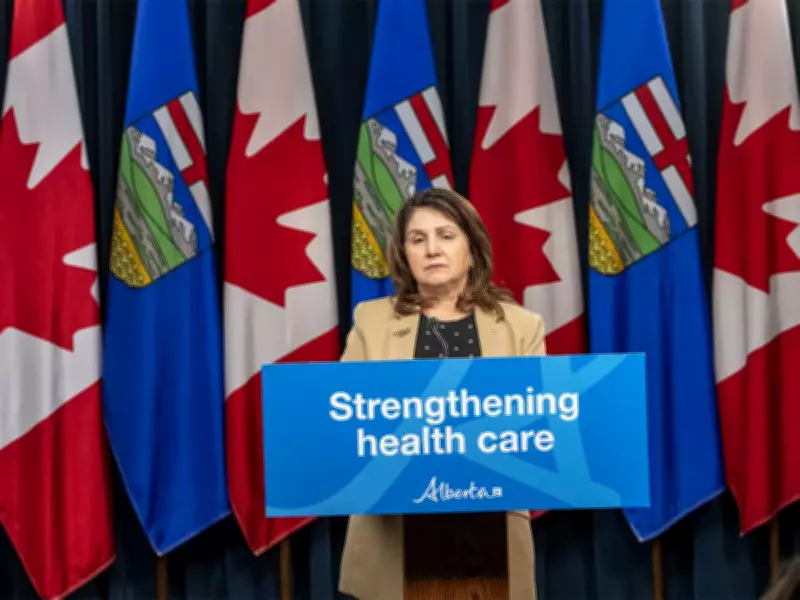
Alberta Government Proposes Private-Pay Medical Testing System
The United Conservative Party (UCP) government in Alberta has unveiled a controversial new scheme that would allow residents to pay privately for blood work, ultrasound examinations, and various other diagnostic tests. This legislative move, announced by Minister of Primary and Preventative Health Services Adriana LaGrange, aims to expand healthcare access but has sparked immediate concerns given the province's troubled history with private medical services.
Legislative Changes and Market-Driven Approach
Bill 29, introduced on Monday, would enable individuals to seek specific preventive health tests at designated clinics without requiring a physician's referral. Currently, such direct requests would be dismissed, but the proposed law would create a framework for private clinics to offer these services directly to paying customers.
Minister LaGrange emphasized that Albertans are facing excessive wait times for diagnostic testing, stating, "This legislation takes a practical step forward. If passed, Bill 29 will enable the government to expand access to certain preventive health tests without needing a provider referral." She further explained that market forces would determine capacity, suggesting that private providers would emerge to meet demand as people pay for tests themselves.

Historical Context and Public Skepticism
The announcement comes against the backdrop of the Dynalife laboratory testing debacle, which resulted in long lineups, wasted millions of dollars, and ultimately forced the province to revert to fully public testing clinics. LaGrange, who coincidentally served as health minister during the Dynalife collapse, now faces scrutiny over this new private-pay initiative.
Unlike the Dynalife situation, which involved privatizing publicly funded labs, this scheme focuses on individual out-of-pocket payments for tests. However, critics warn that it represents another step toward privatizing medical services in Alberta, following the pattern established with private surgical clinics.
Unanswered Questions and Practical Concerns
Several critical questions remain unresolved regarding the implementation of this private-pay system. When pressed about capacity, LaGrange responded that private markets would naturally expand to meet demand. She also clarified that tests ordered through traditional doctor requisitions would continue to be government-funded.
Significant practical issues emerged during questioning. For instance, what happens when a 50-year-old man without a family doctor pays for a PSA test and receives concerning results? LaGrange indicated that the government has considered such scenarios, potentially requiring clinics to have professionals available to interpret test findings.
Furthermore, no provisions exist for refunds if tests reveal serious medical conditions, mirroring the existing policy for private MRI scans where patients receive no rebates regardless of outcomes. The potential expansion of this system beyond basic lab work to include X-rays, CT scans, and other imaging diagnostics also remains unclear.
Broader Implications and Political Landscape
This development occurs alongside other healthcare changes in Alberta, including modifications to drug coverage and regulations allowing physicians to work in both public and private sectors. The government's approach reflects a broader shift toward incorporating private elements into Alberta's healthcare system, despite public skepticism stemming from previous failures.
As the legislation moves forward, Albertans are left to ponder whether this private-pay model will genuinely improve access or simply create a two-tier system that benefits those who can afford to pay while potentially straining public resources. The memory of Dynalife serves as a cautionary tale, reminding citizens and policymakers alike that privatization experiments in healthcare carry significant risks and consequences.