Vancouver’s ruling party has moved to block an overdose prevention site from opening, but legal experts say it is not clear whether city hall has that authority. In a motion approved Tuesday evening, Vancouver’s ABC-majority council directed city staff to “use all tools available to the city” to stop Vancouver Coastal Health’s plan to open a facility downtown. Opponents of the move immediately pointed to a landmark 2011 Supreme Court of Canada decision.
In that decision, the Supreme Court ordered the Government of Canada to stop interfering with the operation of Insite, the long-running supervised drug-use facility in Vancouver’s Downtown Eastside. The court found that the facility improved the safety for drug users, and the federal government’s push to shut it down violated their Charter rights to life, liberty, and personal safety.
“It boils down to this: If you take government action to prevent somebody from accessing health care, you are depriving them of their charter right to security,” Micheal Vonn, chief executive officer of PHS Community Services Society, said Wednesday. “This is actually life-and-death health care. It doesn’t get any more perilous than: your overdose isn’t reversed, you’re dead.”

PHS, a longtime Downtown Eastside non-profit service provider, is the operator of Insite. Vonn was not working for PHS in the lead-up to the 2011 decision, but followed the case closely in her role at the time as policy director of the B.C. Civil Liberties Association, which was an intervener in the case.
When ABC Vancouver Mayor Ken Sim announced his plan on Tuesday to oppose the Helmcken overdose prevention site, Vonn said she could not help but be reminded of the legal battle that led to the 2011 Supreme Court decision. “It’s not an exact parallel, but we do know what the highest law of the land says about preventing someone from accessing something that saves their lives,” said Vonn, who is a lawyer.
The court’s 2011 decision found that Insite was “proven to save lives with no discernible negative impact on the public safety and health objectives of Canada. The effect of denying the services of Insite to the population it serves and the correlative increase in the risk of death and disease to injection drug users is grossly disproportionate to any benefit that Canada might derive from presenting a uniform stance on the possession of narcotics.”
Illicit drugs have been B.C.’s leading cause of death for people aged 10 to 59 ever since the province declared a public health emergency around toxic drugs in 2016. In his comments this week, Sim criticized the province and Vancouver Coastal Health’s approach to the related crises of addictions and mental illness. Sim also repeated his call for the province to follow through on its commitment made 18 months ago to open new beds for mandatory care for people with severe mental illness and addictions.
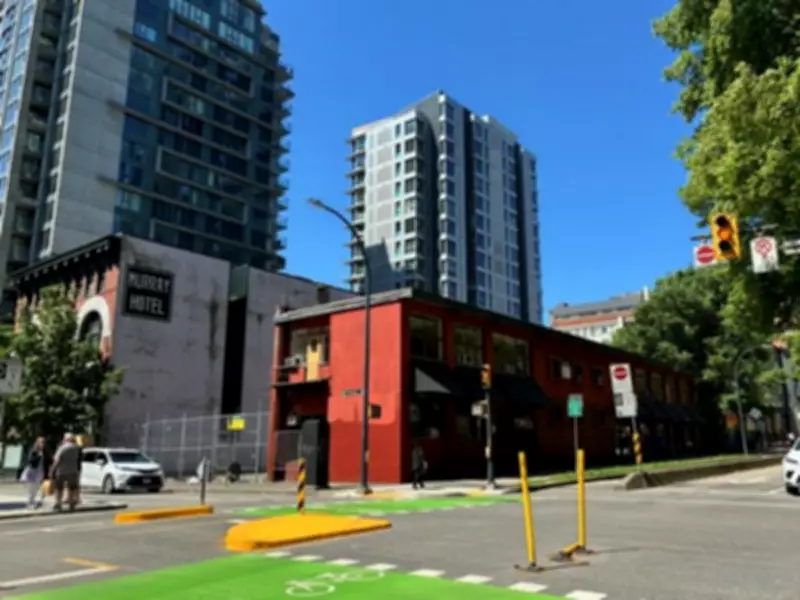
Vancouver Coastal Health has announced a new location for the Thomus Donaghy Overdose Prevention Site. The health authority takes over the lease at the new location, at 900 Helmcken Street, on June 1. The city’s motion to block the site could face a legal challenge, experts say, as the Supreme Court precedent may apply.