When Donald Trump campaigned for the presidency in 2024, he centred his message on economic relief, vowing to tackle inflation and reduce grocery prices for Americans. Political analysts widely considered affordability the election's defining issue, and Trump's victory was partly attributed to this focus. However, one year into his second term, with his approval ratings low and inflation persistent, it has become clear that his central, fulfilled promise was not economic. Instead, it was a pledge rooted in racial division.
From Campaign Rhetoric to Government Policy
The transition from candidate to president saw a direct implementation of Trump's most inflammatory 2024 campaign themes. At an October 2024 rally, he declared, "When I win on November 5, the migrant invasion ends, and the restoration of our country begins." Upon returning to the White House, his administration acted swiftly on this vision, moving beyond rhetoric to concrete action.
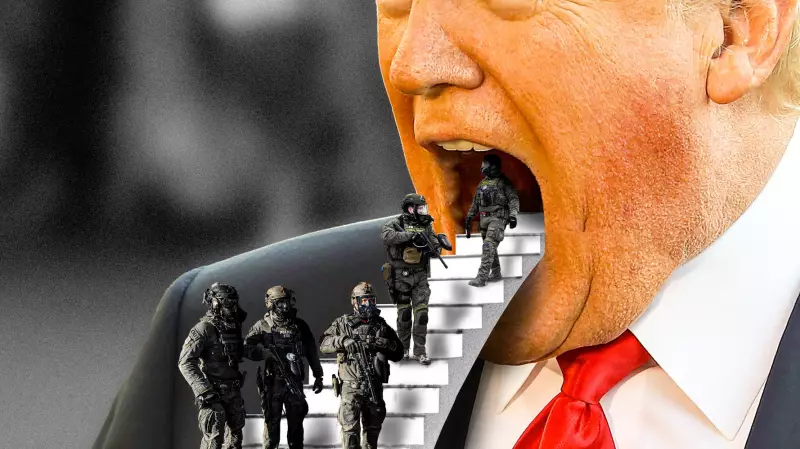
In the past year, the Trump administration has deported immigrants without trials, dismantled federal diversity, equity, and inclusion (DEI) programs, and deployed thousands of federal agents to predominantly Democratic cities. "This is the government weaponizing the social and political views of the president," said William Roberts of the Center for American Progress. "It's Trump's government engaging in policy-making to harm certain people."

This approach was previewed by dehumanizing language during the campaign. Trump and his running mate, JD Vance, amplified a baseless, racist rumour about Haitian immigrants in Springfield, Ohio, claiming they were eating residents' pets. Vance admitted to CNN in September 2024 that he would "create stories" to draw media attention. The consequences were immediate: Haitian communities across the U.S. faced threats and harassment.
The Real-World Consequences of State-Sanctioned Rhetoric
Empowered by a return to office without electoral consequence for such rhetoric, the administration has escalated its actions. In December 2025, after a debunked viral video accused Somali-run daycares in Minneapolis of fraud, Trump dispatched federal officers to investigate. This followed Trump referring to Somalis, including Congresswoman Ilhan Omar, as "garbage."
The Department of Homeland Security's operation in Minneapolis, its largest ever, turned deadly within days. Renee Good, a 37-year-old white mother of three, was shot and killed by an Immigration and Customs Enforcement (ICE) officer while sitting in her car. Her death sparked widespread protests. ICE agents have since been reported targeting individuals, using chemical irritants, and causing such fear that Minneapolis public schools offered remote learning options.
The philosophy behind these crackdowns is scarcely hidden. The official DHS social media account has shared memes and songs popular with white nationalists. "The administration wants this country to be more white," stated Seth Levi, chief strategy officer at the Southern Poverty Law Center. "These are white nationalist beliefs... becoming mainstream thought by the administration."
A Broad Assault on Diversity and Precedent for Discrimination
The administration's agenda extends far beyond immigration enforcement. In his first days, Trump signed an executive order banning DEI initiatives across the federal government, leading to the firing of related staff and the dismantling of programs. This disproportionately affected Black workers, who are overrepresented in federal roles. The ban was extended to public schools and universities, with the administration pressuring elite colleges on admissions data.
The Supreme Court, where one-third of justices are Trump appointees, has bolstered these efforts. In a 6-3 ruling, it allowed immigration officers to target people based on race, with Justice Brett Kavanaugh writing that ethnicity "can be a 'relevant factor.'" This has enabled actions like the March 2025 transfer of hundreds of mostly Venezuelan men to a prison in El Salvador without trials.

The trickle-down effect of official rhetoric is significant. Hateful discourse online increased after the 2024 election, and a Gallup poll found most Americans believe political rhetoric has gone too far. "It does create a permission structure to say these things out in the open," Levi noted. Roberts drew a stark parallel: "Jim Crow wasn't held up only with policy but also by regular people."
Despite campaign promises of economic renewal, the defining constant of Trump's second term appears to be a systematic agenda aligned with racial animus. As Levi concluded, when the administration tweets Nazi memes, "I don't really think there's a nuanced hot take on that. They're being pretty clear about what some of their beliefs are."