Canada's Immigration Numbers Decline Sharply in 2025
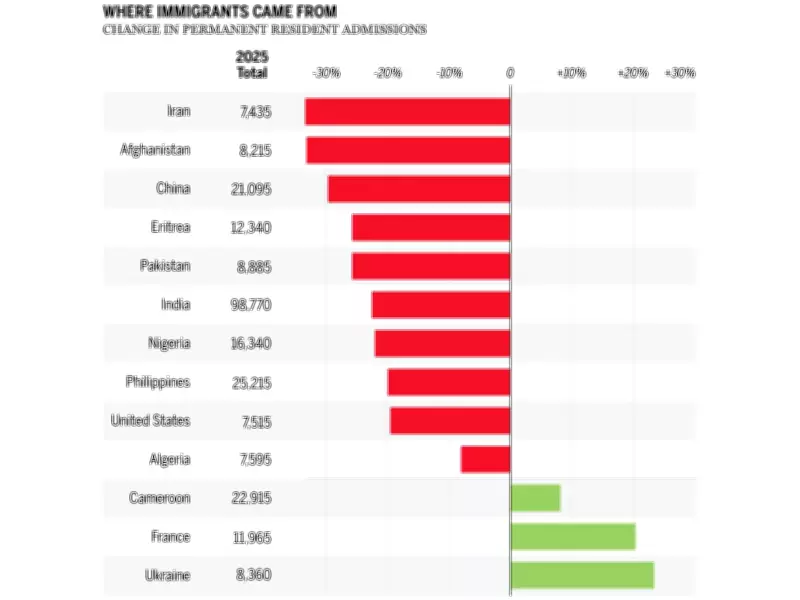
After years of record-high immigration levels, Canada experienced a significant reduction in new arrivals during 2025, marking a notable shift in the country's demographic trajectory. According to the latest federal government data, Canada welcomed 393,530 new immigrants in 2025, representing a substantial 19% decrease from the 483,655 immigrants admitted in 2024.
Population Growth Essentially Flatlines
This immigration decline comes at a time when Canada's overall population growth has essentially flatlined. The second quarter of 2025 saw only 47,098 people added to the national population, translating to a mere 0.1% increase. This represents the lowest level of immigration since 2020, when COVID-19 pandemic restrictions severely limited international travel, and deviates from a decade-long pattern of accelerating increases that began when Justin Trudeau was elected prime minister in 2015.
Regional Variations in Immigration Cuts
The reduction in immigration was not evenly distributed across Canada, with significant regional disparities emerging according to an analysis by the Association for Canadian Studies. "The cuts were quite asymmetrical and uneven across categories and regions," explained Jack Jedwab, president of the Montreal-based ACS. "With immigration being the sole source of population growth, the unevenness of the reductions implies that some parts of the country will face greater population decline than others."

The steepest decreases were concentrated in specific regions:
- Prince Edward Island experienced the most dramatic drop at 44% fewer immigrants
- Saskatchewan saw a 40% reduction in new arrivals
- Nova Scotia welcomed 36% fewer immigrants
- Alberta's immigration numbers dropped by 32%
- New Brunswick experienced a 30% decline
Other provinces also saw significant reductions:
- Yukon: 25% decrease
- Manitoba: 23% decrease
- British Columbia: 20% decrease
- Ontario: 18% decrease
- Newfoundland: 12% decrease
Limited Increases in Select Regions
While most regions experienced declines, three areas saw modest increases in immigration:
- Nunavut: 15% increase
- Northwest Territories: 4% increase
- Quebec: 1% increase
Category-Specific Impacts
The reduced immigration numbers affected different categories of newcomers unevenly. Refugee arrivals were hit hardest, experiencing a 23% decline nationally compared to 2024. This category saw reductions in every province, with the largest drops occurring in Saskatchewan (32.5% decrease) and Ontario, Nova Scotia, and Newfoundland (all with 26.5% decreases). The smallest refugee declines were in Prince Edward Island (5% decrease) and Quebec (5.5% decrease).
Family sponsored immigrants experienced a more moderate 10% decline nationally, with British Columbia (13% decrease) and Ontario (11% decrease) seeing the largest reductions in this category. Economic immigrants fell somewhere between these two categories in terms of reduction severity.
This significant shift in immigration patterns represents a departure from Canada's recent demographic strategy and raises important questions about regional population sustainability and economic implications across the country.