Chicago's Grassroots Response to Immigration Crackdown
In October 2025, Chicago's Little Village neighborhood became the epicenter of a powerful community-led movement against U.S. Immigration and Customs Enforcement operations. The protest, organized by local advocacy groups and supported by students, has since evolved into a model that cities across North America—including several in Canada—are studying and adapting.
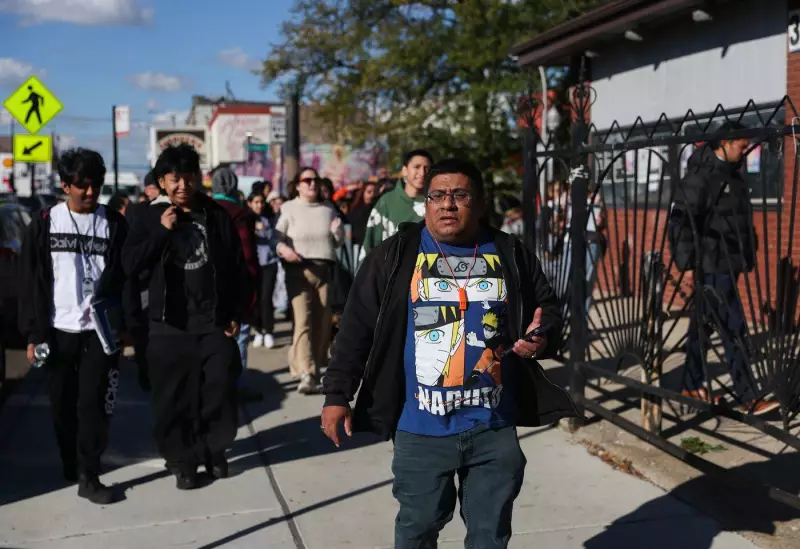
Baltazar Enriquez, president of the Little Village Community Council, emerged as a central figure in the mobilization efforts. Walking alongside Chicago Public School students during a coordinated walkout on Wednesday, October 29, 2025, Enriquez helped lead what has become a landmark example of community organizing in response to federal immigration enforcement actions.
The Protest That Started a Movement
The demonstration saw hundreds of students and community members marching through the streets of Little Village, a predominantly Latino neighborhood with deep immigrant roots. Their peaceful protest aimed to draw attention to what organizers described as aggressive ICE tactics that were creating fear and disrupting family stability throughout the community.

What made Chicago's approach unique was its emphasis on community-led protection networks and educational institutions working in coordination. Rather than relying solely on political channels, organizers built rapid response systems that combined legal support, community monitoring, and public demonstrations to counter enforcement operations.
Becoming a Blueprint for Other Cities
The effectiveness of Chicago's model hasn't gone unnoticed. Municipal leaders and immigrant advocacy groups from multiple Canadian cities have been closely studying the approach as they develop their own strategies for supporting immigrant communities facing similar challenges.
Several key elements make the Chicago model particularly transferable: its reliance on existing community structures, the involvement of educational institutions, and the development of clear communication networks that can activate quickly when enforcement actions are detected. These components have proven adaptable to different urban contexts while maintaining the core principle of community-led protection.
The timing of this cross-border knowledge sharing comes as many Canadian cities are grappling with their own immigration policy challenges and seeking effective ways to support vulnerable communities while navigating complex federal frameworks.