Amid escalating public confrontations and a fatal shooting in Minneapolis, a senior U.S. Department of Homeland Security official has forcefully defended the visible and aggressive tactics of Immigration and Customs Enforcement (ICE) agents, attributing their high-profile presence directly to sanctuary city policies.
Sanctuary Policies Force Public Sweeps, Says DHS Official
In an exclusive interview, Tricia McLaughlin, the Assistant Secretary for Public Affairs at DHS, stated that ICE's "top priority" remains targeting violent offenders. However, she argued that sanctuary city ordinances, which limit local law enforcement cooperation with federal immigration authorities, have necessitated a change in tactics.
"What exactly does (a sanctuary city) mean?" McLaughlin asked. "It means that these sanctuary city politicians are harbouring these criminal illegal aliens, but it also means that our law enforcement is not permitted to work with them." She explained that ICE is often barred from coordinating with local jails, even when they hold non-citizens convicted of serious crimes like rape.

"So, the reason that we have such a large law enforcement presence," McLaughlin emphasized, "is because we can't go into those jails to target those criminals, and so we have to really sweep the city." She cited operations in Minneapolis, Chicago, New York, and Los Angeles as examples of this approach.
Context of the Minneapolis Fatal Shooting
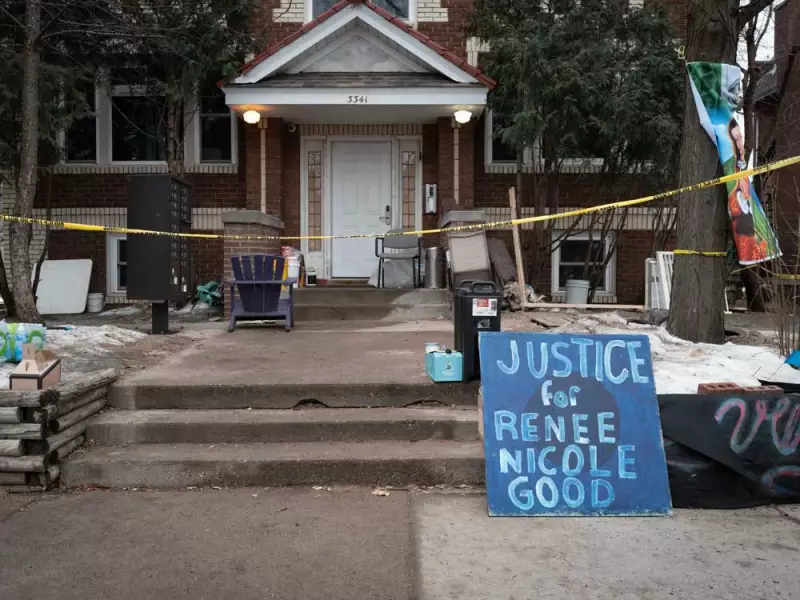
The debate over ICE's methods intensified following the January 7, 2026 fatal shooting of Renee Good in Minneapolis. According to McLaughlin, Good had been impeding and blocking law enforcement officers throughout the day, which constitutes a felony obstruction of lawful operations.
McLaughlin detailed the final moments: when officers attempted to arrest Good and ordered her to exit her vehicle, she refused. "She hits the gas," McLaughlin said, "and (the officer) was in fear of his own life, and he was in fear for the law enforcement who were around him. She weaponized her vehicle." The officer responded with lethal force as per his training, resulting in Good's death.
This incident has fueled protests in Minneapolis, where activists assert their First Amendment right to observe and record police activity. While monitoring is legal, some actions—like blowing whistles to warn communities, following enforcement vehicles, or blocking roadways—enter legally murky territory that could potentially justify obstruction charges.
Rising Violence and Political Rhetoric
McLaughlin issued a stark warning about the consequences of demonizing law enforcement. She reported that DHS has seen a 1000% increase in assaults on its officers, including multiple incidents of vehicles being used as weapons against agents in just the past week. "These vehicles are deadly weapons," she stated. "And one of our law enforcement officers could easily end up killed if we don't see a stop to this."
She dismissed comparisons of ICE to the Gestapo or warnings of a creeping police state as "reckless" and "legally illiterate." McLaughlin pointed to rising crime rates, noting that homicides in Minneapolis have increased by roughly 50% since Governor Tim Walz took office.
"If people don't like ICE enforcing the rule of law … these politicians should change the law," McLaughlin argued. "They can lobby Congress to change the law." She emphasized that the current enforcement mandate aligns with the administration's priorities, linking it to public safety concerns.
The official also suggested that political factors are at play, noting that Minneapolis is a "flashpoint" partly due to large-scale fraud investigations underway by Homeland Security Investigations. She implied that criticism of ICE could be a "smokescreen" to divert attention from those probes.
McLaughlin concluded by highlighting a key, often overlooked distinction: while deportations occur in both politically conservative and liberal jurisdictions, operations in areas that cooperate with ICE typically proceed with far less confrontation and significant results. The current climate, she contends, sacrifices nuance and safety for political opposition.