ICE Operations and Political Fallout Create Republican Tensions
The Trump administration's Operation Metro Surge, an aggressive urban immigration enforcement initiative, is encountering significant challenges and public scrutiny. Gregory Bovino, the controversial head of Immigration and Customs Enforcement (ICE), has been removed from his position and is reportedly preparing for retirement. This leadership change comes amid growing controversy surrounding ICE's actions and their consequences.
Fatal Incidents and Political Repercussions
Two American citizens lost their lives in Minnesota during ICE operations, with many Republicans struggling to reconcile the agency's official accounts with compelling video evidence. The case of Alex Pretti, a Minneapolis nurse fatally shot by ICE officers on January 24th, has become particularly contentious. While witness reports and video footage suggest Pretti was not brandishing his legally carried firearm at the time of the incident, this detail remains officially unconfirmed.
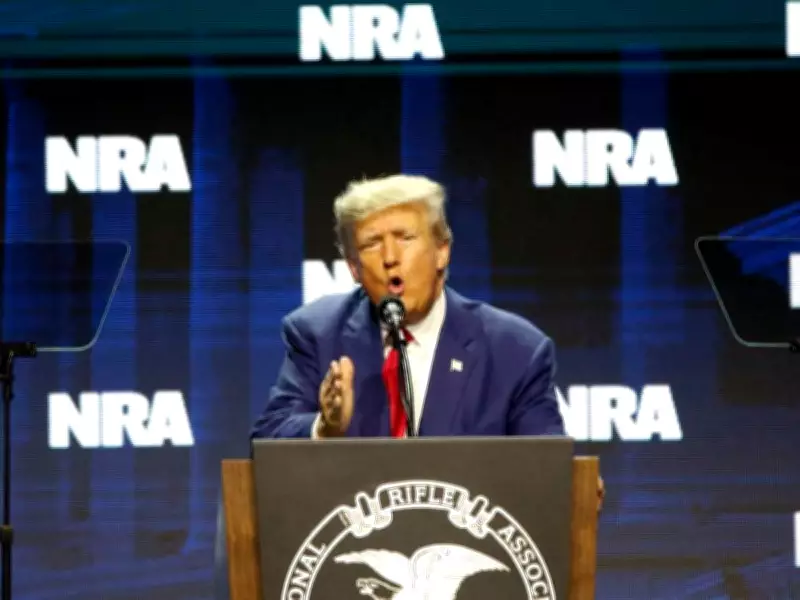
President Trump's response to the situation has raised eyebrows within his own party. "You can't walk in with guns. You just can't," Trump stated, offering what many interpret as a surprisingly casual dismissal of Second Amendment protections from a Republican leader. This position has created unexpected divisions within conservative circles.

Gun Rights Organizations Push Back
The National Rifle Association issued a firm statement affirming that "all law-abiding citizens have a right to keep and bear arms anywhere they have a legal right to be." Gun Owners of America, known for taking even stronger positions on firearm rights, emphasized that "The Second Amendment protects Americans' right to bear arms while protesting — a right the federal government must not infringe upon."
West Virginia Republican congressman Thomas Massie offered perhaps the most pointed criticism, declaring: "Carrying a firearm is not a death sentence; it's a constitutionally protected God-given right. And if you don't understand this you have no business in law enforcement or government."
Broader Implications for Police Conduct
This controversy extends beyond immigration enforcement to touch on fundamental questions about police aggression in American society. The United States experiences significantly higher rates of police-involved fatalities than comparable nations, with Canada ranking a distant second in such statistics. While media often frame this issue through the lens of racial disparities—Black Americans face nearly triple the risk of police violence compared to white Americans—the current ICE controversy demonstrates how police aggression concerns can transcend traditional political and demographic boundaries.
A recent Reuters/Ipsos poll conducted on January 25th reveals shifting public sentiment, with President Trump's net approval rating on immigration falling from a positive seven percent upon his inauguration to negative fourteen percent currently. This decline occurs despite the president's overall approval rating standing at negative twenty-one percent.
Political Crossroads for Republicans
The Trump administration appears to be testing Republican loyalty on multiple fronts simultaneously. Bill Esayli, U.S. attorney for the Central District of California and a Trump appointee, cautioned on social media: "If you approach law enforcement with a gun, there is a high likelihood they will be legally justified in shooting you. Don't do it!" This perspective, combined with the administration's handling of the ICE controversies, creates a complex political landscape for Republicans.
If any single issue could potentially unite Americans across racial, regional, and class divisions, the frequency of law enforcement fatalities represents a strong candidate. The current ICE controversies highlight how immigration enforcement, gun rights, and police conduct have become intertwined in ways that challenge traditional political alliances and force difficult conversations about government authority and individual rights.