ICE Officers in Minnesota Receive New Guidance to Avoid Confrontations
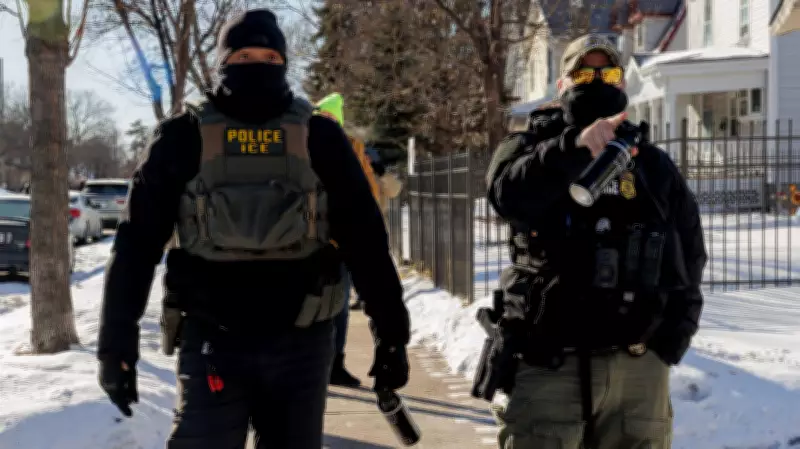
WASHINGTON, Jan 28 (Reuters) - U.S. Immigration and Customs Enforcement (ICE) officers operating in Minnesota have been directed to steer clear of engaging with "agitators" while carrying out President Donald Trump's immigration enforcement initiatives, according to internal documents obtained by Reuters. The guidance, issued on Wednesday, provides the most comprehensive overview to date of how operations will be adjusted in the wake of two fatal shootings involving U.S. citizens during protests in Minneapolis.
Shift to Targeted Enforcement After Minneapolis Shootings
The new operational directives explicitly order ICE personnel to focus exclusively on immigrants who have criminal charges or convictions. This represents a significant departure from the broad, sweeping enforcement actions that have sparked public backlash and legal challenges in Minneapolis and other urban centers across the United States. An email disseminated by a senior ICE official emphasized, "DO NOT COMMUNICATE OR ENGAGE WITH AGITATORS. It serves no purpose other than inflaming the situation. No one is going to convince the other. The only communication should be the officers issuing commands."
This policy shift follows President Trump's recent statement that he aims to "de-escalate" tensions in the Minneapolis-St. Paul area, where federal immigration officers fatally shot two U.S. citizens earlier this month. In both incidents, Trump administration officials quickly characterized the deceased as aggressors, though video evidence has raised questions about those assertions. The president has assigned border czar Tom Homan to oversee operations in Minnesota, with a senior official describing this move as a transition toward a more "targeted" enforcement strategy.

Operational Changes and Leadership Adjustments
Under the newly outlined guidance, ICE officers will be equipped with megaphones to issue public commands and are instructed to "verbalize every step of the arrest process." However, the directives do not specify what actions would trigger such commands or how officers should respond if their commands are ignored. The updated protocols originated from Marcos Charles, the head of ICE's Enforcement and Removal Operations division, according to the internal email.
Concurrently, Border Patrol commander-at-large Gregory Bovino—who led confrontational enforcement sweeps in cities like Los Angeles and Chicago—has been demoted and is expected to retire shortly. This personnel change aligns with the strategic pivot, as ICE will now lead Minnesota operations with Border Patrol assuming a support role, reversing months of street-level clashes under Bovino's leadership.
Focus on Criminal History and Enhanced Cooperation
The guidance mandates that officers may only target immigration offenders with a prior criminal background, stating, "We are moving to targeted enforcement of aliens with a criminal history. This includes arrests, not just convictions. ALL TARGETS MUST HAVE A CRIMINAL NEXUS." This approach contrasts with the Trump administration's earlier rescission of a Biden-era policy that required ICE to concentrate on serious criminals, which had previously allowed officers to arrest non-criminals without restrictions.
Additionally, the guidance authorizes ICE officers to conduct license plate checks to identify potential targets, with instructions to make arrests if the registered vehicle owner is an immigrant with a criminal record. The internal communication also notes that ICE has experienced increased cooperation from state and local officials in Minnesota, potentially creating more opportunities to apprehend immigrants released on parole or probation.
When contacted for comment, a White House administration official indicated, "There are ongoing conversations on how to most effectively conduct operations in Minnesota. No guidance should be considered final until it is officially issued." This statement underscores the fluid nature of the policy discussions surrounding immigration enforcement in the region.