A federal law enforcement officer shot and wounded a person in Minneapolis on Wednesday after being ambushed and attacked with a shovel and a broom handle, according to officials from the Department of Homeland Security. The violent encounter is the latest flashpoint in a massive and controversial federal immigration operation that has plunged parts of Minnesota into chaos and sparked widespread protests.
Details of the Violent Encounter
According to a DHS statement posted on the social media platform X, federal officers first attempted to stop a person from Venezuela who was in the United States illegally. The individual fled in a vehicle, crashed into a parked car, and then attempted to escape on foot. When officers caught up, two other people emerged from a nearby apartment and joined the suspect in attacking an officer.
"Fearing for his life and safety as he was being ambushed by three individuals, the officer fired a defensive shot to defend his life," the DHS statement said. The shot struck one of the attackers in the leg. The two individuals who came from the apartment were taken into custody.

The shooting occurred approximately 4.5 miles north of the location where, on January 7, Immigration and Customs Enforcement officer Jonathan Ross fatally shot 37-year-old Renee Good. That earlier killing has become a rallying cry for protesters and local officials who condemn the federal government's actions.
Mounting Tensions and Legal Challenges
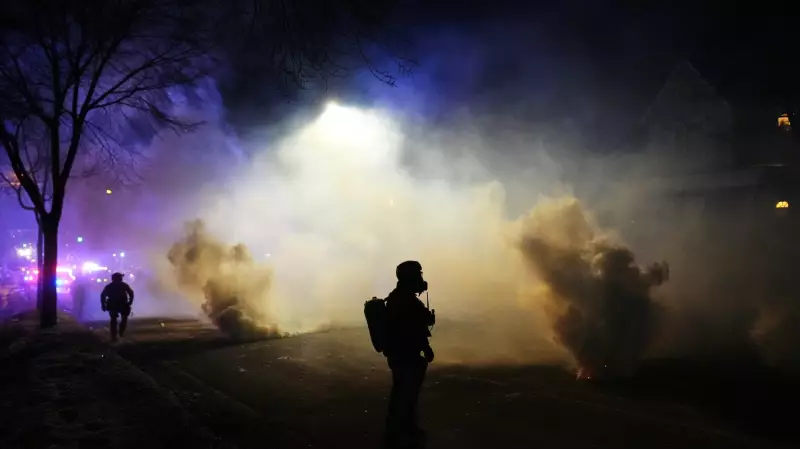
The streets of Minneapolis have been scenes of repeated conflict since Good's death. On Wednesday, a large group of officers in gas masks fired tear gas into a crowd gathered at a north Minneapolis intersection near the latest shooting. Plumes of tear gas and the sounds of protests have become commonplace.
In the courts, a judge is considering a request by the state of Minnesota and the cities of Minneapolis and St. Paul to suspend the federal immigration crackdown. U.S. District Judge Katherine Menendez called the matters "grave and important" and gave the U.S. Justice Department until Monday to respond to the request for a restraining order.
Governor Tim Walz, in a televised speech Wednesday evening, accused the federal government of waging a "campaign of organized brutality against the people of Minnesota." He asserted the operation had long ago stopped being solely about immigration enforcement.
Military Lawyers and a Growing Federal Presence
The Department of Homeland Security reports it has made more than 2,000 arrests in Minnesota since early December and vows to continue. The Pentagon is now preparing to send military lawyers to Minneapolis to assist in the effort. According to a CNN report, Defense Secretary Pete Hegseth has requested the military branches to identify 40 Judge Advocate General (JAG) officers, with 25 slated to serve as special assistant U.S. attorneys in the city.
This move follows a similar deployment of 20 military lawyers to Memphis last week. However, legal experts like Mark Nevitt, a former Navy JAG and professor at Emory University, have expressed concern that these assignments divert crucial legal resources away from the military's own justice system.
Meanwhile, new details have emerged about the agent involved in Renee Good's death. A Homeland Security official, speaking anonymously to The Associated Press, said Officer Jonathan Ross suffered internal bleeding in his torso during the encounter. This contradicts video from the scene which showed Ross walking without obvious difficulty after the shooting. Ross's attorney declined to comment on the injuries.
Good's family has hired the law firm Romanucci & Blandin, which represented George Floyd's family, to conduct its own investigation. The firm stated Good was following orders to move her car when she was shot and that the family wants her remembered as "an agent of peace for all."
The unrest has spilled into daily life. Hundreds of high school students in St. Paul marched to the state Capitol in freezing temperatures to protest, and the University of Minnesota has warned its 50,000-plus students that some classes may move online due to the violence and protests near campus.