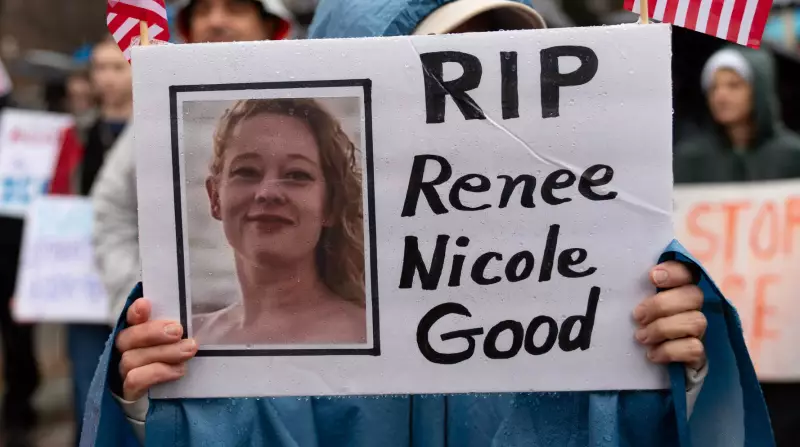
Thousands of demonstrators filled the streets of Minneapolis on Saturday, voicing outrage over the fatal shooting of a woman by a federal immigration officer and expressing solidarity with protesters injured in Portland, Oregon. The massive gathering unfolded in a city still reeling from the death of 37-year-old Renee Good, who was shot by an Immigration and Customs Enforcement (ICE) officer on Wednesday.
A City on Edge and Calls for Peace
The Minneapolis protest was one of hundreds organized across the United States over the weekend, reflecting a national wave of anger. Minnesota Governor Tim Walz and Minneapolis Mayor Jacob Frey both implored demonstrators to remain peaceful, framing the potential for chaos as a political victory for former President Donald Trump.
"Trump sent thousands of armed federal officers into our state, and it took just one day for them to kill someone," Governor Walz stated on social media. "Now he wants nothing more than to see chaos distract from that horrific action." Mayor Frey echoed this sentiment, directly stating, "This is what Donald Trump wants. He wants us to take the bait."

Despite these calls, a protest on Friday night outside a Minneapolis hotel involving about 1,000 people turned violent. Police Chief Brian O'Hara reported that demonstrators threw ice, snow, and rocks at officers, resulting in one officer sustaining minor injuries. Twenty-nine individuals were cited and released.
Nationwide Outcry and Community Frustration
The Minneapolis march, organized by a coalition of migrant rights groups, began in a park near the neighborhood where Good was killed. Protesters carried signs demanding ICE leave the community and voiced support for immigrants. The frustration was palpable among attendees.
"We're all living in fear right now," said Meghan Moore, a Minneapolis mother of two. "ICE is creating an environment where nobody feels safe and that's unacceptable." Another protester, Connor Maloney, shared his daily observations: "Almost daily I see them harassing people. It's just sickening that it's happening in our community around us."
The outrage resonated far beyond Minnesota. In Durham, North Carolina, Steven Eubanks, 51, joined a local protest, calling Good's killing "horrifying." The organization Indivisible reported hundreds of scheduled protests in states including Texas, Kansas, New Mexico, Ohio, and Florida.
ICE Activity and Political Tensions Escalate
The U.S. Department of Homeland Security has called its deployment in the Minneapolis-St. Paul area its largest-ever immigration enforcement operation. The Trump administration has defended the shootings in Minneapolis and Portland as acts of self-defense against drivers who "weaponized" their vehicles.
In a tense incident near the Minneapolis protest, an Associated Press photographer witnessed heavily armed officers—at least one in Border Patrol uniform—confront a person following them, with agents issuing a "first and final warning." Chief O'Hara also revealed that city police have responded to calls about cars abandoned after drivers were apprehended by ICE, including one case where a dog was left inside a vehicle.
The political conflict intensified when three Minnesota congresswomen—U.S. Reps. Ilhan Omar, Kelly Morrison, and Angie Craig—were denied a full tour of the ICE facility in the Minneapolis federal building on Saturday. They accused ICE of obstructing congressional oversight, a move potentially at odds with a recent federal court ruling blocking policies that limit such visits.
As the weekend progressed, the scenes in Minneapolis remained largely peaceful, a stark contrast to the widespread unrest following the 2020 killing of George Floyd. However, the underlying tensions from the massive federal presence and the tragic shooting of Renee Good continue to fuel a national debate over immigration enforcement and community safety.