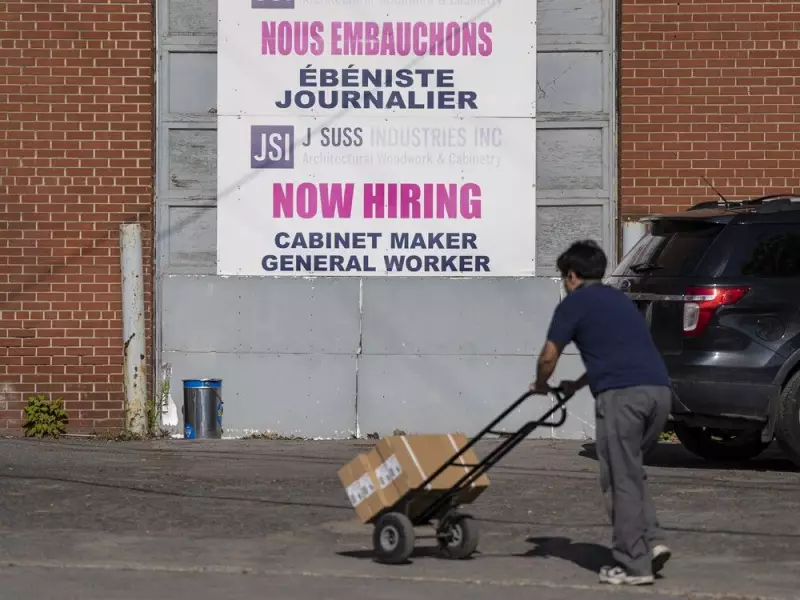
A significant number of recent immigrants to Canada are experiencing anxiety about their future in the country, driven by concerns over shrinking job opportunities and fears that Canada might emulate recent aggressive immigration crackdowns in the United States, a new comprehensive survey reveals.
Survey Reveals Widespread Anxiety
According to a recent study conducted by Leger Marketing Inc., which polled approximately 2,000 individuals including temporary residents like foreign students and workers, as well as permanent residents and new citizens, nearly half of respondents expressed worry about not securing employment. This apprehension is fueled in part by public calls from some politicians for a reduction in immigration levels.
Lisa Covens, a senior vice-president at Leger who led the study, confirmed that "that anxiety is real." She explained, "When the political debate starts to question your contribution, it sort of shakes your sense of security, even if their personal experience has largely been positive in Canada. So, it's concerning."

Job Fear Highest Among Temporary Residents
The survey data shows a clear gradient of concern based on immigration status. The fear of not finding a job is most acute among foreign students and workers, with a striking 76 per cent of them reporting they are worried. This compares to 42 per cent of permanent residents and 29 per cent of those who have recently become Canadian citizens.
Covens noted that while most newcomers feel personally welcomed, the global rise in anti-immigrant rhetoric is having a tangible impact. "The rising anti-immigrant rhetoric globally is impacting newcomers in Canada," she said. The concerns appear to be linked to "headlines that they are seeing around them," even when those headlines are often about events in the U.S.
Ripples from the U.S. Crackdown
The political climate in the United States is casting a long shadow, with about four in 10 newcomers believing that the recent U.S. crackdown on immigrants could potentially be replicated in Canada. This highlights how immigration policies in one country can create unease among migrant populations in neighbouring nations.
This survey comes at a pivotal time, as the Canadian government released its latest immigration plan earlier this month. The new plan signals a strategic shift, placing a greater emphasis on transitioning temporary residents who are already in Canada into permanent residents, rather than bringing in large numbers of new people from outside the country.
The government has almost halved the number of temporary residents it plans to admit, with targets dropping from 673,650 in 2025 to 385,000 in 2026, and further to 370,000 in both 2027 and 2028.
For permanent residents—individuals who typically pursue citizenship—the headline targets remain steady at 380,000 people for each of 2026, 2027, and 2028. However, Ottawa also plans to grant permanent residency through one-time programs to 33,000 work-permit holders and 115,000 people categorized as "protected persons in Canada" in 2027 and 2028. This initiative is expected to push the actual number of newcomers beyond the stated 380,000 figure.
Financial Integration Challenges Persist
From a financial perspective, the Leger survey identified both opportunities and challenges. The data indicates there is significant potential for financial institutions to forge partnerships with newcomers, as almost half of them still maintain investments in their country of origin. This group is composed of 43 per cent students, 37 per cent permanent residents, and 22 per cent new Canadians.
"It does seem that money is kind of moving as people become citizens and are here longer," observed Covens.
Nevertheless, navigating the Canadian financial system presents hurdles for many. The survey found that 30 per cent of newcomers were surprised by the fees charged for everyday banking. Furthermore, 17 per cent reported challenges in accessing credit cards, and 15 per cent found it difficult to secure a mortgage.

While these percentages may not constitute a majority, Covens pointed out that "it's not 80 per cent, but that's almost two in 10 people finding it challenging. That's a big chunk that still needs to figure things out." This underscores the ongoing need for support services and financial education tailored to new Canadians.