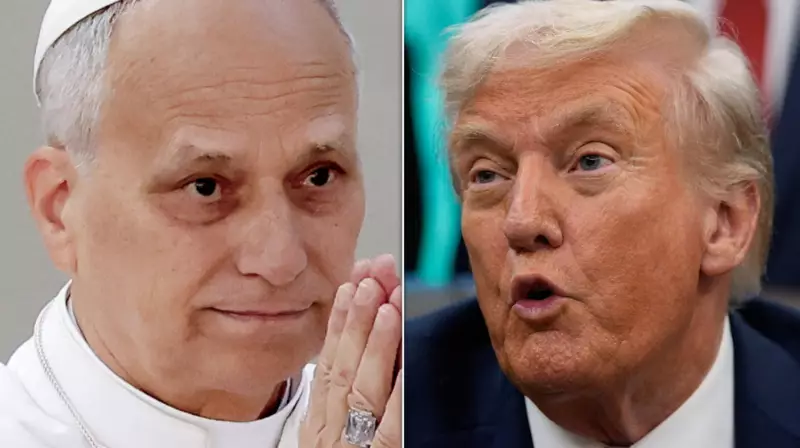
In a significant development from the papal residence in Castel Gandolfo, Italy, Pope Leo XIV has thrown his full support behind American Catholic bishops who recently condemned the Trump administration's approach to immigration enforcement. The Chicago-born pontiff made his position clear during an informal conversation with journalists on Tuesday.
Papal Endorsement of Bishops' Statement
The first American pope in history addressed the "special message" adopted by the U.S. Conference of Catholic Bishops during their general assembly last week. The bishops' statement had criticized the administration's mass deportation policies and what they described as the "vilification" of migrants in current immigration debates.
Pope Leo specifically highlighted several concerns raised by the bishops, including the fear and anxiety generated by immigration raids in communities and the denial of pastoral care to migrants being held in detention centers. "I think we have to look for ways of treating people humanely, treating people with the dignity that they have," the pontiff stated.

Balancing Border Control and Human Dignity
While expressing strong support for the bishops' position, Pope Leo also acknowledged the complexity of immigration issues. He clarified that no one has suggested the United States should maintain completely open borders, recognizing every nation's right to determine who can enter its territory and under what circumstances.
"If people are in the United States illegally, there are ways to treat that. There are courts, there's a system of justice," the Pope noted, suggesting that existing legal frameworks should guide immigration enforcement rather than approaches that might violate human dignity.
The pontiff expressed particular concern about long-term residents facing sudden deportation, stating: "But when people are living good lives, and many of them for 10, 15, 20 years, to treat them in a way that is extremely disrespectful to say the least — and there's been some violence unfortunately — I think that the bishops have been very clear in what they said."
Unusual Bishops' Statement Gains Papal Support
The bishops' "special message" represented a rare intervention, marking the first time since 2013 that the American bishops had issued such a single-issue statement during one of their regular meetings. The significance of their message was underscored by an accompanying Instagram video featuring individual bishops reading portions of the text on camera.
Pope Leo, who has consistently encouraged local bishops to take leadership roles in addressing social justice matters, explicitly urged American Catholics and all people of goodwill to heed the bishops' counsel. "I would just invite all people in the United States to listen to them," he emphasized.
The Pope's comments came as he departed his country residence south of Rome, where he typically spends Monday afternoons and Tuesdays relaxing, playing tennis, and swimming in the estate's indoor pool.
Future Travel Plans Revealed
During the same conversation with reporters, Pope Leo revealed his upcoming travel plans, indicating that he intends to increase his international visits starting in 2026 once his commitments in Rome lessen following the conclusion of the Holy Year.
When asked about potentially returning to Peru, where he served as a missionary for approximately two decades, the Pope responded with an enthusiastic "of course." He also hinted at other possible destinations, including:
- The Fatima shrine in Portugal
- The Guadalupe shrine in Mexico
- Visits to Argentina and Uruguay
"I love to travel, the problem is scheduling with all the commitments," Pope Leo acknowledged. His immediate plans include his first foreign trip as pope to Turkey and Lebanon next week.
The papal endorsement comes at a time of heightened debate over immigration policy in the United States, with the Catholic Church positioning itself as an advocate for migrant rights while acknowledging the legitimate concerns of national sovereignty.