Edmonton Woman Fears Iran's People and Culture Face Erasure Amid Escalating Conflict
As she sipped coffee at Whyte Avenue's Block 1912, the Edmonton woman known only as "Pari" repeated a single, haunting word: "Erased." The Iranian-Canadian woman, who immigrated to Edmonton from Iran in 1978 at age nine, fears that Iran's people, its thousands of years of culture, and irreplaceable historic sites could be completely wiped from existence as war engulfs her homeland.
The Human Cost That Keeps Her Awake
"What I want to talk about is the human cost, and that is what keeps me up at night," Pari explained during an emotional interview. "I'm worrying about my family, worrying about the outcome of this, because it is escalating so quickly."
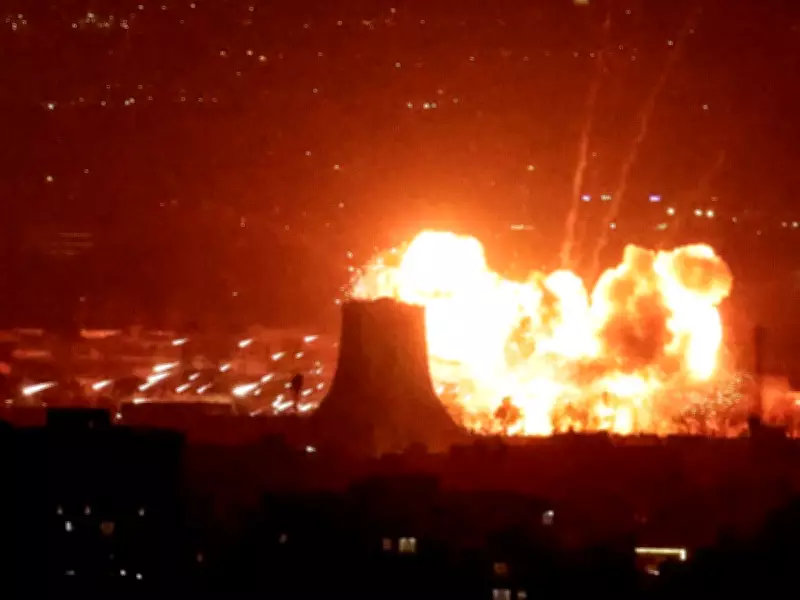
The conflict began on February 28, 2026, when the United States and Israel launched strikes against Iran, sparking swift retaliation from the Islamic republic with missile attacks across the region. The war has since dragged in global powers, upended the world's energy and transport sectors, and brought chaos to even typically peaceful areas of the volatile Middle East.

Caught Between Multiple Threats
Pari, who asked not to disclose her full name due to blowback from Edmonton's Iranian community regarding her views on the war, described feeling "sandwiched between three monsters." While she wants to see the current Iranian regime brought down, she doesn't believe U.S. President Donald Trump or Israeli President Benjamin Netanyahu want to do anything but bring the country to its knees and take its oil resources.
"Trump and Netanyahu really, really scare me, because I know what their end goal is," she said. "And I've been to Iran—the regime is also very scary. They're depriving people of basic internet rights, harassing people on the streets. It's a total lockdown because they see it as an existential threat."
Communication Blackout Leaves Family Vulnerable
Pari has maintained text communication with her uncle, aunt, cousin, and friends in Tehran, but the situation grows increasingly dire. Because the Iranian government has blacked out internet access, her relatives receive no advance warning of missile strikes and feel like sitting ducks. They've been ordered to stay indoors and wear masks to cope with heavy smoke that seeps even into closed areas.
"My loyalties lie to the innocent civilians that are caught in this 100 percent," Pari emphasized, expressing concern that she might be attacked by members of her own community for not seeing the situation as a binary choice between supporting the current regime or foreign intervention.
Community Divisions in Edmonton
Several public demonstrations have occurred in Edmonton before and after the joint Israel-U.S. attack on Iran. Most demonstrators called for the installation of Shah Reza Pahlavi—who has been living in exile—as head of the Iranian state. They advocated for American action before the invasion and have supported it since attacks commenced.
Pari noted these loud voices aren't kind to anyone who doesn't see things their way, creating tension within Edmonton's Iranian community. Her fears extend beyond her immediate relatives to encompass the entirety of Iran's populace and cultural heritage.
As the daughter of a University of Alberta student who arrived just before the Shah was deposed in Iran, Pari represents a generation caught between homeland and adopted country, watching with growing dread as the conflict threatens to erase the very identity of a nation with millennia of history.