The National Congress of American Indians (NCAI), the nation's oldest and largest Native American advocacy organization, has withdrawn from America's 250th birthday celebration, citing fundamental disagreements over representation and historical narrative under the Trump administration.
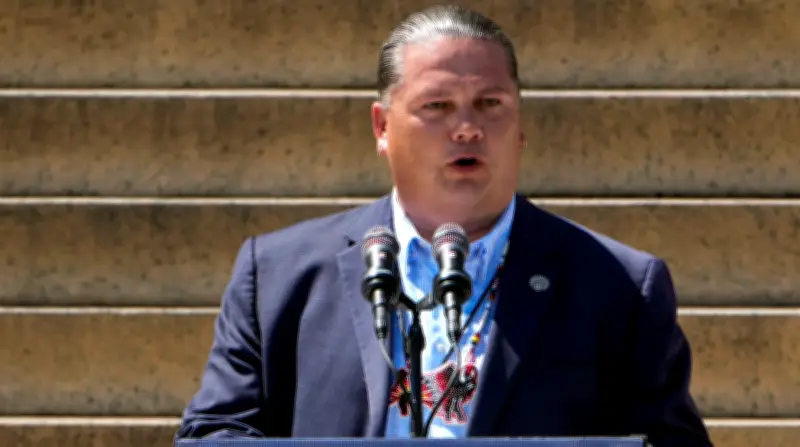
Larry Wright Jr., executive director of the NCAI and a member of the Ponca Tribe of Nebraska, said the organization quietly withdrew from the America250 partnership in July 2025 after initially signing on as a Natural Resource Partner in 2024. The decision came as the Trump administration steered the commemoration away from the bipartisan vision NCAI originally agreed to join.
From Optimism to Exit
“Initially there was outreach. This was several years ago about intent on trying to bring in the native voice into American 250 celebrations and recognitions,” Wright told HuffPost. “We were careful not to call it a celebration, but a recognition. Then with the new administration, the rhetoric changed.”

America250 was established by Congress in 2016 as a nonpartisan organization to plan the semiquincentennial and related civic and educational events. However, it has largely been overtaken by Freedom 250, a Trump-aligned organization created by the president in December 2025 that has benefited him and his allies financially and politically. Signature Freedom 250 events have included Trump campaign-style rallies and events centered on MAGA policy priorities.
Loss of Contract and Historical Revision
NCAI Policy Director Meghan Bishop, a member of the Sugpiat/Native Village of Afognak, told HuffPost that the exit was the culmination of decisions beginning when their partnership contract with America250 was canceled as the Trump administration took over in early 2025. Despite the termination, Bishop said the organization continued to use NCAI's logo on materials for several months after.
Changes in historical perspective also discouraged continued engagement. In July 2025, Hillsdale College was announced as America250's official education provider, with conservative nonprofit PragerU brought on as a partner to develop educational materials. Bishop pointed to PragerU's programming for children, including videos on Thanksgiving and the founding of America, as presenting a sanitized version of history.
“It’s a very, very white-centered view of colonization,” Bishop said.
Broader Implications for Native Communities
The NCAI's exit is a quiet but broader example of how President Donald Trump's partisan takeover has sidelined some communities from a celebration intended for all Americans. The 2020 Census counted roughly 9.7 million Native Americans, whose ancestors pre-dated, shaped, and survived in the nation now marking 250 years since its founding.
Wright said the political revisions reached a tipping point for NCAI leaders and members, an organization that has spent over 80 years fighting for accurate historical representation, tribal sovereignty, and other issues affecting Indian Country and its 575 federally recognized tribes.
“Indian Country is not ‘D’ for Democrat or ‘R’ for Republican, we’re ‘I’ for Indian,” he said.
Looking Ahead
Despite the fractured national efforts around the 250th anniversary, Wright said NCAI hopes to emphasize the deep historical ties of Native Americans to the nation and their significant contributions, such as military service—which is higher than any other racial or ethnic group—and as a major employer across rural regions in the U.S.
“You can look at the successes, but you also have to look at those things that aren’t successful or continuing to be attacked,” Wright said. “I think as the dust settles on this celebration, Indian Country is still here, Indian Country’s growing, and we’ll continue to advocate and defend our tribal sovereignty.”