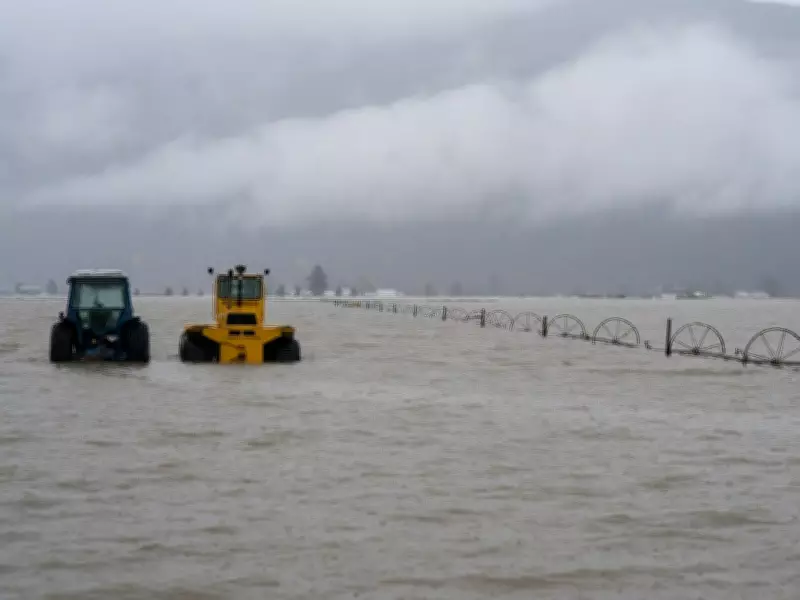
The British Columbia Court of Appeal has granted partial approval for a class-action lawsuit filed by property owners in Abbotsford seeking compensation for damages sustained during the devastating 2021 floods. While the legal action can proceed, the court has significantly narrowed its scope by excluding hundreds of properties that possess covenants protecting the City of Abbotsford from flood-related litigation.
Court Decision Modifies Class-Action Parameters
In a unanimous decision delivered by a three-judge panel, the appellate court determined that the criteria for a class-action lawsuit had been adequately met for most properties affected by the 2021 Sumas Prairie flooding. However, the court identified a critical issue regarding approximately 400 properties that have indemnity covenants registered on their titles, which specifically shield the municipality from lawsuits concerning flood damages.
Justice Peter Willcock, writing for the court, stated: "In my view, it was an error warranting our intervention to include the indemnity class in the class proceedings without satisfying the requirements of the Class Proceedings Act." The court emphasized that including these property owners in the class-action could potentially expose them to legal costs if the covenants prove enforceable.

Properties with Covenants Returned to Lower Court
The appellate court has ordered that the 400 properties with protective covenants be returned to the B.C. Supreme Court for reconsideration. This decision effectively removes these properties from the current class-action proceedings until the covenant issue is properly resolved. The court also set aside the appointments of Oranya Farms II Holdings Inc. and Western Turf Farms Ltd. as representatives for these particular properties.
Representatives for the remaining class-action participants, Caroline Mostertman (owner of a winery, distillery, and farm) and Bernard Dykshoorn (operator of a family dairy), will continue in their roles. The lawsuit, originally filed in 2021, has been progressing slowly through the judicial system, with this recent decision representing a significant milestone.
Background of the Legal Action
In 2024, the B.C. Supreme Court certified the lawsuit as a class action encompassing more than 1,400 properties located within the Sumas Prairie floodplain. Class-action lawsuits, which enable one or more individuals to sue on behalf of a larger group with similar claims, require judicial approval before proceeding. The City of Abbotsford subsequently challenged this certification at the Court of Appeal, arguing that the suit failed to meet essential criteria for class-action status, including the presence of common issues and the appropriateness of the class-action procedure.
The original lawsuit named the City of Abbotsford, the Fraser Valley Regional District, and the provincial government as defendants. Property owners alleged that these governmental bodies "failed to warn of the impending and foreseeable Sumas flood in a timely manner" and "failed to implement emergency measures and warnings" adequately.
Legal Perspectives and Next Steps
Anthony Vecchio, the lawyer representing the class-action plaintiffs, expressed optimism following the appellate decision: "Now, we are free to go to a merit's trial to have the matter heard." This indicates that the core legal arguments regarding liability for the 2021 flooding damages will now proceed to trial for the properties remaining in the class-action.
The City of Abbotsford has maintained its policy of not commenting on active legal matters. The 2021 flooding event caused extensive damage throughout the region, with tractors and agricultural equipment submerged in flooded fields, as documented in photographs from November of that year. The legal proceedings represent one aspect of the ongoing recovery and accountability efforts following the natural disaster.
This appellate decision represents a compromise that allows the majority of affected property owners to pursue collective legal action while protecting those with specific contractual agreements with the municipality from potential financial risks associated with the litigation process.