B.C. Judge Expresses Surprise as Police Enforce Drug Laws in Psilocybin Case
In a recent decision that highlights the contradictions in drug law enforcement across British Columbia, a provincial court judge expressed surprise that police are still prosecuting certain drug offenses. The case involved a man charged with trafficking magic mushrooms, an activity that the judge noted is openly tolerated in Vancouver but prosecuted in Chilliwack.
Judicial Confusion Over Enforcement Priorities
B.C. Provincial Court Judge Peter Whyte, in his February 17 decision, acknowledged that psilocybin (the hallucinogenic compound in magic mushrooms) remains illegal and dangerous under Canadian law. However, he pointed to the irony of convicting Dejan Ivcevic for possessing half a kilogram of magic mushrooms when numerous businesses in Vancouver openly sell the same substance without facing legal consequences.
"It is difficult to reconcile the logic behind a prosecution for behaviour in Chilliwack when the same or even more blatant conduct appears to be tolerated openly, and on a greater scale, in Vancouver," wrote Judge Whyte in his decision.

The Vancouver Psilocybin Retail Scene
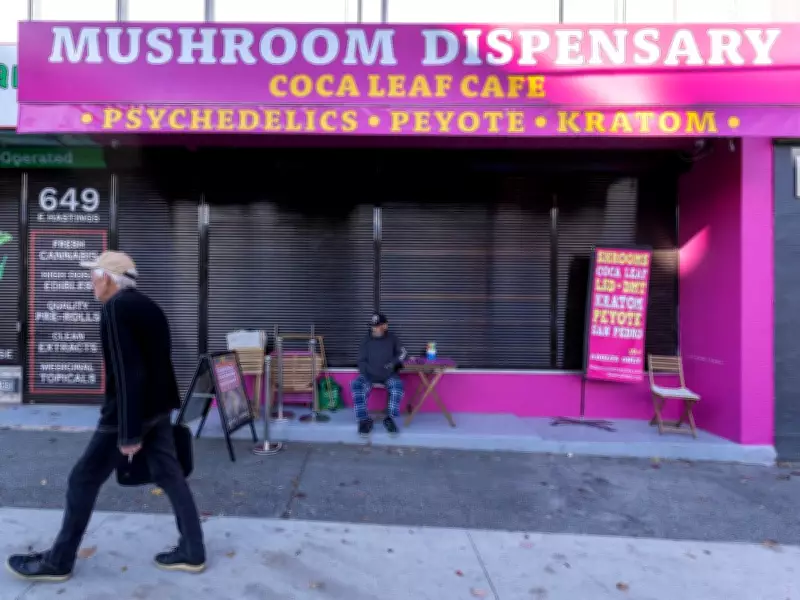
Vancouver is home to more than a dozen businesses that openly sell psilocybin products despite the drug being illegal since 1975 under the Controlled Drugs and Substances Act. These establishments operate from prominent retail storefronts, often decorated with cartoon mushroom imagery, and some even offer delivery services.
Judge Whyte's decision specifically named seven of these businesses, including:
- The Kits Mushroom Company
- The Shroom House
- The White Rabbit Mushroom Dispensary
These operations continue largely because Vancouver police have publicly stated that psilocybin enforcement is not a priority, creating what the judge described as "tacit tolerance" from both police and city officials.
The Chilliwack Case Details
The case before Judge Whyte involved Dejan Ivcevic, a Chilliwack construction worker who was arrested in August 2023 after police responded to a 911 call about disturbances at his apartment. Officers found Ivcevic covered in blood from the knees down, with magic mushrooms scattered throughout the residence, an unsecured firearm on the kitchen table, and journals indicating his intention to market psilocybin through a website.
Ivcevic pleaded guilty to possessing the half-kilogram of mushrooms and equipment for growing more. His defense argued that the thriving retail market for psilocybin in Vancouver should be considered when evaluating the seriousness of his offense.
Legal Framework and Enforcement Discrepancies
Under Canadian law, psilocybin trafficking carries potential jail terms of up to 10 years, and law enforcement has the authority to seize and destroy the drug when encountered. However, enforcement practices vary significantly between jurisdictions, creating what Judge Whyte identified as a logical inconsistency in how drug laws are applied.
The judge's decision raises important questions about:
- Consistency in drug law enforcement across different regions
- Police prioritization of certain offenses over others
- The practical implications of laws that are selectively enforced
This case underscores the complex landscape of drug policy in Canada, where formal laws sometimes conflict with practical enforcement realities, creating confusion for both the judicial system and the public.