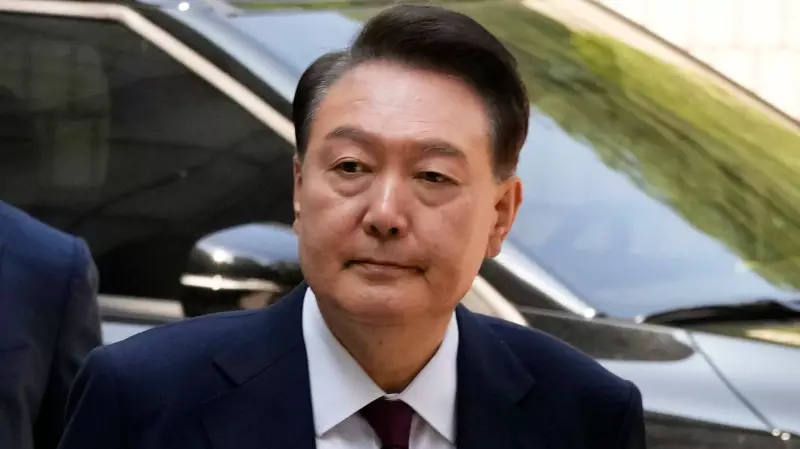
A South Korean court has delivered a significant prison sentence to the country's former leader. On Friday, the Seoul Central District Court sentenced ex-President Yoon Suk Yeol to five years behind bars. This verdict is the first result from eight separate criminal trials against him.
The Charges and the Court's Rationale
The charges in this specific case centered on actions surrounding his controversial declaration of martial law in December 2024. The court found Yoon guilty of defying attempts to detain him, fabricating the martial law proclamation, and sidestepping a legally required full Cabinet meeting. By not convening all ministers, he deprived them of their right to deliberate on his drastic decree.
Judge Baek Dae-hyun, in a televised ruling, stated that imposing a severe punishment was necessary. He cited Yoon's lack of remorse and his repetition of what the judge called "hard-to-comprehend excuses." The judge emphasized the need to restore legal systems damaged by the former president's actions.
The Shadow of the Rebellion Trial
While this case resulted in a five-year term, the most serious legal threat to Yoon remains. He faces a separate trial for rebellion, with prosecutors alleging that his imposition of martial law was an attempt to overthrow the government. An independent counsel has shockingly requested the death penalty for this charge.
However, legal experts believe the death sentence is unlikely. Lawyer Park SungBae, a criminal law specialist, suggested the court will probably issue a life sentence or a term of 30 years or more when it rules on February 19. South Korea has maintained a de facto moratorium on executions since 1997.
Park noted the court would likely consider that Yoon's decree did not cause casualties and was short-lived, even if he has not shown genuine contrition. Yoon's defense team has already announced plans to appeal Friday's ruling, calling it "politicized."
A Nation's Political Turmoil Recalled
The events that led to this moment were unprecedented in modern South Korea. On the night of December 3, 2024, President Yoon abruptly declared martial law in a televised address. He cited a need to eliminate "anti-state forces" and protect the constitutional order, sending troops to encircle the National Assembly.
His move backfired spectacularly. It triggered massive public protests and lawmakers managed to enter the assembly to vote down his decree. The political crisis led to his swift impeachment, arrest, and dismissal from office. For many citizens, the declaration evoked traumatic memories of the country's authoritarian past in the 1970s and 1980s.
Following Yoon's ouster, a snap election brought his liberal rival, Lee Jae Myung, to power in June 2025. President Lee then appointed independent counsels to investigate Yoon, his wife, and associates.
The remaining trials against Yoon involve a range of other serious allegations, including:
- Ordering drone flights over North Korea to deliberately inflame tensions and create a pretext for martial law.
- Manipulating the investigation into a marine's drowning in 2023.
- Receiving free opinion surveys from an election broker in return for political favors.
Observers suggest Yoon's defiant stance in court may be an effort to maintain his political support base. The strategy could be rooted in a belief that while a lengthy prison sentence is unavoidable, a future presidential pardon—a common occurrence for jailed former leaders in South Korea—remains a possibility.