Federal Judge Permits Civil Case Against Trump Over Jan. 6 Capitol Attack to Advance
A federal judge has ruled that a civil lawsuit targeting former President Donald Trump for his conduct surrounding the January 6, 2021, assault on the U.S. Capitol can proceed, marking a significant legal development. The decision, delivered by U.S. District Judge Amit Mehta, rejects Trump's assertion that his actions were shielded by presidential immunity.
Judge Rejects Presidential Immunity Defense
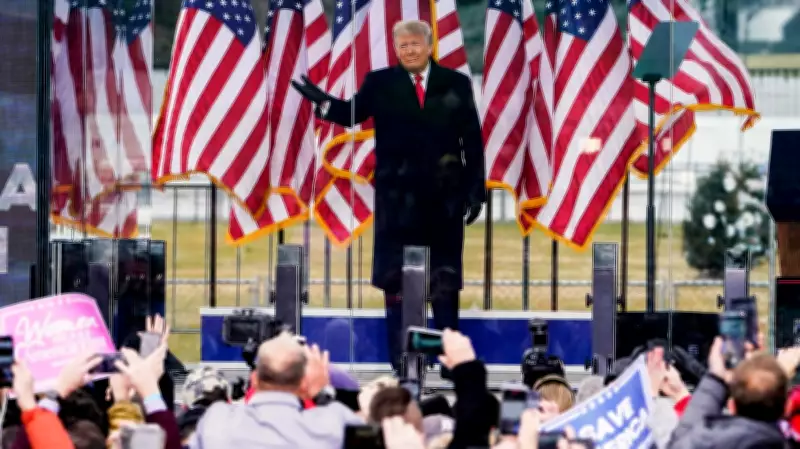
In court, Trump contended that his remarks at a rally and social media posts on January 6 were executed as part of his official White House duties, thereby qualifying for immunity. However, Judge Mehta determined that many of Trump's actions that day, including his speech at the Ellipse and online communications, could not be classified as official presidential acts. The judge emphasized that Trump's legal team had failed to "carry his burden to demonstrate" that these actions fell within his official responsibilities.
Mehta clarified that Trump "remains free to reassert official-acts immunity as a defense at trial. But the burden will remain his and will be subject to a higher standard of proof." This ruling allows the case to move forward while leaving the door open for future arguments on immunity under stricter scrutiny.

Background of the Lawsuit and Legal Challenges
The civil lawsuit was initiated in February 2021 by a group of Democratic lawmakers. They allege that Trump conspired with members of extremist groups, such as the Proud Boys and Oath Keepers, to intimidate Congress members during the certification of the 2020 election. The plaintiffs argue that Trump violated the law by orchestrating a campaign of intimidation, which began with promoting false claims of election fraud and culminated in inciting his supporters to disrupt the electoral process on January 6.
For years, Trump has unsuccessfully sought to dismiss the case at both district and appellate levels, consistently invoking presidential immunity. He maintained that his actions were taken in an official capacity, not for personal or campaign purposes, when he delivered the Ellipse speech and communicated with supporters via social media.
First Amendment Arguments and Judicial Reasoning
Trump also attempted to have the case dismissed on First Amendment grounds, asserting that his words on January 6 constituted protected speech and were motivated by a concern for fair elections, rather than political campaigning. Judge Mehta had previously rejected this argument, and in the latest ruling, he reiterated that the campaign rally at the Ellipse was an "unofficial act of an office-seeker," noting it was largely organized and attended by campaign associates.
Mehta wrote, "He is wrong to suggest that because the Rally was not a fully campaign-sponsored event, his Ellipse Speech therefore must be an official act." This reasoning underscores the distinction between official duties and political activities.
Broader Legal and Political Context
As reported previously, the lawmakers involved in the lawsuit claim Trump attempted to "murder democracy" on January 6 and allege he was aware of potentially armed individuals in the crowd. They view this civil case as a crucial opportunity to hold Trump accountable for the Capitol attack, especially after the Supreme Court's 2024 presidential immunity ruling weakened the criminal case brought by former special counsel Jack Smith, and Trump's reelection in November 2024 further stalled those proceedings.
Judge Mehta's ruling affirms that this civil lawsuit can and will proceed, providing a legal avenue for addressing the events of January 6 despite other obstacles. The case continues to highlight ongoing debates over accountability, presidential powers, and the aftermath of the Capitol insurrection.