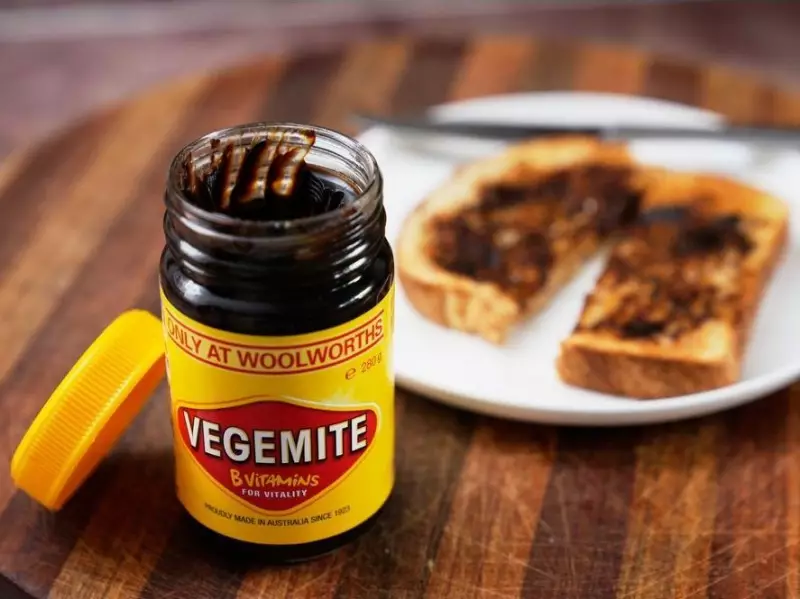
An Australian prisoner serving a life sentence for murder has launched an unprecedented legal battle against the prison system, claiming that being denied access to Vegemite violates his fundamental human rights as an Australian citizen.
Cultural Rights at Stake in Prison Food Battle
Andre McKechnie, 54, currently incarcerated at maximum-security Port Phillip Prison, has taken his case to the Supreme Court of Victoria. The inmate argues that Victoria's ban on Vegemite in prisons breaches his right under the Charter of Human Rights and Responsibilities Act to enjoy his culture as an Australian.
McKechnie is suing both Victoria's Department of Justice and Community Safety and Corrections Victoria, with the case scheduled for trial next year. The legal challenge represents one of the most unusual applications of human rights legislation in Australian correctional history.

Security Concerns Behind Vegemite Ban
Corrections Victoria has maintained the Vegemite ban since 2006, citing significant security concerns. Prison authorities state that the popular spread interferes with narcotic detection dogs because inmates previously smeared drug packages with Vegemite to mask the odor of contraband.
Additionally, Vegemite contains yeast, which is prohibited in Victorian prisons due to its potential use in alcohol production. The contraband list explicitly bans yeast-containing products for this reason.
Despite these security justifications, McKechnie's lawsuit seeks a court declaration that prison authorities have denied him his cultural rights and breached the Corrections Act by failing to provide food adequate to maintain his well-being.
Vegemite's Place in Australian Culture
Manufactured in Australia since 1923 as an alternative to Britain's Marmite, Vegemite holds a special place in the nation's cultural identity. The yeast-based spread became a dietary staple promoted as a source of vitamin B for children and remains present in over 80% of Australian households.
While beloved by most Australians, Vegemite has often puzzled international palates. Former U.S. President Barack Obama once famously declared it horrible, while Australian band Men at Work immortalized the Vegemite sandwich in their 1980s hit Down Under.
The spread's cultural significance was further demonstrated in April 2025 when Canadian officials temporarily blocked a Toronto cafe from selling Vegemite, creating an international incident dubbed Vegemite-gate before relenting under pressure.
Mixed Reactions to Prisoner's Legal Challenge
The lawsuit has drawn strong criticism from victims' rights advocates. John Herron, a victims of crime advocate whose daughter Courtney was beaten to death in 2019, called the case frivolous and offensive to victims' families.
As victims, we don't have any rights. We have limited if any support. It's always about the perpetrator, and this just reinforces that, Herron stated, adding that the lawsuit rubs our faces in the tragedy that we've suffered.
McKechnie was 23 years old when he stabbed wealthy Gold Coast property developer Otto Kuhne to death in Queensland in 1994. After being sentenced to life for murder, he was transferred to the Victorian prison system a decade later.
Interestingly, McKechnie previously spent eight years on parole in Victoria before voluntarily returning to prison a decade ago, claiming the system had done more damage than good. Prison policies regarding Vegemite vary across Australia, with Queensland maintaining similar restrictions while New South Wales permits the spread.
Both the Department of Justice and Community Safety and Corrections Victoria have declined to comment on the ongoing legal proceedings.