Mexican Pyramid Shooter Had Columbine Images, Planned Attack for Days
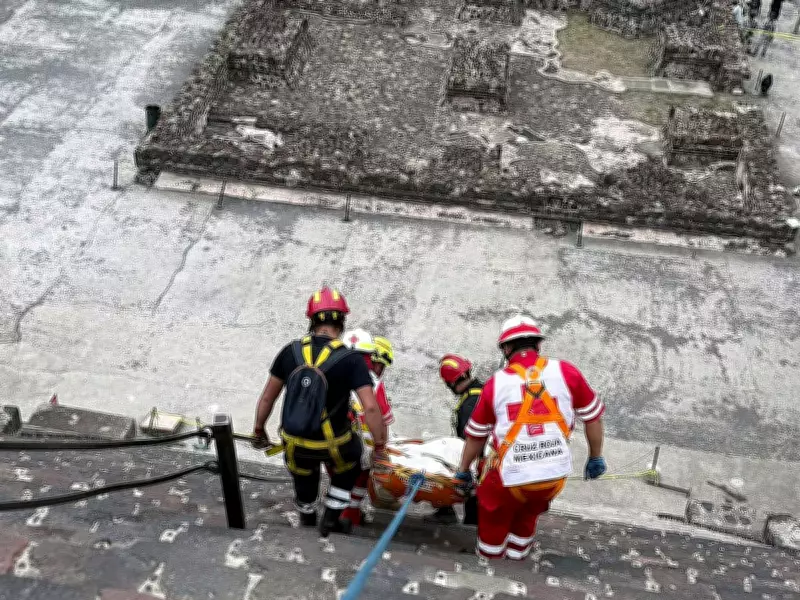
MEXICO CITY — The gunman who killed a Canadian tourist and injured thirteen others at Mexico's renowned Teotihuacan archaeological site had meticulously planned his violent assault over several days, authorities confirmed on Tuesday. Evidence recovered from the scene suggests the attacker was inspired by the infamous 1999 Columbine High School massacre in the United States.
Premeditated Violence at World Heritage Site
Mexico State Prosecutor Jose Luis Cervantes, speaking at a press conference alongside President Claudia Sheinbaum, disclosed that the 27-year-old assailant, identified as Julio Cesar Jasso Ramirez from Mexico City, had made multiple reconnaissance visits to the pyramids. "He stayed in hotels near the site ahead of time, and from there planned his violent acts," Cervantes stated, emphasizing the premeditated nature of the attack which occurred on Monday, April 20, 2026.
The shooting took place on the Pyramid of the Moon, a 45-meter (nearly 150-foot) high monument that visitors are permitted to climb using steep, ancient steps carved from volcanic rock. Teotihuacan, designated as a UNESCO World Heritage site for its "outstanding universal value," features structures built between the first and seventh centuries AD.

Columbine Connection and Evidence Found
Investigators discovered a backpack at the scene containing a firearm, a knife, and fifty-two rounds of ammunition. More chillingly, the bag held literature and images linked "to violent events that are known to have occurred in the United States in April 1999," Cervantes explained, in a clear reference to the Columbine tragedy. On April 20, 1999, two students attacked their Colorado high school, killing twelve classmates and one teacher before taking their own lives.
This connection was corroborated by survivor accounts. Jacqueline Gutierrez, an American who endured Monday's attack, told the Mexican newspaper Milenio that the gunman had explicitly mentioned the anniversary of the Columbine massacre. He also referenced the pyramid's historical role as a site for ritual sacrifices in pre-colonial times, according to Gutierrez.
Victims and Aftermath
The Canadian woman who lost her life was in her early twenties. Among the thirteen injured, who were transported to various hospitals, were:
- A six-year-old boy
- A woman from Colombia
- Another Canadian woman
- A Brazilian man
- Two American citizens
The gunman ultimately shot and killed himself as military personnel arrived on the scene. President Sheinbaum noted that the attacker had "psychological problems" and "was influenced by events that had occurred abroad." She assured the public that there were no suspected links to organized crime, describing the incident as an isolated act of violence.
Calls for Increased Security Measures
In the wake of the tragedy, President Sheinbaum called for tighter gun controls at tourist areas across Mexico. This appeal comes just weeks before the country is scheduled to host several FIFA World Cup football matches, heightening concerns about public safety and security at major venues.
The Teotihuacan attack echoes a disturbing pattern in which several mass shooters in the United States have cited the high-profile Columbine tragedy as inspiration for their own violent acts. This incident underscores the global reach of such influences and the ongoing challenges in preventing targeted violence at public landmarks.