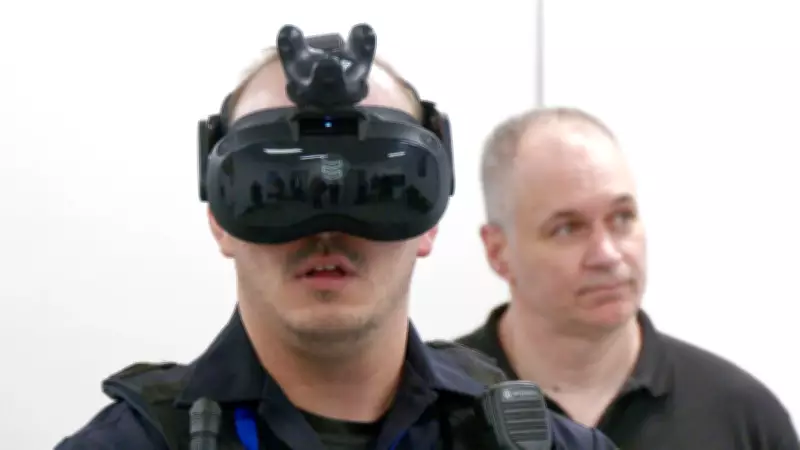
Timmins Police Embrace Virtual Reality for Enhanced Mental Health Crisis Response
In a progressive move to improve community safety and officer preparedness, the Timmins Police Service has announced a groundbreaking partnership with Northern College. This collaboration introduces a state-of-the-art virtual reality (VR) training program specifically designed to equip officers with advanced de-escalation tactics for responding to mental health crisis calls.
Innovative Training Through Technology
The VR training initiative represents a significant shift in how law enforcement approaches sensitive situations involving individuals experiencing mental health emergencies. By immersing officers in realistic, simulated scenarios, the program aims to enhance their ability to assess, communicate, and de-escalate crises effectively, reducing the potential for use of force and improving outcomes for vulnerable community members.
This mandated training is part of a broader effort to align police responses with best practices in mental health intervention. The immersive nature of VR allows officers to practice critical decision-making in a controlled environment, building confidence and skills that can be directly applied in the field.

Partnership with Northern College
Northern College, a key educational institution in Northern Ontario, brings its expertise in technology and training development to this partnership. The college's role includes designing the VR scenarios, ensuring they reflect real-world challenges faced by Timmins police, and providing the technical infrastructure for the training sessions.
This collaboration underscores the growing importance of interdisciplinary approaches in public safety, blending law enforcement with educational innovation to address complex social issues.
Context and Implementation
The rollout of this VR training comes amid increasing awareness of the need for specialized responses to mental health crises. Police departments across Canada are seeking ways to better support individuals in distress while ensuring officer safety. The Timmins initiative is seen as a model that could be adopted by other municipalities, particularly in regions with limited access to mental health resources.
Key features of the training program include:
- Realistic simulations of common crisis scenarios, such as suicidal ideation or acute psychosis.
- Focus on communication techniques that promote calm and cooperation.
- Opportunities for officers to receive immediate feedback on their performance.
- Integration of local community context to ensure relevance to Timmins-specific issues.
By investing in this technology-driven training, the Timmins Police Service aims to not only improve individual officer competencies but also foster greater trust between law enforcement and the community. The program is expected to be fully operational by mid-2026, with ongoing evaluations to measure its impact on crisis outcomes and public satisfaction.