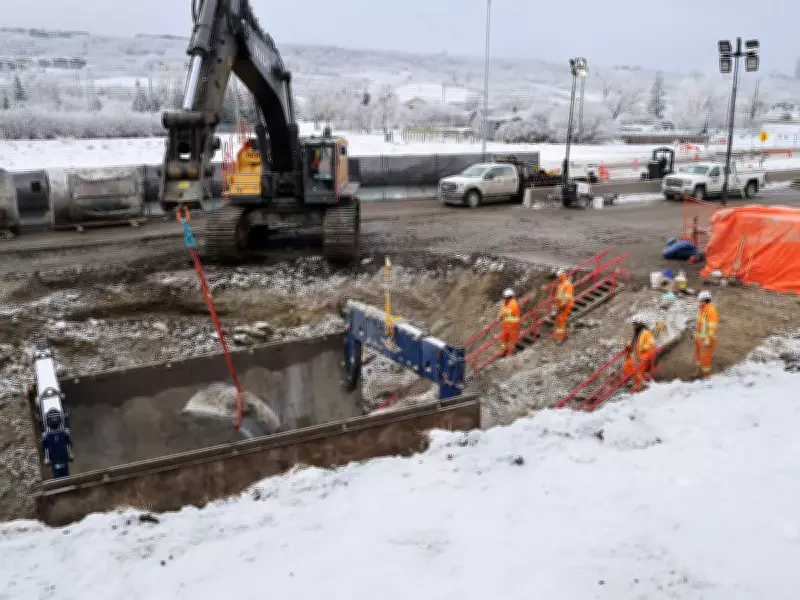
The Alberta government has taken decisive action in response to the ongoing water infrastructure crisis in Calgary, ordering a full-scale investigation into the repeated failures of the city's water system. Premier Danielle Smith's administration is deploying its full legal authority to examine what has been described as "the repeated failure of the greatest magnitude of one of the basic core municipal services."
Provincial Intervention in Municipal Crisis
Municipal Affairs Minister Dan Williams announced the government's decision to appoint an inspector with sweeping powers to investigate Calgary's water pipe fiasco. The move comes after months of water restrictions and infrastructure failures that have left Calgarians questioning the reliability of their basic municipal services.
"We are using the power the province has to ensure we get to the bottom of the matter," Williams stated during the announcement. "There needs to be an understanding of what happened, why it happened and how to prevent it from ever happening again."

Appointment of Seasoned Investigator
The government has selected David Goldie, former chair of the Alberta Energy Regulator and a veteran of senior positions in the oil and gas sector, to lead the investigation. Goldie brings extensive regulatory experience to what promises to be a complex examination of municipal decision-making and infrastructure management.
Williams emphasized that the inspector will have substantial authority to conduct a thorough investigation, including the power to:
- Compel the production of documents and records
- Require witness testimony under oath
- Examine anyone connected to the water pipe file, past or present
- Review decision-making timelines and escalation processes
Scope and Timeline of Investigation
The investigation will be comprehensive in scope, examining multiple aspects of the water system failures. According to Minister Williams, the inquiry will address critical questions including:
- When were infrastructure issues first identified?
- What escalation processes were followed or ignored?
- Which actions were taken and which were deferred?
- How were risk assessments conducted and communicated?
- What internal controls and monitoring systems were in place?
"The scope on this is broad," Williams explained. "Because Albertans, and Calgarians in particular, expect to have basic core services provided and there has been a massive failure to deliver those services."
Previous Government Actions
This investigation follows earlier government intervention in January, when the Smith government compelled Calgary city hall to produce thousands of documents, including materials from closed-door meetings. The current investigation represents a significant escalation of provincial oversight, moving beyond document collection to a formal inquiry with legal authority.
The investigation is expected to continue through the fall, with findings and recommendations to be presented to the government and made public upon completion. Williams stressed that the process will be conducted transparently and without predetermined conclusions.
Government's Stance on Municipal Accountability
Minister Williams made clear that the provincial government is taking a firm stance on municipal accountability. "This kind of inspection is tough stuff," he acknowledged, but emphasized the necessity of the process.
The minister stated that he is "not presupposing anything" and wants to see "the process play out in an above-board way." His stated goal is to uncover "the whole truth and nothing but the truth" about what led to the repeated failures of Calgary's water infrastructure.
Williams positioned himself as overseeing the process rather than directing it, noting that the inspector will have independence to conduct the investigation according to established procedures and legal requirements.

Implications for Municipal-Provincial Relations
The decision to launch a formal investigation represents a significant assertion of provincial authority over municipal affairs. By invoking its legal powers to compel testimony and document production, the Smith government is demonstrating its willingness to intervene directly in what has traditionally been municipal jurisdiction.
The investigation's findings could have far-reaching implications for how municipalities across Alberta manage critical infrastructure and how the provincial government exercises oversight of local governance. The outcome may establish new precedents for provincial intervention in municipal operations when basic services fail.
As the investigation proceeds through the coming months, Calgarians and Albertans will be watching closely for answers about how their water system reached this crisis point and what measures will be implemented to prevent future failures of essential municipal services.