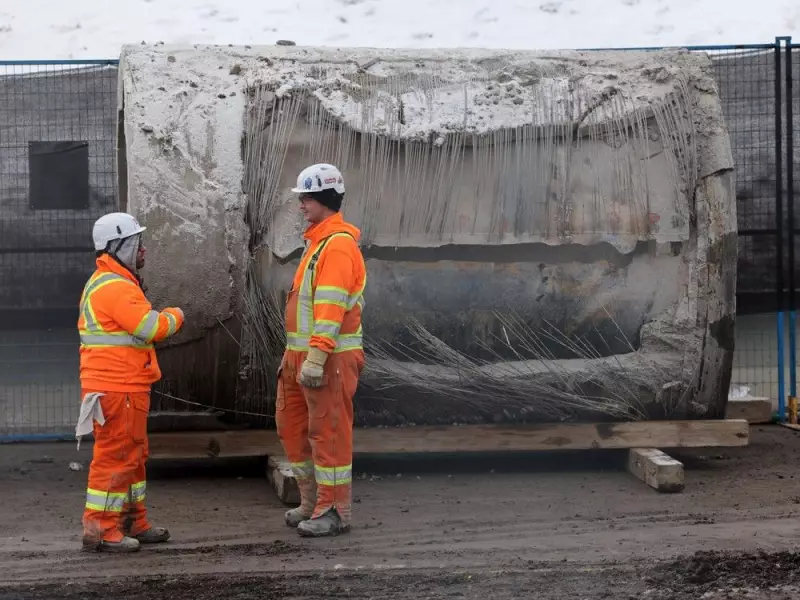
The rupture of Calgary's critical Bearspaw South feeder main pipe is more than a sudden infrastructure failure; it is the culmination of a 21-year systemic cultural problem within the city's governance. While public anger is justified, focusing solely on finding a scapegoat misses the deeper, more persistent issue: a civic culture that has consistently rewarded short-term tax restraint over long-term infrastructure resilience.
The "Delay and Defend" Cycle in City Hall
Over two decades, a predictable pattern played out at Calgary City Hall. Council, responding to resident pressure, would direct administration to present budget options with a clear priority: minimize taxes and utility rates. In turn, city staff, hearing that political directive, would build plans that pushed significant lifecycle costs and major renewals into the future. This was not necessarily recklessness, but a rational response to the political environment that repeatedly signaled "not this year."
This created a "delay and defend" posture that appeared fiscally prudent in annual budgets but accumulated immense risk over time. The pattern involved multiple city managers and mayors with differing styles, making it implausible to pin the failure on a single individual. The system itself was designed to defer hard decisions.

Short-Term Calm vs. Long-Term Resilience
The public sector widely tolerates a managerial habit of pushing large bills five or ten years down the road—far enough that the political and administrative leadership will likely have changed. This incentive structure rewards leaders for maintaining short-term calm rather than ensuring long-term resilience. Citizens, who consistently cheer for lower taxes, become complicit in this cycle, only to express shock when the deferred invoice for neglected infrastructure finally comes due, as with the catastrophic pipe failure.
Undoubtedly, leadership failed. Over 20-plus years, city management did not force a loud enough reckoning to reset council's priorities. However, council after council also explicitly chose tax restraint over proactive asset renewal. The failure is collective.
Moving Beyond Blame to Preventative Accountability
Firing a single official while keeping the same incentives intact will only produce the same outcomes with a different signature. True accountability that prevents a repeat requires fundamental changes to how the city plans and communicates risk.
First, municipal budgets must publish the risk, not just the spend. For every major asset, the document should clearly show the probability and consequences of deferring maintenance or renewal. If a pipeline's failure would be city-shaping, that trade-off must be explicit and public for all residents to see.
Second, the city must adopt measurable service-level guarantees. Council should set clear outcomes for infrastructure reliability, renewal rates, and outage tolerances, and then fund budgets to meet those standards. If the choice is to underfund, the resulting lower service level must be documented on paper—not just experienced unexpectedly by citizens during a crisis.
The lesson for Calgary—and for municipalities across Canada—is clear: when budgets idolize low taxes above all else, you don't get miracles. You get risk, and eventually, a crisis. Fixing the culture is the only way to fix the pipes for the long term.