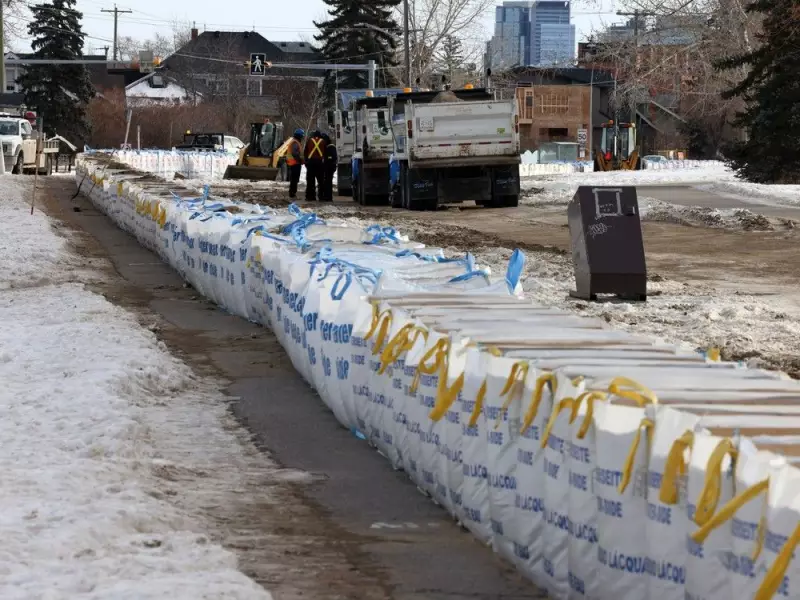
The City of Calgary finds itself in a paradoxical situation, removing temporary flood barriers designed to protect communities from the Bow River, even as it grapples with a repeated failure of a critical water main that has plunged the city into a state of emergency. This contradiction underscores a deepening crisis in the city's water infrastructure and governance.
A Flood of Contradictions and Public Frustration
The immediate irony is not lost on residents. In January 2024, temporary barriers were installed along bike pathways in communities like Parkdale as a protective measure against potential flooding from the Bow River. Now, the city is taking steps to remove some of these barriers. Meanwhile, Calgary is contending with flooding of a different kind: the aftermath of another break in the aging Bearspaw South feeder main, which has triggered emergency water restrictions, traffic disruptions, and significant economic harm.
This bewildering scenario prompted one Calgarian, Bob Grundie, to write to the Calgary Herald, stating the situation made his "head spin." His sentiment captures the public's confusion and frustration with the city's handling of parallel water-related emergencies.

Systemic Failures and Calls for Accountability
The recurring failure of the major water pipeline has exposed what critics call systemic issues within the city's administration. Commentator Guy Buchanan outlined two stark realities: one where citizens expect reliable drinking water, and another where city officials offer vague assurances amid mounting failures.
Despite previous breakdowns, the administrative response has been criticized as slow and lacking urgency. Timelines for replacing the critical pipeline have shifted dramatically, from an initial estimate of two years, to 12-14 months only after pressure from an external expert panel. However, this still leaves the city vulnerable for many more months. Buchanan argues this crisis is a test of governance, demanding real-world accountability over a culture of excuses and normalized delays.
Political Tensions and Broader Community Concerns
The water crisis has also spilled into provincial-municipal politics. Premier Danielle Smith has drawn criticism for suggesting the provincial government should take control of rectifying the city's water system oversight failures. Calgary resident Ed Reuther dismissed this as a "cynical, insidious attempt at power-grabbing" by a "Trump wannabe premier," arguing that Mayor Jyoti Gondek is fully competent to address the infrastructure legacy issues and improve oversight.
Beyond the water crisis, other letters to the editor highlighted ongoing public safety concerns. Rose Robertson of Calgary criticized WestJet's previously planned (and since reversed) cramped seating configuration, questioning how passengers could safely evacuate in an emergency and how Transport Canada could approve such a design. This reflects broader anxieties about corporate accountability and regulatory oversight in different sectors.
The convergence of infrastructure failure, political friction, and public safety debates paints a picture of a city at a crossroads. For Calgarians, the resolution of the water crisis will be a definitive measure of their leaders' ability to deliver tangible outcomes, not just efforts and explanations.