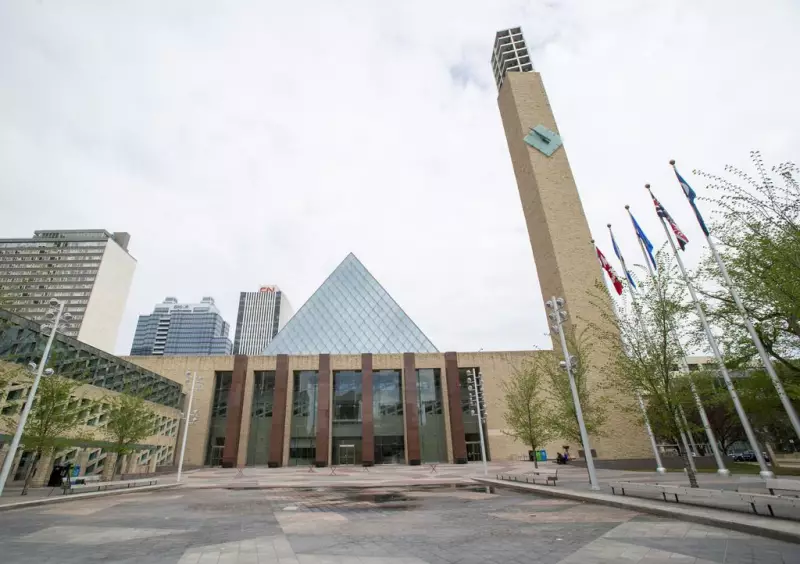
Edmonton city administration has identified four major capital projects that could be financed through public-private partnerships in the upcoming fiscal year. A report requested by the Special Infrastructure Committee in June 2024 will be presented to city council on Tuesday, November 18, 2025.
Four Priority Projects Selected
The four projects selected for potential public-private funding are the renewal of the Woodcroft Library, the proposed Cumberland Fire Station, the planned Windermere North Transit Centre, and upgrades to the city's inventory of sports arenas. These projects were chosen based on their priority status and current lack of funding.
According to the city report, Edmonton owns the parcels of land where these facilities are to be located. The report states these sites no longer meet resident service delivery needs and were identified through the Asset Rationalization Framework. Some locations may also present opportunities for housing development.

Proven Track Record with Partnerships
The report highlights Edmonton's extensive experience with successful public-private partnerships, citing several notable examples including Rogers Place and the Downtown Community Arena, the Kinsmen Twin Arenas, the Laurel neighbourhood development, Remax Field's infield redevelopment, the Dr. Anne Anderson Community Centre, and the recently approved Edmonton Mountain Bike Association skills park.
The city has demonstrated its ability to work with partners across both profit and non-profit sectors to accommodate diverse community needs. Six other capital projects were evaluated but ultimately not selected for this funding model consideration.
Council Scrutiny and Risk Assessment
Ward Métis Councillor Ashley Salvador, who holds a master's degree in urban planning, emphasized that council will need to carefully examine any potential agreements with third parties before approval. She warned that taxpayers could face significant risk if deals aren't properly vetted.
Salvador stressed the importance of considering the total cost of ownership, explaining that this includes not just capital construction costs but also ongoing staffing and operational expenses for whatever facility is being discussed.
The councillor noted that there is flexibility in the types of partnerships potentially being considered — it's not a one size fits all approach. She clarified that public-private partnerships aren't exclusively deals between government and business, pointing out that nonprofit organizations frequently enter into agreements with governments to advance their work.
The next steps involve exploring what partnership possibilities exist and conducting analysis to determine whether pursuing these funding models would be worthwhile for Edmonton taxpayers and the community.