Residents of Edmonton are voicing strong criticism over the city's snow removal efforts and residential parking bans, with many pointing to the city's own increased-density housing policies as a root cause of the problem. The debate, captured in letters to the Edmonton Journal, highlights a growing tension between urban planning goals and practical winter realities.
Residents Challenge Mayor's Frustration
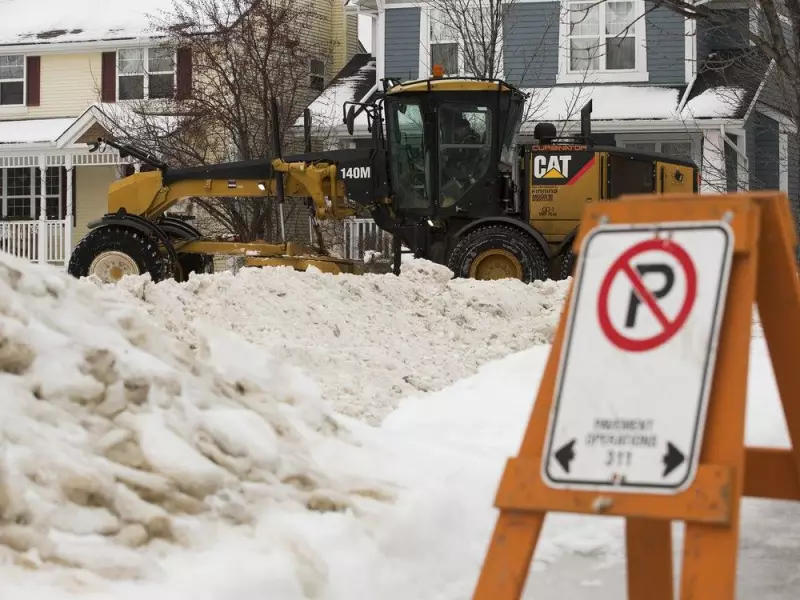
The controversy was ignited by a January 10 report where Mayor Andrew Knack was described as "riled" by citizens disregarding parking bans during snow clearing operations. In a letter published on January 16, 2026, local resident Joan Swain expressed skepticism at the mayor's reaction. "I had to smirk a bit," Swain wrote, questioning how the city expected compliance when its own policies have exacerbated street parking shortages.
Swain directly criticized the city's infill development scheme, which replaces single-family bungalows with multi-unit buildings. "Where there was one, possibly two cars, per bungalow, now you have given the neighbourhood eight units mid-block, no parking, no outside space, with perhaps two cars per unit," she argued. This transformation, she contends, adds eight to sixteen extra cars on streets already at capacity, making it impossible for all residents to park off-street during snow-clearing events.

The Core Conflict: Density vs. Practicality
The sentiment that city policy is creating its own problems was echoed by other letter writers. Myron Borys of Edmonton highlighted a stark contradiction. He noted that while the city approves eight- and ten-plex infill developments with no onsite parking, it simultaneously demands residents move their cars for plows. "You can’t have your cake and eat it too, Mayor Knack," Borys stated.
Borys contrasted Edmonton's situation with his experience in Barrhaven, a suburb of Ottawa, where he was on vacation over Christmas. He observed that plows cleared roads three times in nine days and that the city cleared all residential sidewalks within 12-14 hours, regularly applying sand and salt. "What luxury!" he remarked, implying Edmonton's system falls short.
Satirical Suggestions and Calls for Policy Change
Another resident, David Dear, offered a sarcastic solution to the snow removal dilemma. He recalled that the city administration had previously cited Nashville, Tennessee as a model for justifying bike lane investments. Dear suggested that perhaps the same officials could return to the southern U.S. city to inquire about their snow removal techniques, underscoring the perceived absurdity of comparing a northern Canadian city to a mild southern one for infrastructure planning.
In her letter, Joan Swain called for a fundamental policy shift, urging the city to "follow Calgary’s lead and stop this madness." She framed the high-density projects as a "ridiculous venture to please your developer friends" that has led to predictable parking chaos, especially during critical winter operations.
The collection of letters, all published on January 16, 2026, presents a unified critique: Edmonton's winter parking crisis is not merely an issue of citizen compliance but a direct consequence of housing density policies that have overlooked the essential need for parking, creating an untenable situation for residents when snow falls.